
10-Foot Surf Rods: Compare Four 10-Foot Models

For a 10-foot surf rod with a 15-30 lb line rating and 1-5 oz lure range, the Ugly Stik Carbon Surf is a direct match with a graphite blank and rubberized EVA grip. Choose another model if you want a composite blank, a different guide design or a lighter stated weight.
We earn a commission if you buy through links on this page. As an Amazon Associate I earn from qualifying purchases. Products are compared on manufacturer specifications, not hands-on testing.
- Best overall: Ugly Stik Carbon Surf 10′ – Pairs a 15-30 lb line rating and 1-5 oz lure range with a 100% 24-ton graphite blank.
- Best for composite construction: PENN Prevail III 10′ – Uses a two-piece graphite composite blank and has a 15-30 lb line rating with a 1-5 oz lure range.
- Best for low listed weight: Okuma Rockaway 10′ – The 10-foot rod’s weight is 0.575 lb.
- Best for secure wet grip: PENN Squadron IV Surf 10′ – Shrink-tube foregrips are designed for a secure hold in wet conditions.
| Product | Best for | Construction | Shop |
|---|---|---|---|
| Ugly Stik Carbon Surf 10′ | Graphite blank | 100% 24-ton graphite | Check Price on Amazon |
| PENN Prevail III 10′ | Composite blank | Graphite composite | Check Price on Amazon |
| Okuma Rockaway 10′ | Lower stated weight | 24-ton carbon | Check Price on Amazon |
| PENN Squadron IV Surf 10′ | Wet grip | Graphite composite | Check Price on Amazon |
10-Foot Surf Rods
Compare the blank materials, line ratings and lure ranges that distinguish these surf spinning rods.
Ugly Stik Carbon Surf 10′

The Ugly Stik Carbon Surf pairs a 100% 24-ton graphite blank with a solid graphite tip, setting it apart from composite-blank choices. Its two-piece, medium-heavy spinning setup is rated for 15-30 lb line and 1-5 oz lures. Six one-piece stainless-steel guides have a PVD coating, and the EVA handle has a rubberized X pattern. The maker says its design combines sensitivity with toughness. This is a direct fit for anglers choosing a graphite blank; buyers who prefer a composite construction should compare other options.
Bottom line: Choose this rod if a graphite blank and 1-5 oz lure range fit your setup.
PENN Prevail III 10′

The PENN Prevail III stands apart with a two-piece graphite composite blank and a moderate-fast action. This medium-heavy spinning rod is rated for 15-30 lb line and 1-5 oz lures, matching the range of the graphite options while using a different blank construction. Six one-piece stainless-steel Dura-Guides are intended for use with different line types in fresh or salt water, and the grip uses type C rubber shrink tube. The maker says the rod is designed for responsive coastal fishing. Choose it if composite construction matters more than an all-graphite blank.
Bottom line: Pick this rod if you want a composite blank with a moderate-fast action.
Okuma Rockaway 10′
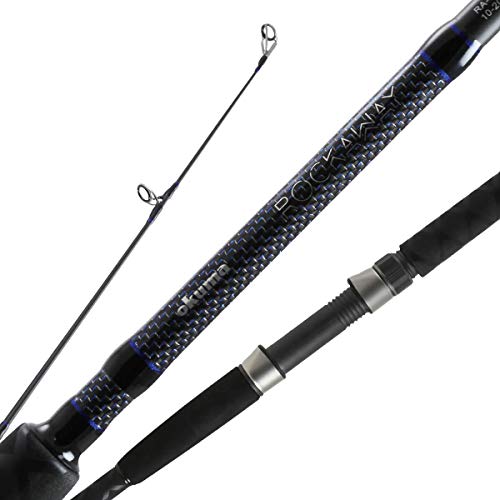
The Okuma Rockaway is the lightest by weight among these models, at 0.575 lb. Its 10-foot blank is 24-ton carbon, with UFR tip technology and tapered shrink-tube grips. Anglers looking for a lightweight carbon option with angled Sea Guide stainless-steel frames and zirconium inserts for braid or monofilament may find this configuration appealing.
Bottom line: Choose this rod if its weight and carbon construction suit your priorities.
PENN Squadron IV Surf 10′

The PENN Squadron IV distinguishes itself with shrink-tube foregrips designed for a secure hold in wet conditions. Its two-piece graphite composite blank balances strength and sensitivity, and the medium-heavy rod is rated for 15-30 lb line and 1-5 oz lures. Six one-piece Dura-Guides are designed to avoid insert pop-outs, and the graphite reel seat provides a base for the reel. Choose this rod if grip texture is a priority; anglers seeking a fully graphite blank should consider a different construction.
Bottom line: Pick this model if a wet-condition grip is a priority for your surf setup.
How to choose a 10-foot surf rod
Start with the lure weight and line rating you actually plan to use; those numbers determine whether a rod suits your sinker and bait setup. The 1-5 oz lure range and 15-30 lb line rating on several rods here suit a defined medium-heavy setup, while the Okuma’s specifications do not give those ranges, so verify them if they are essential. Surf rods commonly run about 9 to 12 feet: shorter rods are easier to manage in tight spaces, while longer rods can help with casting distance when conditions and technique allow. Blank material also changes feel: graphite is generally more sensitive and less forgiving of impact than composite designs. Match the rod’s rating to your reel line and intended lure, rather than choosing by length alone.
What a 10-foot rod changes at the beach
A 10-foot rod offers a middle ground between compact control and the reach of longer surf rods. Casting distance does not come from length alone; rod action, lure weight, line diameter, casting technique and wind all affect how far a rig travels. A heavier sinker can hold bottom in moving water, but it must remain within the rod’s lure rating, which includes the total casting payload rather than just the bait. Leave room for bait and terminal tackle when weighing a rig. For a 1-5 oz rating, a complete rig over 5 oz is outside the range. Heavy surf and strong crosswinds can make a shorter or heavier-rated setup more manageable.
Graphite and composite surf rod blanks
Graphite and carbon blanks emphasize lower weight and bite feel, while graphite-composite blanks combine graphite with other material for a different balance of responsiveness and durability. Rod terms such as 24-ton describe graphite material modulus, not a direct measurement of lifting strength or a guarantee against breakage. All else equal, higher-modulus blanks can feel crisp but may tolerate impacts less readily than more forgiving composites. Guide frames and inserts also matter: braid can abrade or catch on damaged guide surfaces, so inspect every guide before fishing. Rinse saltwater rods with fresh water after use, paying attention to guides and reel-seat areas, then let them dry before storage.
Two-piece rods, transport and care
A two-piece rod separates at the ferrule for easier transport, while assembled use depends on keeping that joint aligned and seated. Check the connection before each outing and during a long session; a loose ferrule can shift under casting load. Keep rod sections in a sleeve or tube during travel, and avoid using a rod blank as a lever to free a snagged line, which can concentrate force and break the tip. Salt and grit can wear guide surfaces and joints, so rinse the rod after saltwater use and wipe it dry. Store it away from direct heat and avoid leaning heavy objects against the blank.
Frequently Asked Questions
What size reel suits a 10-foot surf rod?
A 4000-6000 size spinning reel is a common starting range for many 10-foot surf setups, but line capacity and reel weight matter more than the number alone. Match the reel’s line capacity to the rod’s rating and the target fishing conditions.
How heavy a sinker can a 1-5 oz rod cast?
A 1-5 oz lure rating sets a maximum total casting weight of 5 oz, including sinker, bait and terminal tackle. Keep the complete rig within that range to avoid overloading the rod.
Is a 10-foot surf rod too long for a pier?
A 10-foot rod can work on an open pier, but crowded railings and overhead obstructions can make casting awkward. In a tight space, a shorter rod is generally easier to control and less likely to hit nearby people or structures.
How should I rinse a surf rod after saltwater use?
Rinse the rod gently with fresh water after each saltwater outing, especially around guides and the reel seat. Wipe it dry and let it air-dry before storage to reduce salt buildup and corrosion risk.
Can a 10-foot surf rod handle braided line?
Yes, but line compatibility depends on guide condition and construction. Inspect guides for cracks or rough edges before using braid, since damaged surfaces can abrade line.