
12V Automotive Inline Diodes: Fit and Wiring Compared

For a 12V automotive inline diode with prewired terminals, Automotive 80111 12V Diode is the closest fit because it is identified as a one-way 80111 replacement with 0.25-inch spades. Choose another option if you need a discrete circuit-board component or a vehicle-specific alternator diode rather than an inline assembly.
We earn a commission if you buy through links on this page. As an Amazon Associate I earn from qualifying purchases. Products are compared on manufacturer specifications, not hands-on testing.
- Best overall: Automotive 80111 12V Diode – A one-way 80111 replacement with preinstalled 0.25-inch spade terminals.
- Best for a 3-piece set: 12V Inline 80111 Diode, 3-Pack – The inline 80111 assembly is supplied as a three-piece set and has prewired spades.
- Best for industrial use: 80111 6A 12V Diode Assembly – An 80111 replacement described for industrial control and power-conversion applications.
| Product | Best for | Type | Terminal or package | Quantity | Shop |
|---|---|---|---|---|---|
| Automotive 80111 12V Diode | Panel replacement | One-way rectifier | 0.25-inch spades | 2 pieces | Check Price on Amazon |
| 12V Inline 80111 Diode, 3-Pack | Three replacements | One-way inline diode | Prewired spades | 3 pieces | Check Price on Amazon |
| 80111 6A 12V Diode Assembly | Control systems | 80111 diode assembly | — | — | Check Price on Amazon |
| YUPIKJI Multi-Function Alternator Diode | Alternator replacement | Alternator diode | Mini plug-in structure | 4 pieces | Check Price on Amazon |
12V automotive inline diodes compared
Match the diode form and connections to the circuit you are repairing before choosing an assembly.
Automotive 80111 12V Diode

This is the most direct inline option for a PRF-50506 six-switch panel: it is identified as an 80111 replacement and has spade terminals already fitted at both ends. The manufacturer describes it as a one-way blocking diode for reverse-current, backfeed and circuit-crosstalk issues. Its length is 3.15 inches and diameter is 0.38 inch, so check the available space and connection type in the existing circuit. The polarity coding is red for anode input and black for cathode output. It is a poor match if you need a bare component for soldering onto a circuit board.
Bottom line: Choose this for a compatible panel repair where prewired spades and a two-piece set fit the job.
12V Inline 80111 Diode, 3-Pack

The three-piece count distinguishes this inline 80111 assembly from the two-piece option, while its preinstalled 0.25-inch spades are intended to avoid soldering or crimping. The manufacturer describes the diode as a backfeed and reverse-flow blocker for PRF-50506 panels, and also gives engine run-on and dual-battery isolation as possible applications. Its dimensions are 3.15 inches long by 0.38 inch wide. Confirm that the circuit needs this diode direction and that the panel and wiring are compatible; a color-coded lead does not establish compatibility with every vehicle or alternator.
Bottom line: Pick this when you need three inline assemblies for a compatible panel or wiring repair.
80111 6A 12V Diode Assembly
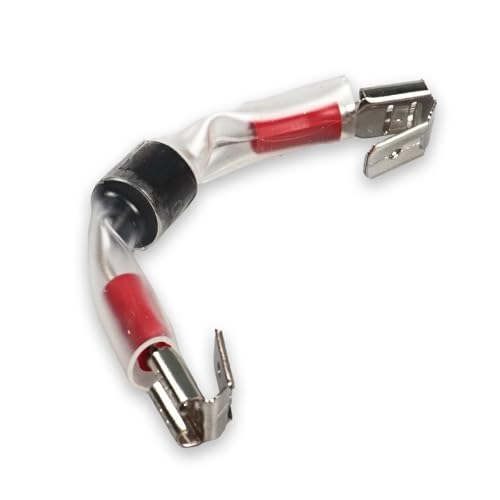
This 80111 assembly is positioned for industrial control and power-conversion work, rather than described with the prewired spade-terminal setup of the two inline options. The manufacturer characterizes it as a 12V diode with rectification and reverse-voltage resistance, and gives instrumentation and DIY circuit design as application areas. Its use is broad, so buyers matching a PRF-50506 switch panel should verify the connection arrangement and physical fit before choosing it. The specifications do not give a terminal style or count, which matters when replacing a wired-in part.
Bottom line: Consider this for industrial or conversion work when its physical connections match your circuit.
YUPIKJI Multi-Function Alternator Diode
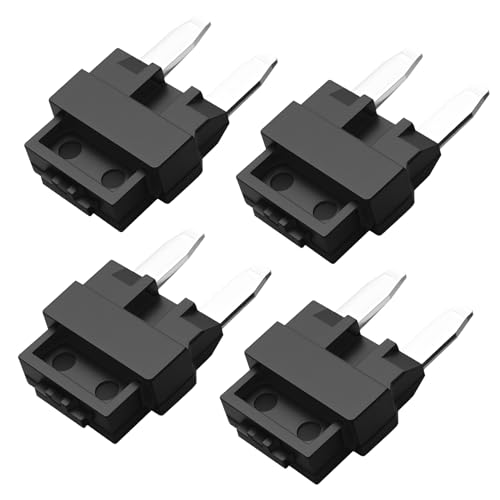
This option is an alternator-replacement diode rather than a general inline 80111 assembly. It is supplied as four pieces and is identified as replacing OEM part numbers 12135037 and 12182137; the manufacturer names Buick, Chevy, GMC, Hummer, Pontiac and Saturn among the compatible makes. Its mini plug-in structure is intended to match a standard fuse-box interface. Match the replacement part number and vehicle application before buying, because a plug-in alternator component is not interchangeable with a spade-terminal inline diode just because both are diodes for automotive electrical systems.
Bottom line: Choose this only when its replacement numbers and plug-in fit match your alternator application.
How to choose a 12V automotive inline diode
Start with the circuit function and connection, not the 12V label alone. A rectifier diode conducts primarily in one direction; an inline blocking diode is oriented to allow intended current while limiting reverse current. Confirm which side of the existing circuit is the source and which is the load, then match the terminal style and available space. A diode’s voltage rating alone does not establish that it can carry the circuit’s current: select a part whose current and reverse-voltage ratings meet the circuit requirements. If those ratings are unavailable for the component you are considering, verify them before installing it. Disconnect the battery before working on vehicle wiring, and insulate exposed connections to prevent shorts.
Inline spade assemblies versus other diode types
Prewired spade assemblies are suited to circuits already using compatible spade connections; axial-lead diodes and plug-in alternator components use different mounting and connection formats. A 0.25-inch spade terminal is 6.35 mm wide, so measure the existing tab rather than assuming every automotive connector is the same size. Zener diodes are a distinct type: they are designed to regulate voltage in a reverse-breakdown region, not simply serve as a generic one-way inline replacement. The table separates these forms by connection and typical task; it is a starting point, not proof of electrical compatibility.
| Form | Typical connection | Use to consider |
|---|---|---|
| Inline assembly | Wired leads or spades | Blocking reverse current in a matching circuit |
| Axial-lead diode | Leads through circuit-board holes | Component-level repair with matching ratings |
| Plug-in alternator diode | Vehicle-specific interface | Replacement matched by part number |
Check polarity, current rating and installation space
Polarity determines whether a diode passes the intended current or blocks it, so identify anode and cathode before connecting an inline part. On the red-and-black coded assembly, the manufacturer assigns red to anode input and black to cathode output; do not apply that color convention to unrelated components. A diode in a charging or accessory circuit must be rated for the circuit’s continuous current and transient conditions, not merely its nominal voltage. Leave room for the body and terminals without forcing the wiring against sharp edges or hot engine parts. If the repair involves an alternator or battery-isolation circuit, verify the vehicle wiring diagram and ratings rather than relying on a generic diode label.
Common mistakes with automotive diode replacements
The most common mismatch is choosing by voltage while overlooking function, current capacity, or connector style. Another mistake is reversing the diode: that can interrupt intended current, while an underspecified or poorly insulated installation can overheat or short. Disconnect the negative battery terminal before altering wiring, and reconnect only after checking polarity, secure connections and clearance. For a PRF-50506 panel repair, match the 80111 part and spade arrangement; for vehicle-specific replacements, confirm the exact replacement number and application.
Frequently Asked Questions
What does an inline diode do in a 12V car circuit?
An inline diode is used to allow current in the intended direction while resisting reverse current. Its current and reverse-voltage ratings must suit the circuit, not just its nominal 12V system.
How can I tell which way to install an inline diode?
Identify the anode and cathode markings or manufacturer polarity coding before connecting the part. For the red-and-black coded 80111 assembly here, red is the anode input and black is the cathode output.
Are 0.25-inch spade terminals a standard automotive size?
A 0.25-inch tab measures 6.35 mm wide, but vehicle connectors vary in width and fit. Measure the existing terminal and confirm the mating connection before selecting a prewired assembly.
Should I disconnect the battery before replacing a diode?
Yes, disconnect the negative battery terminal before modifying vehicle wiring to reduce short-circuit risk. Keep the circuit unpowered while checking polarity and insulating the connections.