
30-Degree Angle Bed Wedges Compared by Length and Fit

For a 30-degree angle bed wedge with broader shoulder-to-hip coverage, choose 34.2-Inch 30-Degree Wedge Pillow because its 34.2-inch length is the longest among the matching options. Choose 20-Inch 30-Degree Positioning Wedge or JJ CARE 23.6-Inch Curved 30-Degree Wedge instead if a shorter support better fits your available space or positioning setup.
These foam positioning wedges support part of the body at an incline; they are not substitutes for a care plan or assistance when someone cannot reposition safely.
We earn a commission if you buy through links on this page. As an Amazon Associate I earn from qualifying purchases. Products are compared on manufacturer specifications, not hands-on testing.
- Best overall: 34.2-Inch 30-Degree Wedge Pillow – Its 34.2-inch length is the longest of the 30-degree options.
- Best for compact support: 20-Inch 30-Degree Positioning Wedge – Its 20-by-10-by-5-inch size is the smallest footprint.
- Best for non-skid base: JJ CARE 23.6-Inch Curved 30-Degree Wedge – Its features specify a non-skid bottom.
| Product | Best for | Length | Width | Weight | Shop |
|---|---|---|---|---|---|
| 34.2-Inch 30-Degree Wedge Pillow | Longer body coverage | 34.2 in | 10.8 in | 1.9 lb | Check Price on Amazon |
| 20-Inch 30-Degree Positioning Wedge | Compact footprint | 20 in | 10 in | 0.84 lb | Check Price on Amazon |
| JJ CARE 23.6-Inch Curved 30-Degree Wedge | Non-skid base | 23.6 in | 7.9 in | 1.76 lb | Check Price on Amazon |
30-Degree Angle Bed Wedges
Compare the matching wedges by their dimensions, shape and positioning features.
34.2-Inch 30-Degree Wedge Pillow
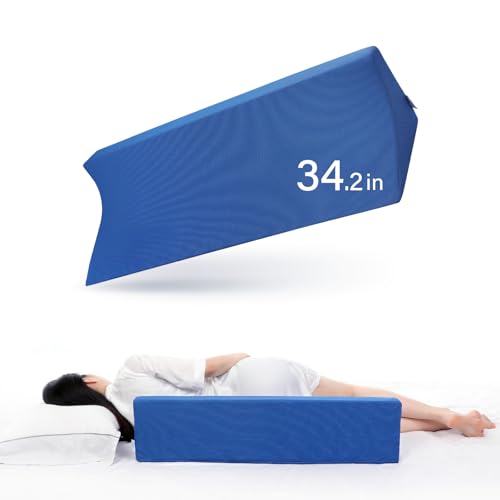
At 34.2 inches long, this wedge offers the greatest length among the matching options, which may suit a setup needing support extending from the shoulders toward the hips. Its R-shaped form is designed for head, neck and shoulder support, and the product name specifies a 30-degree incline. The maker says the cover is machine washable. This option is a practical fit when a longer wedge can lie flat on the bed without crowding the sleeper. Its 10.8-inch width is narrower than the 20-inch-wide option, so it may not suit buyers seeking a broad support surface.
Bottom line: Choose this when longer shoulder-to-hip coverage matters more than a wider footprint.
20-Inch 30-Degree Positioning Wedge

This wedge has a compact 20-by-10-inch footprint and a 5-inch thickness, making it the smallest option for beds with limited positioning space. Its name identifies a 30-degree incline, and the maker says the wave-shaped surface is intended to provide breathable support for side positioning. The maker also describes it for supporting the back, legs or abdomen. It may suit someone who needs a smaller piece that is easier to place around a particular body area. The shorter length provides less continuous coverage than the 34.2-inch wedge, so it is a less suitable choice when extended torso support is the priority.
Bottom line: Choose this when a compact wedge is more useful than extended coverage.
JJ CARE 23.6-Inch Curved 30-Degree Wedge

This curved 23.6-inch wedge stands apart with a non-skid bottom and a pillow case, features that can matter when a support needs to stay positioned on the mattress. Its product name specifies a 30-degree angle, and the maker identifies high-density foam and polyester mesh fabric. The length falls between the 20-inch compact wedge and the 34.2-inch extended option, while its 7.9-inch width is the narrowest of these matches. That slim footprint may suit a confined setup, but it offers less side-to-side area than the other two options.
Bottom line: Choose this if a non-skid bottom and intermediate length fit your setup.
How to choose a 30-degree bed wedge
Start with the body area that needs support, then match the wedge length and width to the available bed space. A short wedge can support a localized area, while a longer wedge can span more of the torso; the products here range from 20 to 34.2 inches long. Measure the clear space between the sleeper and bed edge before choosing, and leave room for bedding and caregiver access. A 30-degree tilt is a positioning angle, not a guarantee of comfort or clinical suitability. For a person who cannot shift position independently, get guidance from a clinician or trained caregiver before relying on a wedge, and make sure the position does not compromise breathing or safe movement.
Use this quick guide to match the main tradeoff:
| Need | Consider |
|---|---|
| Shorter footprint | 20-inch wedge |
| More length | 34.2-inch wedge |
| Non-skid base | Curved 23.6-inch wedge |
Bed wedge sizing and placement
Measure the usable mattress area before placing a positioning wedge, since a few inches can determine whether a support fits without pushing the sleeper toward the edge. Compare both length and width: a longer wedge covers more of the body, while width affects how much room remains beside it. The dimensions are the useful starting point, but the mattress size, bed rail position and the sleeper’s body proportions also affect fit. Keep the wedge fully on the mattress and check that bedding does not bunch beneath it. If a bed rail, adjustable frame or medical equipment is involved, confirm the arrangement with the care team before use.
Never force a wedge into a gap or use it to bridge a space between a mattress and rail. A secure fit and access for repositioning matter as much as the incline.
Safe use of a positioning wedge
Use a positioning wedge only as part of a safe positioning plan when the sleeper needs assistance, because a cushion cannot replace regular checks or caregiver help. A person who cannot reposition independently may need individualized repositioning intervals; there is no single interval that fits every condition, mattress and care plan. Check skin and comfort during care, and change the position if the wedge causes pressure, slipping or restricted movement. Keep the face and airway clear, and do not place padding where it could interfere with breathing. Caregivers should use trained moving techniques rather than pulling a person across the bed with the wedge.
For anyone recovering from surgery or living with limited mobility, ask the clinician which positions and support locations are appropriate. Stop and reassess if the sleeper slides or cannot maintain a stable position.
Frequently Asked Questions
How do I check whether a 30-degree wedge will fit my bed?
Measure the clear mattress area where the wedge will sit, including both length and width. Leave usable room around it for bedding, bed rails and caregiver access rather than choosing by length alone.
How often should someone be repositioned in bed?
There is no universal interval because mobility, skin condition, support surface and medical needs change the schedule. A care team should set the interval for someone who cannot shift position independently, with checks for discomfort or skin changes.
What should I check before using a wedge after surgery?
Confirm with the surgical care team that the angle and supported body area are appropriate for the procedure. Also check that the wedge does not press on a restricted area or make getting in and out of bed unsafe.
Does a 30-degree wedge work with bed rails?
It can only be used safely if the wedge remains stable and does not create a gap between the mattress and rail. Check the full setup with a caregiver or clinician before positioning someone who cannot move independently.