
5 Harness Car Seats: Graco, Safety 1st and Baby Trend

For a forward-facing harness that starts at 26.5 pounds and later converts to two booster modes, choose Graco Tranzitions 3-in-1, Proof; its three stages distinguish it from the two-stage Safety 1st Grand 2-in-1, Old Soul and the feature-described Baby Trend Hybrid SI 3-in-1, Dash Orchid. Because these seats have different width and harness specifications, compare your child’s current fit and vehicle space before choosing.
We earn a commission if you buy through links on this page. As an Amazon Associate I earn from qualifying purchases. Products are compared on manufacturer specifications, not hands-on testing.
- Best overall: Graco Tranzitions 3-in-1, Proof – Its forward-facing harness covers 26.5–65 pounds and transitions to highback and backless booster modes.
- Best for narrow layouts: Safety 1st Grand 2-in-1, Old Soul – The maker says the slim design is intended to fit three across in most vehicles.
- Best for comfort features: Baby Trend Hybrid SI 3-in-1, Dash Orchid – It pairs an adjustable headrest with cushioned seating and dual cup holders.
| Product | Best for | Modes | Harness range | Width | Shop |
|---|---|---|---|---|---|
| Graco Tranzitions 3-in-1, Proof | Three-stage growth | 3 | 26.5–65 lb | 10.47 in | Check Price on Amazon |
| Safety 1st Grand 2-in-1, Old Soul | Three-across planning | 2 | 40–65 lb | 17.75 in | Check Price on Amazon |
| Baby Trend Hybrid SI 3-in-1, Dash Orchid | Cushioned daily rides | 3 | — | 18 in | Check Price on Amazon |
5 Harness Car Seats Compared
Compare each seat’s harness range, growth stages and width against your child’s size and available vehicle space.
Graco Tranzitions 3-in-1, Proof

Graco Tranzitions 3-in-1, Proof is the only seat here with both highback and backless booster stages after its forward-facing harness mode. The harness stage covers 26.5–65 pounds; the highback booster and backless booster each cover 40–100 pounds. Its no-rethread adjustment moves the headrest and harness together, and the headrest has nine positions. At 15.5 pounds, it is a portable option for families who move seats between vehicles. The harness maximum is 65 pounds, so children who still need a harness beyond that limit will need a different seat.
Bottom line: Choose this if you want one seat with harness, highback and backless booster stages.
Safety 1st Grand 2-in-1, Old Soul
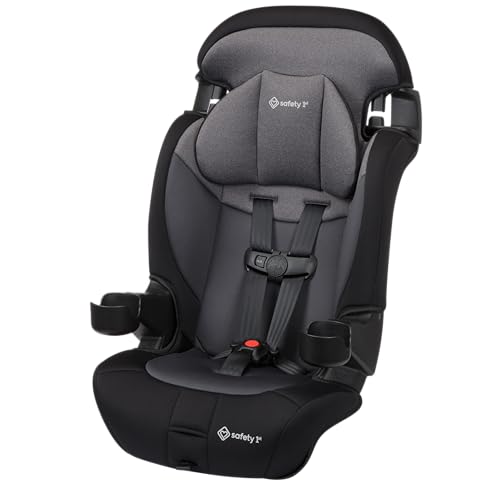
Safety 1st Grand 2-in-1, Old Soul combines a forward-facing harness stage with a highback belt-positioning booster stage, without a backless mode. The harness fits children weighing 40–65 pounds and measuring 43.4–49 inches tall; the highback booster range is 40–100 pounds and 43.4–52 inches. The maker describes its slim design as intended to fit three across in most vehicles, a useful distinction for carpools. Its weight is 8.75 pounds. The harness minimum is 40 pounds, so it is not the match for a smaller child who needs a forward-facing harness.
Bottom line: Choose this when its 40-pound harness minimum suits your child and you are planning a three-across layout.
Baby Trend Hybrid SI 3-in-1, Dash Orchid

Baby Trend Hybrid SI 3-in-1, Dash Orchid is distinguished by its cushioned seat, dual cup holders and side-impact-focused design, alongside an adjustable headrest and three-stage growth concept. The specifications characterize its stages as harness and booster transitions but do not give child weight or height ranges for checking harness fit. At 18 inches wide and 16 pounds, it is the widest and heaviest of these three seats. Buyers choosing a harness seat for a child near a weight or height limit should confirm the usable harness range before ordering.
Bottom line: Consider this if the comfort features appeal and you can verify its harness limits for your child.
How to choose a 5 harness car seat
Start with the child’s current height and weight, then confirm that the forward-facing harness range covers both. A seat’s maximum harness weight matters: Graco Tranzitions 3-in-1, Proof supports harness use up to 65 pounds, while Safety 1st Grand 2-in-1, Old Soul gives a 40–65-pound range. Do not move a child to a booster solely because the seat has that mode; the child must fit the booster correctly and be mature enough to sit upright for the entire ride. A booster positions the vehicle’s lap-and-shoulder belt rather than restraining the child with an internal harness. Check the vehicle manual for seating-position and installation requirements, and the car seat manual for its belt or lower-anchor installation method.
Seat width and three-across fit
Measure the usable bench width and account for buckles, door contours and the space needed to install and tighten each restraint. Safety 1st Grand 2-in-1, Old Soul is 17.75 inches wide and is designed by its maker for three-across use in most vehicles, but that claim cannot guarantee fit in a particular vehicle. The widths for Graco Tranzitions 3-in-1, Proof and Baby Trend Hybrid SI 3-in-1, Dash Orchid are 10.47 and 18 inches respectively; check the measurement basis because a seat width may not represent the widest point or installed footprint. A practical rule: if two adjacent seats leave less than about an inch of room to reach a buckle, test the actual arrangement before relying on it. Never force three seats into a row if any restraint cannot be installed securely.
Use this comparison to narrow the fit, then check the child’s growth stage against the manufacturer’s limits.
| Need | Starting point | Key fit check |
|---|---|---|
| Harness then two booster stages | Graco Tranzitions 3-in-1, Proof | Harness range is 26.5–65 lb |
| Harness then highback booster | Safety 1st Grand 2-in-1, Old Soul | Harness range is 40–65 lb |
| Three-stage design with added comfort features | Baby Trend Hybrid SI 3-in-1, Dash Orchid | Confirm child weight and height limits |
When to switch from harness to booster
Switch only when the child has outgrown the seat’s harness limits and meets the booster’s fit range; the presence of a booster mode alone is not enough. For Graco Tranzitions 3-in-1, Proof, the harness stage ends at 65 pounds, while its booster stages begin at 40 pounds, so stage ranges overlap but do not mean every child is ready at 40 pounds. For Safety 1st Grand 2-in-1, Old Soul, the harness and highback stages also overlap from 40 to 65 pounds. In a belt-positioning booster, the lap belt should lie low across the upper thighs and the shoulder belt should cross the chest and shoulder, not the neck or face. A child who slouches or moves the belt out of place is not ready for booster use.
Harness installation and ride safety
A forward-facing harness seat must be installed tightly, with no more than 1 inch of movement side to side or front to back at the belt path. Use either the vehicle seat belt or lower anchors as allowed by both manuals; do not use both unless the manufacturer permits it. A top tether reduces forward head movement in a crash and should be attached for forward-facing installation when the vehicle provides an approved tether anchor. Harness straps should lie flat and snug, with the chest clip positioned at armpit level. After installation, verify the seat angle and harness routing for the child’s size rather than assuming one setup works for every stage.
Frequently Asked Questions
How tight should a forward-facing car seat be?
A correctly installed seat should move no more than 1 inch side to side or front to back when checked at the belt path. Attach the top tether for forward-facing use when the vehicle and seat provide compatible anchors.
When can a child use a belt-positioning booster?
A child should meet the booster’s height and weight limits and remain seated upright for the whole ride. The lap belt should stay low on the thighs and the shoulder belt should cross the chest and shoulder.
Should I use lower anchors and the seat belt together?
Usually, use one installation method unless both the car seat and vehicle manuals explicitly allow using them together. Lower-anchor weight limits can include the child and seat combined, so check the manuals as the child grows.
Where should the harness chest clip sit?
Position the chest clip at armpit level after tightening the harness straps. Straps should lie flat and snug, with no slack that can be pinched at the shoulder.