
Ultrasonic Mouse Repellers: 4 Models Compared

Ultrasonic Mouse Repellent, 2 Pack is the strongest fit for most people because it offers three selectable settings and an audible TEST mode for setup. Choose another option if you need multiple units in a pack or want a device with a flashing light and simulated cat sounds.
Ultrasonic repellers use high-frequency sound intended to discourage pests, but they should not replace sealing entry points or using appropriate traps.
We earn a commission if you buy through links on this page. As an Amazon Associate I earn from qualifying purchases. Products are compared on manufacturer specifications, not hands-on testing.
- Best overall: Ultrasonic Mouse Repellent, 2 Pack – Three ultrasonic settings and an audible TEST mode make setup more adjustable.
- Best for six outlets: Upgraded Ultrasonic Indoor Pest Repeller, 6 Pack – The six-pack provides the most units among the options.
- Best for added signals: High Power Ultrasonic Rodent Repellent – Combines ultrasonic waves with a flashing light and simulated cat sounds.
| Product | Best for | Pack count | Frequency or settings | Additional features | Shop |
|---|---|---|---|---|---|
| Ultrasonic Mouse Repellent, 2 Pack | Adjustable settings | 2 units | 22–35 kHz; 25 kHz; combined | Audible TEST mode | Check Price on Amazon |
| Upgraded Ultrasonic Indoor Pest Repeller, 6 Pack | Multiple rooms | 6 units | 10–65 kHz | — | Check Price on Amazon |
| Fooxem Ultrasonic Pest Repeller, 7 Pack | Three modes | 7 units | Enhanced, Medium, Silent | — | Check Price on Amazon |
| High Power Ultrasonic Rodent Repellent | Garage deterrence | — | — | Flashing light; simulated cat sounds | Check Price on Amazon |
Ultrasonic Mouse Repellers Compared
Compare the settings and physical features that distinguish these indoor plug-in devices.
Ultrasonic Mouse Repellent, 2 Pack

Three selectable settings and an audible TEST mode distinguish this two-unit repeller. The maker says ULTRA sweeps from 22–35 kHz, TRANS delivers a steady 25 kHz output, and DUO combines the two; the TEST mode lets you check sound operation during setup. The product is intended for indoor areas including garages, attics, basements, kitchens, and pantries. It suits buyers who want settings to adjust by room. Ultrasonic sound does not travel through walls and can be blocked by furniture, so this device is not a substitute for closing entry gaps or trapping active mice.
Bottom line: Choose it if adjustable sound modes and a setup test are priorities.
Upgraded Ultrasonic Indoor Pest Repeller, 6 Pack
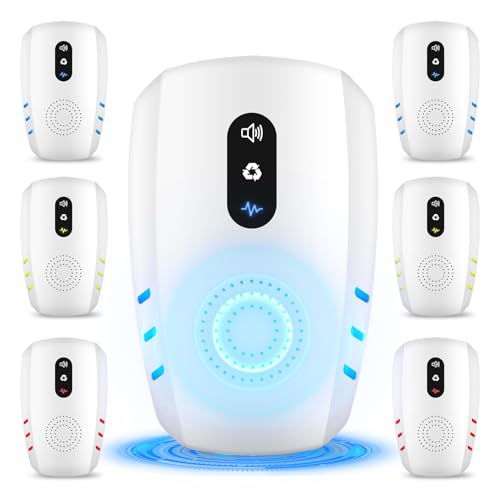
The six-pack is the largest pack among these choices, which may suit a buyer planning to place units in several rooms. The maker says the devices use multi-frequency ultrasonic waves in a 10–65 kHz range and are intended for indoor mice, rats, and other common pests. Each unit measures 3.23 inches high, 2.05 inches long, and 1.38 inches wide. The product is a broad pest-deterrent option rather than a mouse-only device. The maker does not establish a placement range or coverage area, so confirm outlet placement and room coverage needs before choosing it for a particular layout.
Bottom line: Pick it when you want six compact units for separate indoor spaces.
Fooxem Ultrasonic Pest Repeller, 7 Pack

Three named modes and a seven-unit pack set this indoor repeller apart. The maker describes Enhanced, Medium, and Silent settings and recommends an unobstructed wall outlet approximately 10–50 inches above the floor. Intended spaces include bedrooms, kitchens, basements, attics, garages, and pantries. The 7-pack suits buyers who want units for multiple indoor areas and a choice of operating mode. Because ultrasound is readily blocked by furniture and does not pass through walls, a unit in one room should not be assumed to protect adjacent rooms; plan placement for each open area that needs attention.
Bottom line: Choose it for multiple rooms where three selectable modes are useful.
High Power Ultrasonic Rodent Repellent

A flashing light and simulated cat sounds add signals beyond ultrasound, setting this device apart from the other options. The maker says it is designed primarily to help deter rodents and recommends using it as part of integrated pest management, including sealing entry points and maintaining a clean environment. Its dimensions are 9.84 inches high, 9.25 inches long, and 8.66 inches wide, so it is substantially larger than the compact plug-in choices. The title claims coverage up to 6,000 square feet, but room layout and obstacles matter; do not treat that figure as proof that one unit covers separated rooms.
Bottom line: Pick it if you want a larger device with light and sound signals.
How to Choose an Ultrasonic Mouse Repeller
Choose by room layout and response plan, not by frequency range alone. Ultrasound is sound above 20 kHz, but a higher number on a device does not by itself establish that mice will leave or that a room is covered. Mouse repellers are best treated as a possible supplementary deterrent; seal openings and use suitable traps when there is evidence of activity. For placement, use one device per open room rather than expecting sound to cross walls. If a room has furniture or stored boxes between the outlet and likely mouse paths, choose a clear outlet location or address the access route directly. Avoid relying on a repeller as the only response to droppings, gnawing, or repeated sightings.
Where to Place a Plug-In Repeller
Place a plug-in repeller in an unobstructed outlet in the room where activity occurs. Ultrasound travels in a line and is absorbed or blocked by soft furnishings, stored goods, and walls, so a hallway unit is not a dependable substitute for units in separate rooms. One product here recommends positioning its unit 10–50 inches above the floor; that is a specific maker recommendation, not a universal placement standard. Keep the outlet accessible and avoid placing the device behind a sofa, cabinet, or stacked storage. For mice entering through a gap, sealing the opening matters more than moving a sound source around the room.
Ultrasonic Devices Compared With Mouse Control
Ultrasonic repellers emit high-frequency sound, while exclusion blocks routes into a structure and traps physically capture rodents. Repellers do not remove a mouse or close a hole, and mice can become accustomed to repeated stimuli. Use the table to match the tool to the task; a persistent infestation may require a coordinated approach rather than a single device.
| Need | Useful approach | Why |
|---|---|---|
| Discourage activity in an open room | Ultrasonic device as supplement | Sound may be blocked by walls and objects |
| Stop entry through a crack | Seal the opening | A sound device does not close access routes |
| Address a mouse already indoors | Appropriate traps and cleanup | A repeller does not capture or remove rodents |
Safety and Realistic Expectations
Keep ultrasonic devices supplementary and use caution around pet rodents. Mice and rats hear frequencies beyond the range of human hearing, so a device that seems silent to a person may still be audible to rodents; do not put a pet rodent’s enclosure in the same room as a repeller. Some household pets may also hear high-frequency sound. Follow safe trapping practices and keep traps inaccessible to children and pets. A flashing light or simulated animal sound is an added feature, not a guarantee of pest removal. If activity continues after entry points are sealed and traps are used, consider qualified pest-control help rather than depending on a repeller alone.
Frequently Asked Questions
Do ultrasonic mouse repellers work through walls?
No, ultrasound does not pass reliably through walls or around solid obstacles. Use a device in each open room where you want to try this supplemental deterrent.
How high should a mouse repeller plug in?
One device maker recommends an unobstructed outlet 10–50 inches above the floor. Keep the sound path clear of furniture and stored items, since obstacles can reduce exposure.
Can mice get used to ultrasonic sound?
Yes, rodents may habituate to repeated stimuli, so a repeller should not be the only control measure. Seal openings and use suitable traps if there are signs of activity.
Are ultrasonic mouse repellers safe around pet mice?
Do not place a pet mouse’s enclosure in the same room as an ultrasonic repeller. Mice can hear high frequencies beyond human hearing, even when the device seems silent to people.
Should I use traps with an ultrasonic repeller?
Yes, traps can address rodents already indoors while exclusion blocks future entry. A repeller neither captures mice nor seals gaps, so it is only a supplemental option.