
Best Porcelain Sink Chip Repair Kits Compared by Fit

For most porcelain sink chips, Ankita White Tub Repair Kit is the clearest fit because its thick white paste is made to stay in place on cracked sinks and chipped edges. Choose a brush-on touch-up product for shallow scratches or paint imperfections; deeper damage calls for a repair compound that can fill rather than merely cover.
We earn a commission if you buy through links on this page. As an Amazon Associate I earn from qualifying purchases. Products are compared on manufacturer specifications, not hands-on testing.
- Best overall: Ankita White Tub Repair Kit – Its high-viscosity white paste is designed to fill sink cracks and chipped edges without running.
- Best for mixed surfaces: Multi-Surface Porcelain Repair Kit, 50 g – The 50 g kit is described for enamel, acrylic and ceramic repairs and includes two repair agents.
- Best for surface marks: DWIL Tub and Tile Touch-Up Paint – The 1.5 fl oz acrylic-resin touch-up paint applies with a built-in brush.
- Best for color matching: Tub and Fiberglass Shower Repair Kit, 3.7 oz – The kit identifies several finish options, including white, biscuit, almond and bone.
| Product | Best for | Form | Amount (g) | Finish options | Shop |
|---|---|---|---|---|---|
| Ankita White Tub Repair Kit | Filling chipped edges | High-viscosity paste | — | White | Check Price on Amazon |
| Multi-Surface Porcelain Repair Kit, 50 g | Several surface types | Two-part repair agent | 50 g | Color match | Check Price on Amazon |
| DWIL Tub and Tile Touch-Up Paint | Surface imperfections | Acrylic-resin paint | 42.6 g | White | Check Price on Amazon |
| Loctite Ceramic Repair Glue, 20 g | Small ceramic repairs | Repair glue | 20 g | Glossy white | Check Price on Amazon |
| Tub and Fiberglass Shower Repair Kit, 3.7 oz | Alternate glaze shades | Repair kit | 104.9 g | Multiple shades | Check Price on Amazon |
Porcelain sink chip repair options
Match the repair material to the damage depth and the finish you need to blend.
Ankita White Tub Repair Kit

Unlike brush-on touch-up paint, this kit uses a thick paste that the maker says stays in place when filling cracked porcelain sinks and chipped tub edges. The white repair material is intended for porcelain, fiberglass, acrylic, enamel, cast iron, plastic and ceramic, so it can suit a bathroom with more than one surface type. Its white finish is the key constraint: a sink with an aged, off-white glaze may show a color mismatch. The maker also claims the cured finish resists water and yellowing, but the specifications do not establish a cure time.
Bottom line: Pick this when the chip needs filling and a white repair finish is an appropriate match.
Multi-Surface Porcelain Repair Kit, 50 g
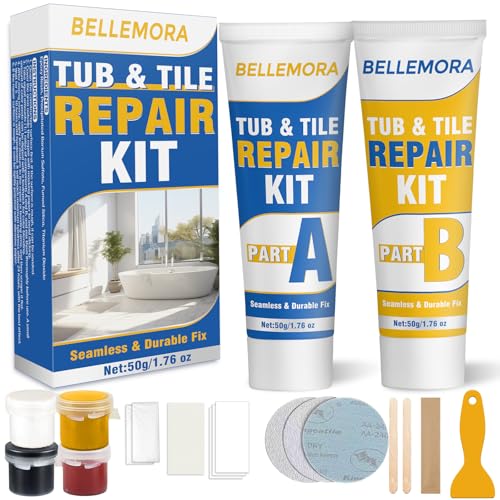
This is the only option that explicitly includes repair agents A and B, making it a fit when a chip needs a compound rather than a thin coat of paint. The 50 g kit also includes a scraper, six stickers and a mixing board. It is intended for enamel, acrylic and ceramic, including sinks, tubs and tile. The color-match designation may help when standard white does not suit the basin, but no specific shade choices appear in its features. The maker says the cured layer is waterproof and glossy; this option requires mixing, unlike brush-on touch-up paint.
Bottom line: Choose it for a two-part compound and several compatible bathroom surface types.
DWIL Tub and Tile Touch-Up Paint

For small scratches, spots or paint imperfections, this product offers a brush-on acrylic-resin touch-up rather than a moldable filler. Its built-in brush allows targeted application, and the 1.5 fl oz container is also intended for tile, tubs, enamel and toilets. The maker says the formula dries quickly and resists water and flaking. The limitation is its paint format: it is better aligned with surface coverage than with filling a deep or open chip, where a repair compound is more suitable. Its white color also makes glaze matching important.
Bottom line: Pick this for shallow marks that need a brush-applied white coating.
Loctite Ceramic Repair Glue, 20 g

This compact 20 g tube is specifically positioned as ceramic and porcelain repair glue, unlike the broader multi-surface kits. It is intended for chips, cracks and scratches and produces a glossy white finish. The maker says the bond is water-resistant and can be applied without professional tools. The small amount makes it a more limited option for a large repair area, and the glossy white result may stand out against a colored or worn basin.
Bottom line: Choose it for a small porcelain or ceramic repair where glossy white suits the sink.
Tub and Fiberglass Shower Repair Kit, 3.7 oz

This kit stands out for naming multiple possible finish shades, including white, biscuit, almond, bone and black, rather than presenting only a white repair. The 3.7 oz size is intended for chips, dents, holes and scratches on porcelain sinks as well as tubs, tile, toilets and cultured marble. The maker says the material cures waterproof and firm. The range of shade names is useful only if the selected option matches the sink; confirm which shade you will receive before ordering. It is also a broader repair kit, not a simple brush-on paint.
Bottom line: Pick it when a named non-white shade may better match the basin.
Choose filler or touch-up paint by chip depth
A shallow surface scuff needs less material than a chip with a visible depression. Brush-on paint such as DWIL Tub and Tile Touch-Up Paint can cover small scratches and spots, while thicker paste or a repair compound is the more appropriate format when material must fill an edge or cavity. As a practical screening rule, if the chip is deeper than about 1/8 inch, favor a filler-style repair over a thin paint; that is a general repair threshold, not a guarantee for every product. Porcelain sinks have a hard glazed surface, and the repair’s color and gloss can remain visible even when the damaged area is filled. Compare the damaged spot with the surrounding glaze in daylight before choosing a white shade.
Prepare the porcelain sink before applying a repair
A clean, dry surface is essential for a repair compound or touch-up coating to adhere. Remove soap film and residue, rinse, and let the area dry fully; moisture trapped in a chip can interfere with adhesion. Avoid expanding the damaged area while removing loose fragments, and do not use a repair material over a moving crack or an actively leaking basin. Small chips are generally simpler to fill than damage that reaches through the sink body. Bathroom repair compounds may contain reactive ingredients, so ventilate the room and keep uncured material away from skin and children. Check the product’s cure time before using water, since the options do not provide a uniform return-to-use interval.
Compare repair formats for a chipped sink
Repair format determines whether the material can fill a cavity or primarily cover a surface mark. A paint brush gives precision for thin imperfections; a thicker paste or two-part compound is better suited to building up a chip. Glue is a different format and works best when the repair itself fits its intended bonding use. Use this guide to narrow the choices before matching the finish:
| Damage or need | Format to consider | Trade-off |
|---|---|---|
| Scratch or small spot | Brush-on paint | Coverage, not substantial fill |
| Edge chip or shallow cavity | Thick paste or repair compound | Application and cure require care |
| Small ceramic repair | Repair glue | Limited 20 g amount in this option |
| Non-white finish match | Multi-shade kit | Confirm the selected shade |
Do not assume that a glossy white repair will disappear on an older sink; glaze color can shift with age and cleaning.
Check finish match and safe cure before use
Finish matching matters because a repair can be structurally sound yet still show as a contrasting spot. White, biscuit, almond and bone are distinct shades, and a product labeled white is not automatically a match for every white sink. Test a tiny amount in an inconspicuous area only if the product directions permit it. Keep the sink dry for the full cure period specified by the maker, and do not expose uncured material to standing water or routine cleaning. For a chip that exposes a sharp edge, avoid contact with the damaged spot until it is repaired; a repair coating should not be treated as a substitute for replacing a badly cracked or leaking basin.
Frequently Asked Questions
Can porcelain sink chip repair fill a deep chip?
A filler-style paste or compound is better suited to a cavity than thin touch-up paint. For damage deeper than about 1/8 inch, favor a filling format and assess whether the chip extends beyond the glaze.
How do I match white porcelain sink repair?
Compare the repair shade with the sink in daylight, since white, biscuit, almond and bone can look different against aged glaze. A glossy finish can also remain visible even when the color is close.
Can I use touch-up paint on a sink chip?
Brush-on paint can cover shallow scratches and small surface imperfections, but it is not the best format for a deep cavity. Use a filler-style repair if the chip needs material built up.
How long should a repaired sink stay dry?
Keep the basin dry for the full cure time specified for the chosen repair material. The available products do not share one cure interval, so confirm that interval before planning sink use.
Is porcelain sink repair safe around children?
Keep children away from uncured repair compounds and ventilate the room while applying them. Do not allow water or skin contact with the repair until its specified cure is complete.