
Gloves for Trigger Finger: 4 Compression Options Compared

For trigger finger, FREETOO All-Around Compression Gloves is the closest match because it covers the hand through the fingertips and includes targeted silicone pressure points. Choose a fingerless option instead if fingertip access for typing or household tasks matters more than full-finger coverage.
We earn a commission if you buy through links on this page. As an Amazon Associate I earn from qualifying purchases. Products are compared on manufacturer specifications, not hands-on testing.
- Best overall: FREETOO All-Around Compression Gloves – Full-finger coverage and targeted silicone pressure points distinguish it from the fingerless choices.
- Best for typing: DRNAIETY Fingerless Compression Gloves – Its finger-free design leaves fingertips available for phone use, typing and cooking.
- Best for copper-infused fabric: ComfyBrace Copper Arthritis Gloves – The maker describes copper-infused fibers intended to wick moisture and control odors.
| Product | Best for | Finger coverage | Sizing | Distinct feature | Shop |
|---|---|---|---|---|---|
| FREETOO All-Around Compression Gloves | Full-finger coverage | Fingertips to wrist | XS–XL; palm 6.3–9.7 in | Silicone knuckle pressure points | Check Price on Amazon |
| DRNAIETY Fingerless Compression Gloves | Everyday fingertip access | Fingerless | Small | Breathable fabric | Check Price on Amazon |
| ComfyBrace Copper Arthritis Gloves | Moisture-conscious wear | Fingerless | Medium | Copper-infused fibers | Check Price on Amazon |
| Copper Compression Fingerless Gloves | Grip-friendly tasks | Fingerless | Large | Non-slip palm grips | Check Price on Amazon |
Gloves for Trigger Finger
Compare these compression gloves by coverage, fit guidance and the design feature that best matches your daily activities.
FREETOO All-Around Compression Gloves

FREETOO is the only option here that covers the fingertips as well as the hand and wrist, making it the closest fit for someone seeking compression around the whole hand. Its maker describes 360-degree compression and silicone pressure points at key knuckles. Choose a size by measuring palm circumference: the range runs from 6.3 inches in XS to 9.7 inches in XL. The full-finger construction can be less convenient than open-finger gloves for tasks requiring direct fingertip contact, so consider your typing and handling needs before choosing.
Bottom line: Pick these if you want fingertip-to-wrist coverage with targeted knuckle pressure.
DRNAIETY Fingerless Compression Gloves
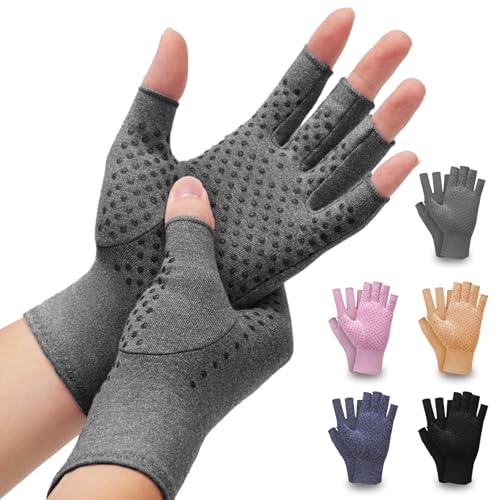
DRNAIETY keeps the fingers open, unlike the fingertip-to-wrist coverage of FREETOO All-Around Compression Gloves, so phone use, typing and cooking remain accessible. The maker describes the fabric as breathable and dehumidifying, with compression intended to support areas affected by hand discomfort. The variant is gray in Small. That single size may not suit every hand, so this option is most appropriate when its fit works and open fingertips matter more than compression over the full finger length.
Bottom line: Choose these when accessible fingertips matter more than full-finger coverage.
ComfyBrace Copper Arthritis Gloves

ComfyBrace pairs an open-finger design with copper-infused fibers, while DRNAIETY Fingerless Compression Gloves emphasizes breathable fabric without a copper claim. The maker says the fibers help wick moisture and control odors while maintaining breathable warmth and compression. The version is black in Medium. Because the fingers remain open, these gloves do not compress the full length of each finger; choose another style if that coverage is central to what you need. The fabric feature may matter most during longer stretches of wear or repetitive daily tasks.
Bottom line: Pick these if open fingertips and moisture-wicking fabric are priorities.
Copper Compression Fingerless Gloves

Copper Compression stands out for non-slip palm grips alongside its open-finger construction, a useful distinction for handling objects during tasks such as typing or crocheting. The maker describes copper-infused fibers and four-way stretch, with compression intended to support hand comfort. The version is black in Large. Like the other fingerless choices, it leaves the fingers uncovered, so it may not meet a need for compression along the full finger. Consider it when grip and mobility take precedence over fingertip coverage.
Bottom line: Choose these for open-finger mobility with palm grip features.
How to choose gloves for trigger finger
Start with the coverage you want: fingertip-to-wrist gloves cover more of each finger, while fingerless styles keep the fingertips available. Compression gloves are stretchy garments that apply gentle pressure; they are not the same as a rigid splint designed to hold a joint still. For fit, measure palm circumference at its widest point, excluding the thumb, and use the maker’s sizing chart; a glove that is too tight can cause discomfort or numbness. If a finger catches or locks, gloves should not replace clinical evaluation. Choose FREETOO All-Around Compression Gloves for full-finger coverage, or one of the fingerless options when direct fingertip contact matters more.
Fingerless versus full-finger compression gloves
Full-finger gloves provide fabric over the fingertips, while fingerless designs expose the fingers for touch and dexterity. Neither design alone establishes that a glove will prevent catching or treat trigger finger. This table highlights the practical choice based on coverage and activity.
| Need | Coverage to consider | Trade-off |
|---|---|---|
| Compression over fingertips | Full-finger | Less direct fingertip contact |
| Typing or handling small objects | Fingerless | Finger lengths remain uncovered |
For extended tasks needing touch feedback, fingerless gloves are generally easier to work in. If your main concern is support around the finger itself, check exactly where the glove fabric ends and whether the coverage matches your comfort needs.
Getting a comfortable glove fit
A compression glove should feel snug without causing tingling, color change or increasing pain. Measure the palm and match the number to the relevant size range; the FREETOO chart, for example, spans palm circumferences from 6.3 to 9.7 inches across XS to XL. Hand swelling can change through the day, so a size that feels comfortable at one time may feel restrictive later. Remove the glove promptly if your fingers become numb, unusually cold or discolored. A fit that bunches at the finger joints can also interfere with movement, so test hand motion gently before wearing the glove for a long task.
When trigger finger needs more than a glove
Trigger finger can cause a finger to catch, click or lock when bending and straightening. A compression glove may offer warmth or gentle support, but it does not hold the affected joint in a prescribed position like a splint. Persistent locking, worsening pain or difficulty straightening a finger warrants advice from a qualified clinician; do not force a locked finger straight. For a snug glove, stop wearing it if numbness, tingling or skin color changes develop. If your care plan includes a splint or exercise, use the glove only in a way that does not interfere with that plan.
Frequently Asked Questions
Can compression gloves stop trigger finger from locking?
Compression gloves are not designed to hold a finger joint still, so they should not be relied on to stop locking. A finger that repeatedly catches or locks merits clinical advice, especially if straightening becomes difficult.
Should trigger finger gloves cover the fingertips?
Coverage depends on whether fingertip compression or dexterity matters more. Full-finger styles reach the fingertips, while fingerless styles leave them exposed for touch-sensitive tasks.
How should compression gloves fit on the hand?
A compression glove should feel snug but should not cause numbness, tingling, increasing pain or color change. Measure palm circumference and use the glove’s size range rather than choosing by usual clothing size.
When should I take compression gloves off?
Remove a glove if fingers become numb, unusually cold, discolored or more painful. These signs can indicate that the fit is too restrictive and should be addressed before wearing it again.
Are compression gloves the same as trigger finger splints?
No. Compression gloves wrap the hand with stretchy fabric, while a splint is designed to limit movement at a joint; ask a clinician which approach suits your symptoms.