
Best Brazing Rod for HVAC: 3 Options Compared

For most copper-to-copper HVAC/R work, BCuP-2 16-Inch Flat Rods is the best fit because its BCuP-2 rods are self-fluxing on copper and include flux for brass or bronze. Choose BCuP-5 14-Inch Rods or BCuP-5 10-Inch Rods instead if you specifically want BCuP-5 with 15% silver; verify the filler alloy is compatible with the joint metals before brazing.
We earn a commission if you buy through links on this page. As an Amazon Associate I earn from qualifying purchases. Products are compared on manufacturer specifications, not hands-on testing.
- Best overall: BCuP-2 16-Inch Flat Rods – BCuP-2 is self-fluxing on copper-to-copper joints, and the kit includes flux for brass or bronze.
- Best for longer sticks: BCuP-5 14-Inch Rods – Its 14-inch BCuP-5 rods are longer than the 10-inch option.
- Best for shorter rods: BCuP-5 10-Inch Rods – Its 10-inch BCuP-5 rods suit buyers who prefer a shorter stick.
| Product | Best for | Alloy | Rod length | Shop |
|---|---|---|---|---|
| BCuP-2 16-Inch Flat Rods | Copper-to-copper joints | BCuP-2 | 16 in | Check Price on Amazon |
| BCuP-5 14-Inch Rods | 15% silver alloy | BCuP-5, 15% silver | 14 in | Check Price on Amazon |
| BCuP-5 10-Inch Rods | Shorter 15% silver rods | BCuP-5, 15% silver | 10 in | Check Price on Amazon |
Brazing Rods for HVAC
Match the filler alloy to the joint metals, then compare rod length and profile for handling.
BCuP-2 16-Inch Flat Rods

The 16-inch length sets these BCuP-2 rods apart, reducing how often a user needs to change sticks during a job. Each flat rod measures 0.050 × 1/8 inch, and the pack includes 100 g of flux for brass or bronze work. The maker gives a melting range of 1,310–1,460°F and says the rods are self-fluxing on copper-to-copper joints. These suit HVAC/R work involving copper tubing, especially when the added reach is useful. The limitation is that they are BCuP-2 rather than the 15% silver BCuP-5 alloy found in the other two options.
Bottom line: Choose these for longer BCuP-2 rods and copper-to-copper joints.
BCuP-5 14-Inch Rods

The 15% silver BCuP-5 alloy is the main distinction of these 14-inch flat rods. The maker specifies a 0.050 × 1/8-inch profile, a solidus of 1,190°F, a liquidus of 1,475°F, and a brazing range of 1,300–1,500°F. The maker also says a gas brazing torch is suitable and calls for flux when joining copper alloy such as brass. This option suits HVAC/R buyers who want BCuP-5 and a longer rod than the 10-inch alternative. Its 14-inch length is shorter than the 16-inch BCuP-2 rods, and brass work requires flux.
Bottom line: Choose these if you want 15% silver BCuP-5 in a 14-inch stick.
BCuP-5 10-Inch Rods
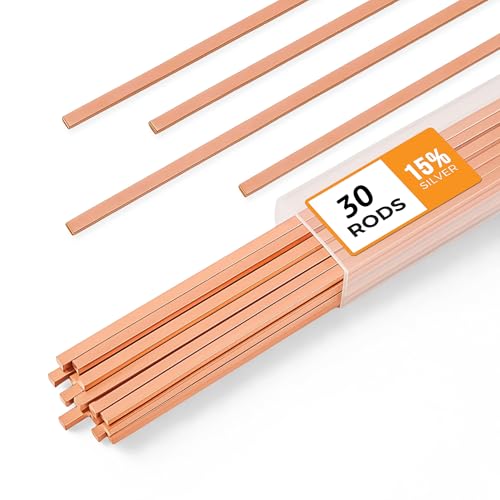
The 10-inch stick length distinguishes these BCuP-5 rods from the 14- and 16-inch options. The product name specifies 15% silver and a flat 0.050 × 1/8-inch profile, with HVAC, refrigeration and industrial applications named as intended uses. The maker says the rods flow smoothly and form tight joints; treat those as manufacturer claims rather than a guarantee for a particular repair. This option suits buyers who want the same BCuP-5 silver percentage as BCuP-5 14-Inch Rods in a shorter stick. The tradeoff is less rod length per stick, which may mean more frequent changes while working.
Bottom line: Choose these for 15% silver BCuP-5 in a shorter 10-inch stick.
How to Choose a Brazing Rod for HVAC
Choose the filler based on the metals in the joint: copper-phosphorus rods are commonly used for copper-to-copper connections, while brass or bronze may call for a compatible flux. BCuP-5 contains 15% silver in the two options here; BCuP-2 16-Inch Flat Rods is BCuP-2 and specifies self-fluxing on copper-to-copper joints. Brazing is distinct from soldering: AWS defines brazing by a filler metal liquidus above 840°F (450°C), while soldering uses filler below that temperature. Match alloy and process to the tubing and fitting rather than choosing by silver content alone. With brass or bronze in the joint, use flux intended for that metal combination and remove residue after the joint cools.
| Joint or preference | Decision |
|---|---|
| Copper to copper | Consider BCuP-2 or BCuP-5 compatible with the joint |
| Brass or bronze involved | Use compatible flux |
| Shorter stick preferred | Choose a 10-inch rod |
| Longer stick preferred | Choose a 14- or 16-inch rod |
Rod Length and Flat Profile for HVAC Work
Rod length is a handling choice, not a measure of joint strength: these options run from 10 to 16 inches, and all three have a flat 0.050 × 1/8-inch profile. A longer rod can reduce how often the operator changes sticks, while a shorter piece may be easier to control in a confined work area. Flat filler can rest against a surface more readily than round stock, but fit still depends on access and technique. Brazing relies on capillary action, so the joint needs a close, consistent clearance rather than a wide gap. Clean the mating surfaces and maintain the designed fit; filler metal should not be used to bridge a poorly fitted connection.
Flux and Joint Preparation for Copper Tubing
Copper-to-copper joints can use phosphorus-bearing BCuP filler without added flux, but brass or bronze generally needs a suitable flux. BCuP-2 16-Inch Flat Rods explicitly identifies that distinction and includes flux for brass or bronze; the BCuP-5 option BCuP-5 14-Inch Rods says flux is necessary for copper alloy such as brass. Remove oil, oxidation and debris before heating because contamination interferes with filler flow. Apply only the flux appropriate for the metals, heat the joint evenly, and let the filler draw into the gap rather than melting the rod directly with the flame. Flux residue can be corrosive, so clean it after the assembly has cooled using the flux maker’s directions.
Safe HVAC Brazing Practices
Brazing flame and hot tubing create a serious fire and burn hazard, so clear combustible material from the work area and protect nearby surfaces before lighting a torch. Keep an appropriate fire extinguisher within reach and maintain a fire watch after the flame is out, especially around concealed cavities and insulation. Wear eye protection suitable for torch work, heat-resistant gloves and clothing that covers exposed skin; never handle a recently brazed joint as if it were cool. HVAC refrigerant circuits must be recovered and handled using applicable regulations and equipment before opening or heating a system. Use ventilation, and avoid heating a sealed or pressurized assembly.
Frequently Asked Questions
Can BCuP rods be used on copper-to-copper joints?
Yes, BCuP filler rods are commonly used for copper-to-copper brazing, and BCuP-2 16-Inch Flat Rods says its BCuP-2 rods are self-fluxing on those joints. Brass or bronze changes the flux requirement, so use compatible flux for those metals.
Does brazing rod need flux for brass fittings?
Brass work generally needs suitable flux because copper-phosphorus filler is not self-fluxing on brass. Apply the flux specified for the alloy combination and clean residue after cooling.
What temperature qualifies a process as brazing?
Brazing uses filler metal with a liquidus above 840°F (450°C), the dividing temperature in the AWS definition. The actual working range depends on the filler alloy and joint.
How much joint clearance should HVAC brazing have?
Brazed joints rely on capillary flow through a close, consistent gap; a typical clearance is about 0.001–0.005 inch. Follow the fitting or tubing system’s specified joint fit where available, since an oversized gap weakens filler flow.
What precautions matter when brazing HVAC tubing?
Remove refrigerant safely and legally before opening or heating a circuit, and never heat a sealed or pressurized line. Clear combustibles, wear eye and heat protection, and keep a fire watch after torch work.