
Laser Stripper Handheld for Wood: 5 Options Compared

For wood paint and stain removal, LYXC APC-300 IoT is the clearest match because its maker identifies wood cleaning as a specialty and gives a 0–100 mm scanning width. Choose 200W Pulsed Laser Cleaner instead if you want a 200W pulsed machine listed for wood and metal; the other options emphasize metal cleaning or provide less direct wood-specific support.
A laser stripper removes surface material with a scanned laser beam rather than a blade or abrasive, so wood type, coating, settings and operator control all matter.
We earn a commission if you buy through links on this page. As an Amazon Associate I earn from qualifying purchases. Products are compared on manufacturer specifications, not hands-on testing.
- Best overall: LYXC APC-300 IoT – It is specifically described for cleaning paint, stains and graffiti from wood.
- Best for a 200W option: 200W Pulsed Laser Cleaner – Its maker describes pulsed removal of paint from wood and metal.
- Best for marking too: 300W Pulse Cleaning and Marking Machine – The maker combines 300W pulsed cleaning with a marking function, though its wood claim is less developed.
| Product | Best for | Laser power | Scan width | Input voltage | Shop |
|---|---|---|---|---|---|
| LYXC APC-300 IoT | Wood paint cleaning | 300 W | 0–100 mm | 110–220 V ±10% | Check Price on Amazon |
| 200W Pulsed Laser Cleaner | Wood and metal | 200 W | — | — | Check Price on Amazon |
| 300W Pulse Cleaning and Marking Machine | Cleaning and marking | 300 W | 145 × 145 mm | 110 V | Check Price on Amazon |
| Triumph TR-LC300W | Metal surface cleaning | 300 W | 0–130 mm | 110 or 220 V | Check Price on Amazon |
| 1500W Air-Cooled Laser Cleaner | Industrial paint removal | 1500 W | 250 mm | 220 V | Check Price on Amazon |
Handheld laser strippers for wood
Compare the wood claims and operating specifications before choosing a laser cleaner for a wood surface.
LYXC APC-300 IoT

Unlike the metal-first alternatives, this 300W pulsed cleaner is specifically described for wood paint, stains, graffiti and dirt. Its scan width is 0–100 mm, pulse width is 10–500 ns, and it has a 5 m cable. The maker says the light source is controllable and intended not to damage wood and mold substrates; treat that as a capability claim, not a guarantee for every species or finish. The IoT controls support remote parameter adjustment. Its 100 mm maximum scan width may be limiting for broad surfaces compared with wider-scan machines.
Bottom line: Choose it when wood cleaning is the primary job and a 100 mm scan width suits the work area.
200W Pulsed Laser Cleaner

This is the lower-powered pulsed option explicitly presented for wood and metal paint removal. Its maker describes an electronic control system intended to reduce excessive ablation at the ends of a cleaning pass and promote even rust removal; that performance claim does not establish a safe setting for every wood coating. The input also gives a Class 2 designation and 0.874 mW output power.
Bottom line: Choose it if you need a pulsed machine described for both wood and metal and can confirm coverage before purchase.
300W Pulse Cleaning and Marking Machine

The distinguishing feature is its combined cleaning and marking capability: the maker describes marking text, logos, serial numbers and graphics as well as cleaning. It uses a 300W pulsed source at 1070 ± 20 nm, with scan speed up to 30,000 mm/s and a 145 × 145 mm scan range using the included F254 lens. Although its name mentions wood, the functional claims focus on metal rust, paint, oil and contaminants, so wood-specific suitability is less clear than for LYXC APC-300 IoT and 200W Pulsed Laser Cleaner. It is a better fit when marking is also part of the job.
Bottom line: Choose it when the marking function matters alongside cleaning, and verify suitability for your wood surface.
Triumph TR-LC300W
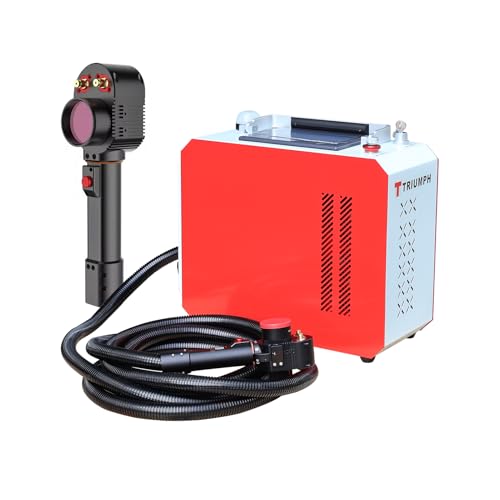
This 300W pulsed cleaner is presented for metal rust, paint, oil and dirt rather than wood-specific stripping. It has a 1064 nm wavelength, 0–130 mm scanning width, dual-axis swing and a 5 m laser fiber. The maker describes non-abrasive cleaning for delicate surfaces and hard-to-reach areas, but those claims do not establish how a wood coating will respond. Its AC110V/60Hz or AC220V/50Hz input offers a choice of supply configurations; confirm that the version and electrical supply match your setup before ordering.
Bottom line: Choose it for metal-focused cleaning; wood users should verify the intended surface and test parameters with the maker.
1500W Air-Cooled Laser Cleaner

This continuous-wave 1500W unit has the widest scan width here at 250 mm, but its described applications are industrial rust, paint and oil removal rather than wood-specific stripping. It is identified as Class 2 with 0.874 mW output power, and its net weight is 112 lb, which matters when moving the machine between work areas. The maker describes non-contact cleaning for metal substrates; that does not show how the beam affects wood grain or a particular finish. Its 220V supply also makes it less suitable where only 110V is available.
Bottom line: Choose it for industrial, wide-scan work only after confirming the substrate and electrical fit.
How laser stripping works on wood
Laser stripping removes a coating by directing a scanned beam across the surface, but the wood and finish determine how much energy the work can tolerate. A pulsed beam delivers energy in short bursts; a continuous-wave beam delivers it continuously, so the two operating modes should not be treated as interchangeable. Scan width describes the area swept by the beam, not a guaranteed removal rate. For example, a 0–100 mm scan covers a narrower band than a 250 mm scan, while the latter can be harder to control near edges and carved details. Choose a machine with a wood-specific use claim and a documented starting procedure for the coating you intend to remove.
Choosing a scan width and working area
Match scan width to the surface: a narrow band is easier to keep on trim, moldings and small parts, while wider coverage can reduce the number of passes across broad, flat boards. A scan width is not the same as the machine’s safe working distance or the width of a completed paint-free area. Surface profile, beam overlap and pass speed affect how evenly the coating is removed. Make a small test patch in an inconspicuous area, then inspect for darkening, raised grain or remaining finish before expanding the work area. Thin veneer and sharp edges deserve extra caution because the wood layer is shallow and localized heating can show quickly.
Laser safety and wood fire precautions
Laser cleaners require wavelength-matched protective eyewear with an optical density suitable for the machine; ordinary shop glasses are not laser protection. A direct beam or specular reflection can cause severe eye injury, so keep reflective tools and metal hardware out of the beam path and restrict access to the work zone. Wood dust, paint residue and some finishes can also ignite or produce hazardous fumes when heated. Keep combustible debris away, provide suitable extraction, and have an appropriate fire response available. A product’s laser class is not a substitute for safe operating controls, especially when the workpiece, reflections or beam path create additional hazards.
Preparing wood before stripping
Preparation reduces avoidable damage: remove loose hardware, identify veneer and solid-wood areas, and clear dust from the test zone before making a pass. Coatings vary in thickness and chemistry, so a setting that affects one paint layer may scorch another finish or expose soft earlywood unevenly. Keep passes moving rather than dwelling on one spot, and compare the test patch under consistent lighting before proceeding. Painted surfaces may contain lead in older buildings; avoid creating uncontrolled dust or fumes and use appropriate assessment and containment practices before disturbing suspect coatings. Stop if the wood darkens, smokes or chars, since continuing can deepen damage beyond the coating.
Frequently Asked Questions
Can a laser cleaner remove paint from wood?
Some machines are specifically described for wood paint removal, including options whose makers mention stains and graffiti. Results depend on wood species, coating and settings, so require a small, controlled test before treating a visible area.
What scan width is useful for wood stripping?
A 0–100 mm scan width suits narrower passes and localized work, while a 250 mm width covers a broader strip per pass. Wider coverage does not automatically suit carved details or thin veneer.
Is a 300W laser safe to use on wood?
Power alone cannot establish safe use on a particular wood surface; coating, focus, scan speed and dwell time affect heat and material removal. Use a wood-specific operating procedure and test a hidden area before proceeding.
What laser eye protection does a cleaner need?
Laser eye protection must be rated for the machine’s wavelength and appropriate optical density; ordinary safety glasses do not protect against laser radiation. A high-power beam can also create hazardous reflections, so keep the work area controlled and use the machine’s specified shielding.
Does a wider scan remove paint faster?
A wider scan covers more area per pass, but removal speed also depends on pulse settings, beam overlap, coating thickness and operator speed. Compare the machine’s supported settings rather than treating scan width as a standalone speed measure.