
Best Face Sunscreen That Doesn’t Burn Eyes: 5 Picks

Eucerin Tinted Sensitive Mineral SPF 35 is the best starting point if eye comfort is your priority because it uses zinc oxide, a mineral filter, rather than a non-mineral sunscreen formula. No sunscreen here is confirmed not to sting eyes, so stop use if irritation occurs; choose another option if you need up to 80 minutes of water resistance.
We earn a commission if you buy through links on this page. As an Amazon Associate I earn from qualifying purchases. Products are compared on manufacturer specifications, not hands-on testing.
- Best overall: Eucerin Tinted Sensitive Mineral SPF 35 – Its zinc oxide mineral filter is the clearest fit for shoppers prioritizing eye comfort.
- Best for acne-prone skin: Neutrogena Clear Face SPF 50 – Oil-free, fragrance-free, non-comedogenic SPF 50 is formulated for oily and acne-prone skin.
- Best for a tinted moisturizer: CeraVe Tinted Mineral SPF 30 Light – SPF 30 mineral protection comes in a sheer light tint with hyaluronic acid and niacinamide.
| Product | Best for | SPF | Filter type | Water resistance | Shop |
|---|---|---|---|---|---|
| Eucerin Tinted Sensitive Mineral SPF 35 | Mineral-filter preference | 35 | Zinc oxide | — | Check Price on Amazon |
| Neutrogena Clear Face SPF 50 | Acne-prone skin | 50 | Non-mineral | Up to 80 min | Check Price on Amazon |
| CeraVe Tinted Mineral SPF 30 Light | Tinted daily wear | 30 | Zinc oxide and titanium dioxide | — | Check Price on Amazon |
| Neutrogena Sport Face SPF 70+ | Outdoor activity | 70+ | Non-mineral | Up to 80 min | Check Price on Amazon |
| Centella Hyalu Cica Sun Serum SPF 50+ | Serum-like texture | 50+ | — | — | Check Price on Amazon |
Face Sunscreens That May Be Gentler Around Eyes
Compare the filter type and wear features, but note that none of these products is confirmed sting-free around the eyes.
Eucerin Tinted Sensitive Mineral SPF 35

For shoppers prioritizing eye comfort, the zinc oxide mineral filter makes this the clearest match in the group; the product is not confirmed sting-free. The SPF 35 lotion is tinted, broad spectrum, and contains five antioxidants. Eucerin says it is lightweight, dries clear, and blends across skin tones, and describes it as hypoallergenic and suitable for sensitive skin. Its 1.7 fl oz size is smaller than the 3 fl oz option here. Choose it if a tinted mineral formula is your priority; choose a different pick if you need documented water resistance.
Bottom line: Pick this if a tinted zinc oxide formula matters more than water resistance.
Neutrogena Clear Face SPF 50
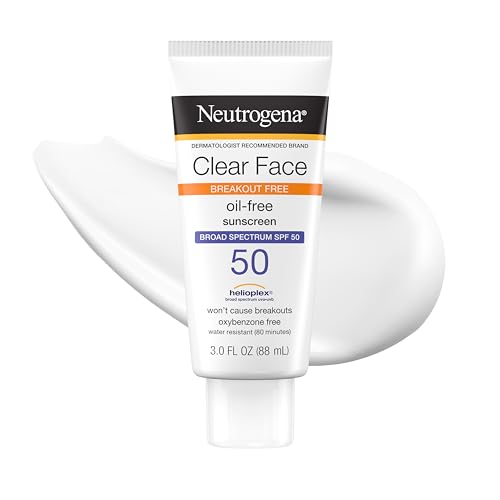
Unlike the mineral picks, this is an oil-free, non-mineral lotion aimed at oily and acne-prone skin. It provides broad-spectrum SPF 50 and is fragrance-free, oxybenzone-free, and non-comedogenic. The brand says it resists water for up to 80 minutes, a useful distinction for outdoor activity, and describes the finish as shine-free and breathable for layering under makeup. Those features do not establish that it will avoid eye stinging, so it is a weaker fit for that specific concern than a zinc oxide option. Its 3 fl oz tube is also the largest size in this comparison.
Bottom line: Choose this for acne-prone skin and water resistance, not as a guaranteed sting-free formula.
CeraVe Tinted Mineral SPF 30 Light

Compared with the SPF 35 Eucerin, this tinted mineral moisturizer has SPF 30 and combines zinc oxide with titanium dioxide. The light shade uses iron oxides to offset white cast, and the formula includes hyaluronic acid and niacinamide. CeraVe says it can be worn alone or under makeup and is suitable for all skin types, including dry and sensitive skin. The specifications do not confirm water resistance or that it avoids eye stinging, so select it for its tint and moisturizing ingredients rather than swimming or a guaranteed eye-comfort result. The package is 1.7 oz.
Bottom line: Pick this for a light tinted moisturizer with mineral filters and SPF 30.
Neutrogena Sport Face SPF 70+

For active use, this sport formula has SPF 70+ and up to 80 minutes of water resistance, unlike the mineral options. The brand says it absorbs quickly and leaves a non-greasy finish; the oil-free formula includes vitamins C and E and is made without oxybenzone or PABA. Those activity-focused claims do not mean it will be comfortable near the eyes, and its non-mineral filter type makes it a less direct fit for shoppers seeking eye comfort. At 2.5 fl oz, it falls between the 3 fl oz Clear Face tube and the 1.7 fl oz tinted formulas.
Bottom line: Choose this for outdoor activity when high SPF and water resistance take priority.
Centella Hyalu Cica Sun Serum SPF 50+

This is the serum-style option rather than a conventional lotion, with SPF 50+ and a PA++++ rating. The specifications describe it as water-fit and hydrating, with centella and niacinamide, and say it leaves no white cast. Its filter type and water-resistance duration are not established here, so it is harder to compare for eye comfort or swimming than picks with a named mineral filter or a specific resistance time. The 1.69 fl oz bottle is also the smallest volume. Consider it for a lightweight serum texture, not as a verified solution for eye stinging.
Bottom line: Pick this for the serum texture and no-white-cast claim, after checking its filter and water-use suitability.
How to choose a face sunscreen for eye comfort
Mineral sunscreens with zinc oxide or titanium dioxide are a reasonable first category to compare when eye stinging is a concern, but no filter guarantees a sting-free result for every person. These products include zinc oxide in two tinted options; one adds titanium dioxide. Lotions can migrate with sweat, rubbing, or water, so apply carefully around the orbital area and avoid getting sunscreen directly in the eyes. SPF measures protection against sunburning UVB, not eye comfort, and broad-spectrum labeling indicates UVA and UVB coverage. If a product causes burning or irritation, rinse it away and stop using it; persistent eye pain or vision changes warrant medical attention.
Mineral and non-mineral face sunscreen differences
Mineral filters are zinc oxide and titanium dioxide; the two non-mineral Neutrogena formulas are oxybenzone-free, but that does not make them mineral. The labels and ingredients determine filter type, not the words “sport,” “serum,” or “sensitive.” SPF 30 blocks about 97% of UVB under test conditions, while SPF 50 blocks about 98%; neither rating describes UVA protection alone, so look for broad-spectrum coverage. A tinted formula can help reduce visible white cast, while a clear or non-tinted formula may suit buyers who do not want tint. If eye comfort is the deciding factor, compare filters first, then choose a texture you can apply consistently.
This table separates filter type from claims that do not prove sting-free wear.
| Formula type | What to look for | Decision cue |
|---|---|---|
| Mineral | Zinc oxide or titanium dioxide | Compare first for eye sensitivity concerns |
| Non-mineral | Named non-mineral filters in ingredients | Do not assume oxybenzone-free means mineral |
| Tinted | Iron oxides or a tint shade | Consider to reduce visible white cast |
When water resistance matters
Water-resistant sunscreen labels typically specify 40 or 80 minutes; reapply after that interval, after towel drying, and at least every two hours when outdoors. Only two products here give an 80-minute water-resistance claim, so do not treat the others as swim-ready based on SPF alone. Apply enough sunscreen to cover exposed skin evenly: adults generally need about 1 ounce for a full-body application, with the face taking a portion of that amount. For face-only use, coverage matters more than a tiny dab; spread it uniformly, including hairline and ears, while avoiding the eyes. Water resistance does not mean waterproof, and sweat can still move product toward the eyes.
How to reduce sunscreen mistakes around eyes
Apply sunscreen before outdoor exposure and let the layer set before exercise; rubbing a wet layer can move it into the eyes. Use a separate, clean fingertip to apply around the orbital bone rather than placing lotion on eyelids or lash lines. Reapply every two hours outdoors and after swimming or toweling, even when a formula is water resistant. Pair sunscreen with a wide-brim hat and UV-blocking sunglasses for added protection; sunglasses should fit close enough to shield the sides without obstructing vision. If sunscreen repeatedly stings, switch formula type and avoid applying it too close to the eye; do not sacrifice broad-spectrum coverage to chase a comfort claim.
Frequently Asked Questions
Can mineral sunscreen still sting your eyes?
Yes, mineral sunscreen can still irritate eyes if lotion migrates into them. Apply around the orbital bone and stop using a formula that causes burning.
Does SPF 50 protect much more than SPF 30?
SPF 30 blocks about 97% of UVB and SPF 50 about 98% under test conditions. Both require adequate application and reapplication, and SPF does not measure UVA coverage by itself.
How often should I reapply sunscreen outdoors?
Reapply at least every two hours outdoors and after swimming or towel drying. For water-resistant formulas, also observe the labeled 40- or 80-minute interval.
Is oxybenzone-free sunscreen mineral sunscreen?
No, oxybenzone-free only means the formula omits that ingredient; it may still use non-mineral filters. Check whether the active filters include zinc oxide or titanium dioxide.
Can I use face sunscreen on my eyelids?
Avoid putting sunscreen directly in the eyes or along the lash line. Apply carefully around the orbital bone, and use UV-blocking sunglasses and a brimmed hat for added coverage.