
Silicone Spray for Cars: 5 Lubricants Compared

For general car use on rubber, vinyl, plastic, and metal, WD-40 Specialist Silicone Lubricant 13.3 oz is the strongest fit because it is designed for auto and equipment parts and dries clear. Choose DuPont Silicone Lubricant Surface Safe 10 oz if broader surface coverage matters more, or 3-IN-ONE RVcare Slide-Out Silicone Lube 11 oz for RV slide-out mechanisms; these are silicone lubricants, which leave a film to reduce friction rather than a grease coating.
We earn a commission if you buy through links on this page. As an Amazon Associate I earn from qualifying purchases. Products are compared on manufacturer specifications, not hands-on testing.
- Best overall: WD-40 Specialist Silicone Lubricant 13.3 oz – Designed for auto and equipment parts and claims a dry, clear finish that does not attract dirt.
- Best for broad surfaces: DuPont Silicone Lubricant Surface Safe 10 oz – Named for use on rubber, plastic, vinyl, leather, metal, and wood.
- Best for RV slide-outs: 3-IN-ONE RVcare Slide-Out Silicone Lube 11 oz – Formulated for slide-out tracks and mechanisms with a two-way spray straw.
| Product | Best for | Can size | Finish | Named surfaces or use | Shop |
|---|---|---|---|---|---|
| WD-40 Specialist Silicone Lubricant 13.3 oz | Auto tracks | 13.3 oz | Clear, dry | Metal, rubber, vinyl, plastic | Check Price on Amazon |
| DuPont Silicone Lubricant Surface Safe 10 oz | Mixed materials | 10 oz | — | Rubber, plastic, vinyl, leather, metal, wood | Check Price on Amazon |
| CRC Heavy Duty Silicone Lubricant 11 oz | Water resistance | 11 oz | Dry film; no residue | Rubber, nylon, metal and non-metal | Check Price on Amazon |
| B’Laster Silicone Lubricant ProStraw 2-Pack | Two-can supply | 11 oz each; 2-pack | Clear, quick-drying film | Metal, rubber, plastic | Check Price on Amazon |
| 3-IN-ONE RVcare Slide-Out Silicone Lube 11 oz | RV slide-outs | 11 oz | Dries clear | Metal, rubber, vinyl, plastic; slide-outs | Check Price on Amazon |
Silicone Spray for Cars Compared
Match the surface compatibility and intended task to the part you plan to lubricate.
WD-40 Specialist Silicone Lubricant 13.3 oz

Designed for auto and equipment parts, this lubricant is the most direct match for car window tracks, guide rails, pulleys, hinges, and cables. The maker says it dries to a clear finish without sticky residue and does not attract dirt or debris, useful where a dusty film could interfere with movement. Its compatibility includes metal, rubber, vinyl, and plastic. The limitation is that the maker gives no vehicle-specific application guidance, so check material compatibility before spraying near trim or finished surfaces.
Bottom line: Choose this for automotive tracks and linkages where a dry finish is the priority.
DuPont Silicone Lubricant Surface Safe 10 oz
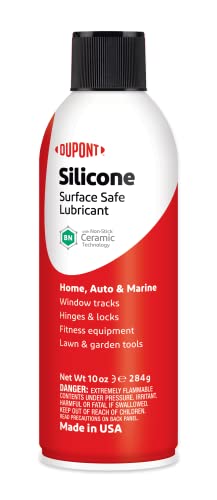
Broader material coverage sets this lubricant apart: it is intended for rubber, plastic, vinyl, leather, metal, and wood, including non-metal materials that conventional lubricants may damage. The maker says the formula waterproofs, protects, lubricates, and preserves, and identifies windows, hinges, and locks as uses. Its 10-ounce aerosol is a general-purpose option when a vehicle task involves more than track hardware. The maker does not identify a dry finish, so choose another option if avoiding residue or dirt attraction is the deciding requirement.
Bottom line: Pick this when a car task spans several different materials.
CRC Heavy Duty Silicone Lubricant 11 oz

A dry-film claim and water resistance distinguish this CRC spray from the more broadly described general-purpose options. The product facts say it leaves no residue and identify rubber and nylon lubrication plus protection for metal and non-metal surfaces. That combination may suit a car component exposed to moisture when a clean film matters.
Bottom line: Choose it for a water-resistant dry film on compatible parts.
B’Laster Silicone Lubricant ProStraw 2-Pack

The two-can pack and ProStraw application system make this option distinct when a buyer wants multiple cans and spray control. The maker says it dries quickly to a clear lubricating film that will not attract dirt or dust, and names doors, window tracks, cables, pulleys, seals, and O-rings as uses. It is stated to work on metal, rubber, and plastic. While its named tasks overlap automotive hardware, its facts emphasize general tracks and moving equipment rather than car-specific applications.
Bottom line: Pick this for multiple compatible tasks and the two-way straw format.
3-IN-ONE RVcare Slide-Out Silicone Lube 11 oz

Unlike general automotive sprays, this formula is specifically for RV slide-out tracks and mechanisms. The maker says it lubricates and waterproofs slide-outs, dries clear, and is safe on metal, rubber, vinyl, and plastic; the permanent Smart Straw sprays as either a stream or a broader spray. It also claims rust and corrosion prevention on slide-out mechanisms. The intended use is narrow, so ordinary car window tracks or hinges are not the reason to choose this option.
Bottom line: Choose it for RV slide-out mechanisms rather than general car lubrication.
How to choose silicone spray for a car
Start with the part material and the finish you want, not just the word silicone on the can. Silicone lubricants can reduce friction on compatible surfaces, but a dry-film claim is not the same as a claim that a formula suits every trim, seal, or coating. For window tracks, cables, and pulleys, prioritize products that name those uses and surfaces. For mixed-material parts, check the material list; rubber and plastic compatibility does not automatically establish compatibility with paint, glass, or every interior finish. Apply a small amount to the moving contact area, keep overspray off braking and tire surfaces, and wipe excess from surrounding trim.
Where silicone spray fits in automotive maintenance
Silicone sprays are commonly used on rubber seals, plastic guides, and light-duty sliding or pivoting parts; they are not substitutes for every automotive lubricant. Wheel bearings, chassis joints, and high-load metal interfaces need the lubricant specified for that component, often grease or another purpose-made product. A spray with a dry finish can be useful around exposed tracks where sticky residue would collect grit, while a broader material list can help with mixed non-metal parts. Do not spray near brake rotors, pads, or tire tread: lubricant contamination can reduce braking or traction. For door weatherstripping, confirm the vehicle manufacturer permits the product on that seal material.
How to apply silicone spray without making a mess
Mask or shield nearby surfaces before spraying, because aerosol drift can coat glass, paint, pedals, or upholstery. Use a short burst aimed at the track or moving joint, then cycle the mechanism and wipe away excess; repeated heavy coats are not a substitute for cleaning grit from a track. On exposed moving parts, a straw can improve aim, but it does not make overspray impossible. Keep silicone off brake components and tire contact surfaces, and ventilate the work area because aerosol propellants can accumulate indoors. If a part remains noisy or binds after cleaning and suitable lubrication, inspect for wear or misalignment rather than adding more spray.
Silicone spray versus other automotive lubricants
Silicone spray is best considered for compatible rubber, plastic, vinyl, and light-duty sliding parts; grease is generally better suited to enclosed or high-load bearings and joints that require a lasting lubricant. Penetrating oils are used to loosen stuck metal fasteners, a different task from preserving rubber or reducing friction in a plastic guide. The choice should follow the component’s material and load, not the convenience of an aerosol can. Use the vehicle service manual’s specified lubricant for load-bearing or safety-critical parts. The quick guide below separates common tasks by lubricant role.
| Task | Typical choice | Key condition |
|---|---|---|
| Rubber seal or plastic guide | Compatible silicone spray | Verify surface compatibility |
| High-load bearing or joint | Specified grease | Match the component requirement |
| Stuck metal fastener | Penetrating oil | Keep off brakes and tires |
Frequently Asked Questions
Can I use silicone spray on car door seals?
Many silicone lubricants are intended for rubber, and some name rubber seals among their uses. Confirm the vehicle maker permits the formula on that seal and wipe away excess to avoid transferring it to painted or interior surfaces.
Is silicone spray safe for car window tracks?
Some formulas specifically name window tracks and are designed to dry clear without attracting dirt. Aim only at the guide surfaces and keep spray off glass, paint, and any nearby brake parts.
Does silicone spray damage car paint?
Compatibility with paint is not established by these products’ stated surface claims. Shield painted areas and wipe overspray promptly; avoid using any formula on paint unless its label permits that application.
Can silicone spray be used on car brakes?
No; keep silicone lubricant off brake pads, rotors, and other friction surfaces. Contamination can compromise braking, so any accidental contact should be addressed before driving.
Should I use silicone spray or grease on a car hinge?
Use the lubricant specified for the hinge and its load; silicone sprays are aimed at light-duty lubrication, while grease is used where a lasting film is required. If the hinge is part of a safety-critical assembly, use the vehicle service specification rather than a general-purpose spray.