
Extra Wide Transition Strips: 5 Options Compared

For the broadest coverage, choose SFNSM 36 x 6-Inch Aluminum Threshold, a 6-inch-wide aluminum threshold; its width is the deciding advantage for a wide seam or doorway. Choose a different option if you need a long, flexible, peel-and-stick cover or a narrower strip for a smaller gap.
A transition strip covers or joins the exposed seam where flooring meets or changes. Measure the gap at its widest point and choose a strip wide enough to cover it without hiding a floor-height mismatch that needs a sloped profile.
We earn a commission if you buy through links on this page. As an Amazon Associate I earn from qualifying purchases. Products are compared on manufacturer specifications, not hands-on testing.
- Best overall: SFNSM 36 x 6-Inch Aluminum Threshold – Its 6-inch width is the broadest among these options.
- Best for screw mounting: Jiekayi 36 x 4-Inch Aluminum Threshold – The 4-inch aluminum threshold has pre-drilled holes and includes screws and expansion tubes.
- Best for long adhesive coverage: PATIKIL 3-Inch Vinyl Transition Strip – The vinyl strip is about 9.84 feet long and 3 inches wide.
| Product | Best for | Width | Length | Material | Shop |
|---|---|---|---|---|---|
| SFNSM 36 x 6-Inch Aluminum Threshold | Broad doorway seams | 6 in | 36 in | Aluminum | Check Price on Amazon |
| Jiekayi 36 x 4-Inch Aluminum Threshold | Screw-mounted transitions | 4 in | 36 in | Aluminum | Check Price on Amazon |
| PATIKIL 3-Inch Vinyl Transition Strip | Long adhesive coverage | 3 in | 9.84 ft | Vinyl | Check Price on Amazon |
| Tintvent 2-Inch Vinyl Transition Strip | Extra-long narrow seams | 2 in | 20 ft | Rubber (maker-claimed) | Check Price on Amazon |
| Greymond 4-Foot PVC Transition Strip | Narrow carpet seams | 1.57 in | 4 ft | PVC | Check Price on Amazon |
Extra Wide Transition Strips
Compare coverage width, strip length and mounting style before choosing a transition for your floor seam.
SFNSM 36 x 6-Inch Aluminum Threshold

At 6 inches wide, this aluminum threshold provides the broadest coverage in this group. The 36-inch strip has a wood-grain texture, pre-drilled holes and included expansion screws, and it can be cut to fit. The maker says its low-profile design allows wheelchairs and strollers to pass and helps block drafts and dust at an exterior door.
Choose this option for a broad doorway seam where a rigid, screw-mounted threshold suits the floor and door. Its 36-inch length may not span a wider opening without a separate piece, so measure the doorway before choosing it.
Bottom line: Pick it for a wide, 36-inch doorway seam where a 6-inch aluminum cover fits.
Jiekayi 36 x 4-Inch Aluminum Threshold

This 4-inch aluminum threshold is a narrower, rigid alternative to the 6-inch option, with a flat profile and black finish. It is 36 inches long and 0.1 inch high, and includes pre-drilled holes, screws and expansion tubes. The maker says the threshold can bridge floor height differences up to 1 inch and is designed to resist weather and rust.
Choose it when a 4-inch cover is enough and a screw-secured threshold suits the doorway. The 36-inch length limits coverage across wider openings, and the flat profile may not suit every uneven floor junction.
Bottom line: Pick it for a 4-inch-wide transition where screw mounting is preferred.
PATIKIL 3-Inch Vinyl Transition Strip

For a longer continuous run, this gray wood-grain vinyl strip is about 9.84 feet long and 3 inches wide, rather than a rigid, screw-mounted threshold. It has a peel-and-stick backing and a maximum thickness of 0.14 inch. The maker says the vinyl is waterproof, scratch-resistant and easy to clean.
This option suits a long, relatively narrow seam or damaged corner on a compatible surface. Its flexible adhesive format is not the same as a load-bearing doorway threshold, so use it only where a thin, surface-applied cover is appropriate.
Bottom line: Pick it for a long seam that can use a 3-inch adhesive vinyl cover.
Tintvent 2-Inch Vinyl Transition Strip

This 20-foot roll is the longest option here, but its 2-inch width makes it a narrower choice for extra-wide coverage. The strip is gray and self-adhesive; the maker describes its material as rubber and says it can be applied to surfaces such as tile, wood, marble, glass and metal.
Choose it for a long run where a narrow, flexible cover is sufficient and the surface is suitable for adhesive. The 2-inch width cannot cover a seam that needs broader coverage, so measure before selecting it.
Bottom line: Pick it for a long, straight seam that needs no more than 2 inches of cover.
Greymond 4-Foot PVC Transition Strip
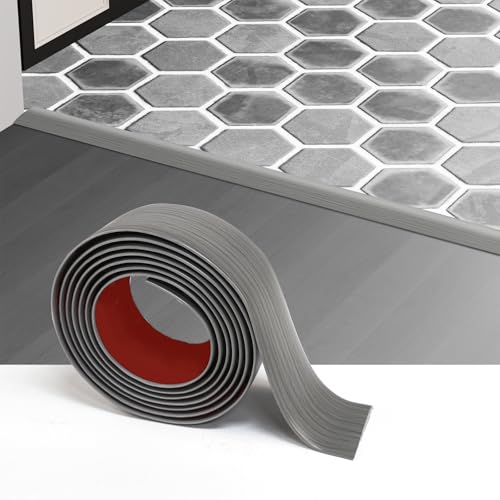
This PVC strip is the narrowest in the group at 1.57 inches wide, with a 0.12-inch profile and a 4-foot length. It uses peel-and-stick attachment and can be cut with scissors. The maker says the material resists scratches and stains and recommends cleaning the floor with alcohol before applying the strip.
Choose it for a modest carpet-to-tile or other floor seam where its narrow coverage is enough. The 1.57-inch width makes it a poor match for a broad gap; measure the full exposed seam rather than relying on the floor transition label.
Bottom line: Pick it for a narrow seam where a low-profile, cut-to-fit adhesive strip works.
How to measure for an extra wide transition strip
Measure the exposed seam at its widest point, then choose a strip that covers the gap and overlaps both flooring edges. A 6-inch strip provides 3 inches more width than a 3-inch strip, while a 20-foot roll provides length rather than extra coverage across the seam. For a practical fit rule, choose a strip at least 1 inch wider than the measured gap so it has about 0.5 inch of overlap on each side.
Measure the doorway span separately from the seam width: a 36-inch threshold cannot span an opening wider than 36 inches. Check floor heights at several points too; a strip can cover a seam, but a flat profile does not necessarily resolve a noticeable step. Keep the strip edges outside the main walking surface where possible to reduce catching toes or wheels.
When to choose aluminum or adhesive strips
Rigid aluminum thresholds attach with screws and suit doorway seams where a secured, hard cover is appropriate; flexible vinyl, PVC, or rubber strips use adhesive for surface application. The aluminum options are 36 inches long and 4 or 6 inches wide, while adhesive options range from 1.57 to 3 inches wide and 4 to 20 feet long. Choose the fastening style based on the floor beneath the seam: screw mounting needs a substrate that can accept fasteners, and adhesive needs a clean, dry surface.
Adhesive strips are not substitutes for structural floor repair or a ramp when surfaces have a significant height difference. As a safety rule, if the height step is more than about 1/4 inch, compare a sloped reducer or ramp profile rather than assuming a thin flat cover will remove the trip edge. For doorways exposed to weather, verify that the selected strip and attachment method suit that location.
How to prepare and install a transition strip
Clean and dry the floor before applying a peel-and-stick strip; dust, grease, or moisture can undermine adhesion. Measure and cut the strip before removing its backing, then position it so the cover is centered over the seam and press along its full length. A hairdryer can help soften some adhesive PVC strips around curves, but keep heat moving and avoid overheating the floor finish.
For a screw-mounted threshold, mark the hole positions and confirm the floor can be drilled without hitting hidden wiring, plumbing, or radiant-heating components. Keep fasteners flush and check that the threshold does not rock underfoot. Aluminum strips may require a metal-cutting tool, while thin PVC can often be trimmed with scissors; use eye protection when cutting rigid material and smooth or cover sharp edges before walking over it.
What width and length solve common floor seams
Width determines how much of the seam the strip covers, while length determines how far it runs along the doorway or floor joint. For example, the 6-inch aluminum threshold is the broadest included option, but at 36 inches long it is shorter than the 20-foot adhesive roll. The 1.57-inch PVC option suits a narrower seam, whereas a 2- or 3-inch roll gives more cover without matching the broad threshold’s width.
Use this comparison by need rather than treating every strip as interchangeable. A long roll can reduce joints along a hallway seam, but its narrower profile may not cover a broad gap; a wider threshold offers more coverage but must match the opening length and mounting surface.
| Seam need | Useful dimension | Strip type to compare |
|---|---|---|
| Broad doorway gap | 6 in wide, 36 in long | Rigid aluminum threshold |
| Long, narrower run | 2–3 in wide, 9.84–20 ft long | Adhesive flexible strip |
| Small carpet-floor seam | 1.57 in wide, 4 ft long | Cut-to-fit PVC strip |
Frequently Asked Questions
How wide should a floor transition strip be?
Choose a strip wider than the exposed seam so it overlaps flooring on both sides. Measure the gap at its widest point; a 6-inch strip offers more coverage than a 2-inch strip, but width alone does not correct a height mismatch.
Can a flat transition strip bridge uneven floors?
A flat strip is best when the two floor surfaces are nearly level. When the height difference is over 1/4 inch, look for a sloped reducer or ramped profile rather than assuming a flat cover will make a safe transition.
Should I use adhesive or screws for a transition strip?
Adhesive suits thin surface covers on clean, dry floors, while screws secure rigid thresholds to a drillable substrate. Avoid relying on adhesive across dusty or damp flooring, since the bond depends on surface preparation.
How do I measure a doorway for a transition strip?
Measure the opening from one side to the other at floor level, then compare that span with the strip length. A 36-inch strip will not cover an opening wider than 36 inches without a joint or another piece.
Can I cut a transition strip to fit?
Some strips can be cut, but the method depends on material and attachment. The maker says the aluminum thresholds can be cut and the Greymond PVC strip can be trimmed with scissors; measure twice and keep the cut edge clear of the walking path.