
Best High Build Primer: 5 Automotive Options Compared

For most automotive refinishing, U-POL High Solids Urethane Primer Kit is the strongest fit because its high-solids urethane formula emphasizes film build and surface leveling. Choose a spray option instead for small repairs, or a different chemistry when the project calls for something other than a urethane kit.
High-build primer is a primer-surfacer intended to build a sandable layer that helps level minor surface imperfections before topcoat.
We earn a commission if you buy through links on this page. As an Amazon Associate I earn from qualifying purchases. Products are compared on manufacturer specifications, not hands-on testing.
- Best overall: U-POL High Solids Urethane Primer Kit – High-solids urethane formula offers film build, leveling, and air-dry, low-bake, or infrared curing options.
- Best for a gallon kit: Speedokote SS-2950G/2790A Gray Primer Kit – A gray 128-ounce 2K urethane primer/sealer kit with fast-dry and easy-sanding claims.
- Best for small repairs: Rust-Oleum Stops Rust Filler Spray Primer – A 12-ounce filler-and-sandable spray primer covers up to 10 square feet.
- Best for direct-to-metal: LiME LiNE Direct-to-Metal Primer Surfacer – A 40-ounce 2K urethane primer-surfacer labeled for direct-to-metal use.
| Product | Best for | Type | Package size | Color | Shop |
|---|---|---|---|---|---|
| U-POL High Solids Urethane Primer Kit | Most refinish jobs | High-solids urethane | 1 gallon kit | Clear | Check Price on Amazon |
| Speedokote SS-2950G/2790A Gray Primer Kit | Gray urethane kit | 2K urethane primer/sealer | 128 fl oz | Gray | Check Price on Amazon |
| Rust-Oleum Stops Rust Filler Spray Primer | Small spot repairs | Oil-based filler spray primer | 12 oz | Gray | Check Price on Amazon |
| LiME LiNE Direct-to-Metal Primer Surfacer | Direct-to-metal prep | 2K urethane primer-surfacer | 40 fl oz | Light gray | Check Price on Amazon |
| SEM 42013 Gray Acrylic Primer | Acrylic primer format | Acrylic primer | 16 oz | Gray | Check Price on Amazon |
Automotive high build primers
Compare the primer chemistry and package format against the size and preparation needs of your repair.
U-POL High Solids Urethane Primer Kit
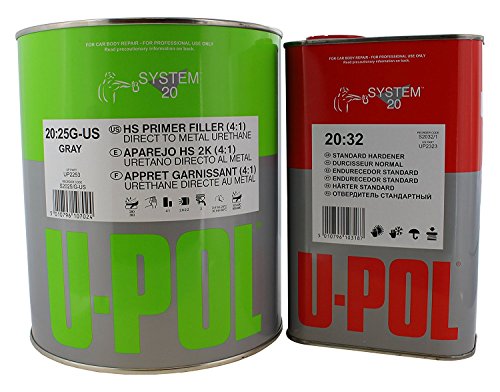
U-POL High Solids Urethane Primer Kit stands out for its high-solids urethane formula and multiple cure options. The kit uses a 4:1 mixing ratio and includes standard-temperature hardener for 60–95°F conditions. The maker says it offers opacity, hiding power, film build, and surface leveling, and can be air dried, low baked, or infrared cured. Choose it when the repair calls for a larger mixed batch and you have the equipment and process for a 2K primer. A gallon kit is a poor match for a tiny spot repair, where a spray can may be easier to manage.
Bottom line: Choose this kit for larger automotive refinishing work where urethane film build and the cure options fit your process.
Speedokote SS-2950G/2790A Gray Primer Kit
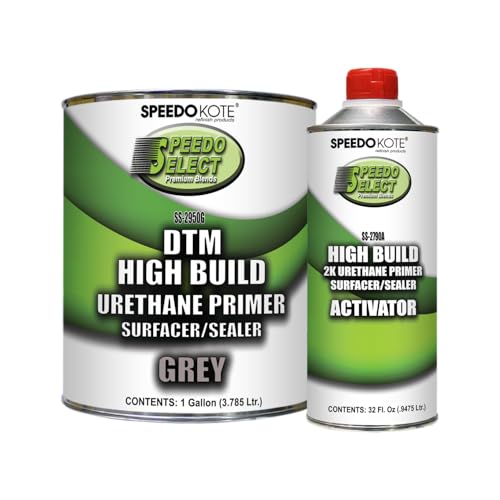
Speedokote SS-2950G/2790A Gray Primer Kit differs by combining a high-build primer with a sealer in a gray, 128-fluid-ounce kit. The maker describes it as fast drying, easy to sand, and having great adhesion. That combination suits a repair where you want a larger 2K urethane package and the sealer role is useful, rather than a small aerosol filler. The product name identifies a gallon kit, so it is not the most convenient format for an isolated chip or a few small imperfections. Confirm the substrate and coating system are compatible before committing to a full refinish sequence.
Bottom line: Pick this gray kit when you need a larger 2K urethane primer/sealer package.
Rust-Oleum Stops Rust Filler Spray Primer

Rust-Oleum Stops Rust Filler Spray Primer is the small-job alternative: a 12-ounce oil-based filler and sandable spray primer rather than a mixed urethane kit. Its surfaces include wood, metal, and fiberglass, and the maker says it covers up to 10 square feet, dries to the touch and can be recoated in 10 minutes, and sands smooth. That makes the aerosol format suited to minor surface flaws and localized work. Its coverage is limited compared with gallon packages, so larger panels or multi-panel work may call for a kit format instead.
Bottom line: Choose the spray can for localized filler work across its surface types.
LiME LiNE Direct-to-Metal Primer Surfacer

LiME LiNE Direct-to-Metal Primer Surfacer is the direct-to-metal option among these products, packaged as a 40-fluid-ounce 2K urethane primer-surfacer in light gray. Its name specifies a 4:1 mixture, and the maker claims weather and corrosion resistance. Those traits make it relevant when the repair plan calls for a direct-to-metal surfacer rather than a small aerosol filler. The package is smaller than the gallon kits, but larger than the spray options. Direct-to-metal labeling does not remove the need to prepare the surface properly; remove corrosion and contamination before coating.
Bottom line: Pick this kit when direct-to-metal application is central to the repair plan.
SEM 42013 Gray Acrylic Primer

SEM 42013 Gray Acrylic Primer differs from the urethane kits by being a gray acrylic high-build primer in a 16-ounce package. It may suit a buyer specifically seeking an acrylic primer and a smaller quantity than a gallon kit. The product name alone does not establish a mixing ratio, substrate range, or cure schedule; confirm those requirements before planning the coating steps.
Bottom line: Choose this option when an acrylic primer and a 16-ounce quantity fit your project.
How to choose an automotive high-build primer
Choose by repair area, primer chemistry, and application format rather than the words “high build” alone. Primer-surfacer builds a sandable layer for leveling minor surface irregularities; a 2K urethane kit also requires the correct hardener and mixture ratio. Aerosol filler primer avoids mixing but comes in a much smaller package. For a repair covering only a few square feet, an aerosol can be more manageable; for broad panel work, compare kit quantity and application equipment. High-build primer is not a rust remover or a substitute for repairing deep damage. Remove corrosion and clean and prepare the substrate before priming, then use the sanding and coating sequence appropriate to the chosen system.
| Project need | Format to consider |
|---|---|
| Small isolated flaws | Filler spray primer |
| Larger refinish area | Primer kit |
| Direct-to-metal workflow | Primer labeled for direct-to-metal use |
What high-build primer does before paint
High-build primer creates a thicker sandable layer than a conventional thin primer, helping level minor sanding marks and surface texture before the topcoat. It does not fill deep dents, replace body filler, or make unstable rust sound; correct those problems before priming. Block sanding helps reveal low and high areas because a long, flat sanding block bridges small depressions instead of following every contour. Avoid sanding through the primer at panel edges, where the film is easiest to cut through. Primer-surfacer and primer-sealer are related but not identical roles, so select the product for the coating sequence and substrate rather than treating the labels as interchangeable.
How to handle 2K urethane primer safely
Two-component urethane products combine primer with a separate hardener, and the specified ratio matters: the U-POL kit here calls for 4:1. Mix only the quantity the repair requires and use the hardener intended for the product and temperature range. Spraying 2K urethane can expose users to hazardous isocyanates; use a properly controlled spray area and respiratory protection appropriate to the product safety data sheet and applicable workplace rules. A simple dust mask is not a substitute for suitable protection. Keep people and pets away from spray and curing areas, and do not spray near ignition sources when the product’s safety guidance warns against it.
How to plan sanding and recoating
Let the selected primer reach its sanding or recoating stage before moving to the next coating; touch-dry and sand-ready are different conditions. The Rust-Oleum can’s maker gives a 10-minute touch-dry and recoat time, but that claim should not be generalized to the urethane kits or acrylic primer. Use a guide coat when block sanding to make remaining highs and lows easier to see, and stop if the primer exposes the underlying substrate. Dust removal matters because sanding residue can interfere with adhesion. Before ordering, confirm the chosen primer’s substrate compatibility and sanding window for your intended coating system.
Frequently Asked Questions
Can high-build primer fill deep scratches and dents?
No, high-build primer is for minor surface irregularities and sanding marks, not deep dents or major damage. Repair deeper defects with the appropriate body-repair material before priming.
Is 2K urethane primer the same as primer-sealer?
No, the terms describe different roles: 2K identifies a two-component system, while sealer describes a coating role in the paint process. Some products combine primer and sealer, so choose by the role your coating sequence requires.
How much area does a 12-ounce primer spray cover?
The Rust-Oleum spray in this group gives a maker-claimed coverage of up to 10 square feet. Actual coverage depends on application and surface conditions, so use that figure as a planning limit rather than a guaranteed result.
What does a 4:1 primer mixing ratio mean?
A 4:1 ratio means four parts primer to one part hardener by the specified measurement method. Use the exact product’s mixing directions, since ratios and compatible hardeners are not universal.
Can I apply primer over rust without removing it?
No, high-build primer should not be treated as a rust repair coating. Remove corrosion and prepare a sound surface before priming; the product’s substrate compatibility also matters.