
Outdoor Drain Cover Mesh: 5 Options Compared by Fit

For a square outdoor drain that needs a reusable metal screen, 12 × 12 in 304 Stainless Steel Mesh Cover is the closest match because it is a 12-inch square 304 stainless steel cover with a 5 mm mesh pattern. Choose a layered debris cover instead if leaves and grass are the main concern; the round and square limits differ by model.
Measure the drain opening before choosing: mesh panels and raised covers fit differently, and a cover that is too small may not stay in place.
We earn a commission if you buy through links on this page. As an Amazon Associate I earn from qualifying purchases. Products are compared on manufacturer specifications, not hands-on testing.
- Best overall: 12 × 12 in 304 Stainless Steel Mesh Cover – Its 12-inch square 304 stainless steel panel has a 5 mm mesh pattern for finer debris.
- Best for layered filtering: Drain Defender Two-Stage Cover – A slotted outer wall and perforated inner screen separate larger and smaller yard debris.
- Best for larger openings: Dual-Layer Outdoor Drain Cover – It is designed for round drains up to 9 inches or square drains up to 7 inches.
| Product | Best for | Style | Material | Drain fit | Shop |
|---|---|---|---|---|---|
| 12 × 12 in 304 Stainless Steel Mesh Cover | Fine debris | 5 mm mesh panel | 304 stainless steel | 12 × 12 in panel | Check Price on Amazon |
| Drain Defender Two-Stage Cover | Layered filtration | Slotted wall plus perforated screen | PVC | Round up to 8.5 in; square up to 6 in | Check Price on Amazon |
| Dual-Layer Outdoor Drain Cover | Larger openings | Outer wall plus inner columns | Rubber | Round up to 9 in; square up to 7 in | Check Price on Amazon |
| Gray Outdoor Drain Cover with Guide Pin | Round drains | High-flow debris barrier | — | Round up to 8.5 in; square up to 6 in | Check Price on Amazon |
| 6-Pack 20-Mesh Stainless Steel Screen | DIY screen panels | 20 mesh; 1 mm aperture | Stainless steel | Each panel 11.8 × 8.2 in | Check Price on Amazon |
Outdoor Drain Cover Mesh Options
Match the cover style to the drain opening and the debris you need to keep out.
12 × 12 in 304 Stainless Steel Mesh Cover
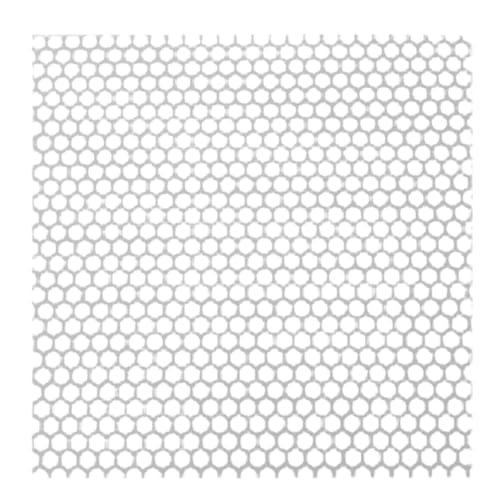
Unlike the raised yard-debris covers, this is a flat square metal screen with a 5 mm mesh pattern. The maker says it catches hair, debris and small particles while letting water pass; the panel measures about 11.8 inches square and is made from 304 stainless steel. It suits a square drain where a washable, reusable screen is preferred. Its flat panel is a limitation if the drain needs a raised barrier to hold back leaves or needs a cover sized to a different opening.
Bottom line: Choose this for a square drain when fine screening and a stainless steel panel matter most.
Drain Defender Two-Stage Cover

The two-stage design distinguishes this raised cover from a flat mesh panel: its slotted outer wall blocks larger debris and its inner perforated screen catches smaller material. The maker says it fits round drains up to 8.5 inches across or square drains up to 6 inches per side; the cover is about 12 inches in diameter and 2 inches high, with a lower guide pin. It suits stairwell or yard drains exposed to leaves and smaller debris. The PVC cover is not a metal mesh sheet, so choose another style if you need a cut-to-size panel.
Bottom line: Pick this when a two-stage barrier and the drain-size limits fit your opening.
Dual-Layer Outdoor Drain Cover

This cover has the largest opening limits among the raised covers here: round drains up to 9 inches or square drains up to 7 inches. Its outer wall catches leaves and grass while inner columns trap finer debris; the maker describes its rubber design as flexible and suitable for foot traffic. At about 11 inches square and 1.52 inches high, it suits a yard, stairwell or garage drain that needs a raised dual-layer cover. It is not a flat woven mesh panel, so it may not suit a drain requiring a flush screen.
Bottom line: Choose this for a larger opening within its limits when a raised rubber cover is appropriate.
Gray Outdoor Drain Cover with Guide Pin

This gray raised cover is presented as a high-flow barrier for leaves, grass clippings, blossoms and twigs, rather than as a fine metal mesh sheet. It measures about 12 inches across and 2 inches high and is intended for round drains up to 8.5 inches or square drains up to 6 inches per side. The maker says accumulated debris can be rinsed off with a garden hose. It suits yard drains where larger debris is the main concern; its function does not establish the finer filtration of a small-aperture screen.
Bottom line: Pick this for a yard drain within its size limits when larger debris is the priority.
6-Pack 20-Mesh Stainless Steel Screen

These six cuttable woven screens are raw material for a DIY drain screen, unlike covers shaped to sit over a specific drain. Each panel is 11.8 by 8.2 inches, with 20 mesh, a 1 mm aperture, 0.4 mm wire and 52% open area; the maker identifies the metal as 304 stainless steel. This suits someone able to cut and secure a panel to a frame or grate. The sheet itself has no stated drain-specific shape or attachment method, so it is not a drop-in cover for an opening.
Bottom line: Choose this only when you can cut and secure your own screen panel.
How to Choose an Outdoor Drain Cover Mesh
Start with the drain opening and the debris, then choose a flat mesh panel or a raised debris cover. Measure the clear opening across its widest points; for a square drain, measure each side, and do not use the outside dimensions of the surrounding frame. A raised cover needs enough overlap to stay centered, while a flat screen generally needs a frame or grate to support it. Mesh opening size is a tradeoff: smaller apertures catch finer particles but can clog sooner, reducing water flow. For leafy yards, a raised barrier with openings designed for larger debris may need less frequent clearing than a fine screen. Do not assume a cover marked for one shape fits another simply because its overall width seems large.
Flat Mesh and Layered Drain Covers Compared
Flat mesh screens and raised layered covers handle debris differently. A woven screen catches material at its surface, while a raised design can intercept leaves at an outer wall and finer debris farther inside. The choice changes how often the drain may need clearing: leaves can blanket a fine screen, and small particles can accumulate in a layered cover. Compare the actual aperture or filtration construction, not the word “mesh” alone.
This table summarizes the main choice by use and tradeoff.
| Style | Useful for | Tradeoff |
|---|---|---|
| Flat woven mesh | Small particles; cut-to-fit DIY screens | Needs support and secure attachment |
| Flat square cover | Reusable surface screening | Must match the opening and support surface |
| Raised layered cover | Leaves and mixed yard debris | Bulks above the drain and needs clearing |
How to Measure Drain Fit
Measure the opening, not the drain cover you hope to replace, and compare it with the product’s maximum opening size. Round-drain limits refer to diameter; square-drain limits refer to each side, so a 6-inch-per-side limit is not a 6-inch diagonal measurement. Check whether the cover overlaps the opening enough to remain centered and whether nearby walls or steps interfere with its outer dimensions. A practical rule is to reject any cover whose maximum is smaller than the measured opening; for an irregular opening, use its widest span as the measurement. Raised covers and flat panels have different support needs, so confirm a secure resting surface before relying on either style.
Keep Outdoor Drain Screens Clear
Clear leaves and sediment before they form a mat over the drain; a screen cannot pass water freely when its openings are blocked. Fine mesh can need attention more often than a coarse barrier because smaller apertures collect smaller particles as well as leaves. After removing a cover, rinse it and the supporting surface, then make sure the cover sits flat or centered again. Keep the drain itself accessible, especially in areas where runoff collects, and do not cover it with soil, mulch or landscaping fabric. If the drain serves a stairwell or another low area, check it during heavy rain because a blocked opening can impede drainage.
Frequently Asked Questions
How do I measure an outdoor drain opening?
Measure the clear opening across its widest points, using diameter for a round drain and side length for a square one. Compare that measurement with the cover’s maximum fit limit, not its outside dimensions.
Does finer drain mesh catch more debris?
A smaller aperture can catch finer particles, but it also gives leaves and sediment less open area to pass through. Check the screen often when runoff carries a lot of yard debris.
Can I use a flat mesh sheet without a frame?
A flat sheet needs support so it does not sag into the drain or shift under water flow. Cut it to the supported area and secure its edges; the sheet alone is not a shaped, fitted cover.
How often should an outdoor drain cover be cleaned?
Check the cover after storms and whenever leaves or grass clippings collect over it. Fine screens can need more frequent clearing than raised barriers because smaller openings can clog with smaller debris.
Can a square drain cover fit a round drain?
Shape alone does not establish fit; the cover must overlap the opening and rest securely without obstructing surrounding surfaces. Use the round or square opening limit for the intended shape.