
Black Paint for Metal Surfaces: 3 Options Compared

16 oz Black Metal Paint suits most metal projects when you need a 16-ounce container with coverage of 25–30 square feet. Choose Painter’s Touch Semi-Gloss Black instead for a semi-gloss finish and paint for several indoor or outdoor surface types; SENVEN Black Metal Paint, 5.3 oz is a smaller option for a compact job.
We earn a commission if you buy through links on this page. As an Amazon Associate I earn from qualifying purchases. Products are compared on manufacturer specifications, not hands-on testing.
- Best overall: 16 oz Black Metal Paint – Its 16-ounce container is listed for 25–30 square feet of coverage.
- Best for multi-surface use: Painter’s Touch Semi-Gloss Black – The water-based acrylic paint is intended for metal, wood, plaster, masonry and unglazed ceramic.
- Best for small projects: SENVEN Black Metal Paint, 5.3 oz – The 5.3-ounce container is a smaller format with maker-claimed rust resistance.
| Product | Best for | Container size | Coverage | Shop |
|---|---|---|---|---|
| 16 oz Black Metal Paint | Larger metal projects | 16 fl oz | 25–30 sq ft | Check Price on Amazon |
| Painter’s Touch Semi-Gloss Black | Mixed surfaces | 8 fl oz | Up to 30 sq ft | Check Price on Amazon |
| SENVEN Black Metal Paint, 5.3 oz | Small touch-ups | 5.3 fl oz | — | Check Price on Amazon |
Black Paint for Metal Surfaces
Compare container size, stated coverage and finish claims to match the paint to your project.
16 oz Black Metal Paint

For a larger surface, this 16-ounce black paint lists coverage of 25–30 square feet, more than the 5.3-ounce container option. The maker says its coating resists moisture and oxidation and adheres to metal; it also claims quick drying and low odor. It is positioned for doors, gates, furniture, fences, railings and crafts. The limitation is that no specific finish sheen is given, so buyers who need a particular gloss level should choose a product that names one.
Bottom line: Pick this for a medium-size metal project when its claimed coverage fits your area.
Painter’s Touch Semi-Gloss Black
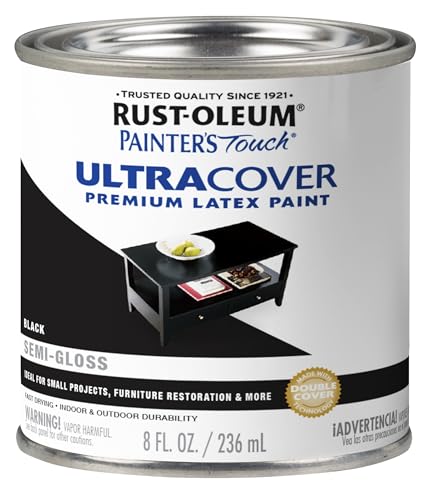
For projects that combine metal with other materials, this water-based acrylic enamel is intended for indoor and outdoor use on metal, wood, plaster, masonry and unglazed ceramic. The 8-ounce container covers up to 30 square feet, and the semi-gloss finish is specified. The maker says it is low odor, chip- and fade-resistant, and dries to the touch in 30 minutes. Preparation matters: the directions call for sanding with 180- or 200-grit paper, washing with degreaser and letting the surface dry. Its limitation is that it is not presented specifically as a rust-preventive metal coating.
Bottom line: Choose this when a named semi-gloss sheen and multi-surface use matter.
SENVEN Black Metal Paint, 5.3 oz

The 5.3-ounce container makes this the smallest option here, suited to a limited repair or compact metal item rather than a broad fence or railing. The maker claims a moisture- and oxidation-resistant barrier, strong adhesion, quick drying and low odor; the paint is also described as suitable for gates, fences, railings, crafts, wood and walls.
Bottom line: Pick this for a small job if you can confirm the amount needed and desired sheen.
How to choose black paint for metal
Start with the surface condition and the finish you want: paint formulated for metal can combine color and corrosion protection, while a general multi-surface enamel prioritizes broader material compatibility. Rust needs attention before coating; remove loose rust and flaking paint, then clean away dirt, grease and dust so the new layer can bond. Smooth, glossy old paint usually benefits from scuff sanding. Match the container to the area: a quart covers 100–150 square feet at a typical 4–6 mil wet film, but actual coverage changes with texture, porosity and application method. If the project is over 30 square feet, plan for more than one small container and account for edges and a second coat.
| Project need | Practical choice |
|---|---|
| Multiple surface materials | Multi-surface enamel |
| Metal with maker-claimed rust resistance | Metal paint |
| Area over 30 sq ft | Calculate quantity and allow for extra coats |
Preparing metal before painting
Clean, stable metal gives paint a better chance of adhering than rusty or oily metal. Remove loose rust with a wire brush or abrasive paper, remove peeling coating, and degrease the surface; let it dry fully before painting. For bare steel or remaining rust, many paint systems call for a compatible metal primer unless the label explicitly allows direct application. Aluminum and galvanized metal can need a primer made for those surfaces because ordinary coatings may not bond reliably. Keep sanding dust out of the coating, and avoid painting damp metal or in conditions outside the product label’s temperature and humidity range. For the semi-gloss multi-surface option, its directions specifically call for 180- or 200-grit sanding and degreasing.
Estimating coverage and coats
Coverage is an estimate, not a guarantee: rough, pitted or textured metal uses more paint than a smooth flat panel, and edges increase the coated area. Measure the actual surface area in square feet; for a rectangular panel, multiply length by width in feet, then multiply by the number of faces being painted. The 16-ounce option lists 25–30 square feet, while the multi-surface enamel lists up to 30 square feet; these figures do not establish equal coverage under every condition. A contrasting old color, bare patches or a change from dark to light may need more than one coat. If a job is near the limit, allow extra material rather than assuming one container will cover it.
Using and maintaining a metal paint finish
Apply thin, even coats rather than one heavy layer; thick paint can sag, wrinkle or stay soft underneath. Dry-to-touch time is not the same as full cure, and handling or placing hardware against a fresh coating too soon can mark it. Follow the specific label for recoating and full-cure timing, since water-based acrylic and other metal coatings can differ. Keep the work area ventilated, protect skin and eyes, and keep paint away from children and pets while it is being applied and drying. Inspect exterior metal periodically for chips and new rust, especially at joints and cut edges where moisture can collect; touch up damaged areas after cleaning and drying them.
Frequently Asked Questions
Can black metal paint go over rust?
Remove loose rust and flaking paint before coating; paint over unstable rust can peel with the material beneath it. Only apply directly over remaining rust if the product label allows it, since many systems require a compatible primer on rusted or bare steel.
How much black paint do I need for a fence?
Measure the fence faces and multiply length by height to estimate square footage, then include both sides if painting both. Compare that total with the coverage and allow extra for rough metal, posts, edges and additional coats.
Should metal be primed before black paint?
Bare steel, rusty areas, aluminum and galvanized metal may need a compatible primer unless the coating label explicitly permits direct application. Primer compatibility matters because smooth or reactive metal can resist adhesion.
How long should metal paint dry before handling?
Dry-to-touch time does not mean a coating is fully cured; handling too early can leave marks or damage the finish. Use the product’s specific recoat and cure times, since they vary by formula and conditions.
Is ventilation needed when painting metal indoors?
Yes, ventilate the room during application and drying, even for products described as low odor. Keep the area away from children and pets, and use the label’s protective-equipment guidance.