
Best Inline Pool Chlorinator: 3 Models Compared

The Hayward CL2002S is the strongest fit for most pool owners because it gives a 50–90 gpm flow range and 2-inch ports for return-line installation. Choose another model if you need a replacement compatible with a specific feeder or want to match a 3-inch tablet format.
An inline chlorinator is a feeder installed in a pool’s return plumbing that releases sanitizer as water circulates.
We earn a commission if you buy through links on this page. As an Amazon Associate I earn from qualifying purchases. Products are compared on manufacturer specifications, not hands-on testing.
- Best overall: Hayward CL2002S In-Line Feeder – It specifies 2-inch ports, adjustable feed control and a 50–90 gpm flow range.
- Best for Rainbow 320 replacement: R171096 / Rainbow 320 Replacement Feeder – It is designed as a replacement for Pentair R171096 and Rainbow 320 and supports up to 11 large tablets.
- Best for 3-inch tablets: XtremepowerUS 3-Inch Inline Feeder – It is sized for 3-inch tablets and is described as compatible with Hayward CL200.
| Product | Best for | Port or tablet fit | Flow or pool range | Shop |
|---|---|---|---|---|
| Hayward CL2002S In-Line Feeder | Most pool systems | 2-inch ports | 50–90 gpm | Check Price on Amazon |
| R171096 / Rainbow 320 Replacement Feeder | Rainbow 320 replacement | Replacement fit | 6,500–70,000 gallons | Check Price on Amazon |
| XtremepowerUS 3-Inch Inline Feeder | 3-inch tablet format | 3-inch tablets | — | Check Price on Amazon |
Inline Pool Chlorinators Compared
Compare plumbing fit, operating range and tablet capacity before choosing a feeder for your return line.
Hayward CL2002S In-Line Feeder
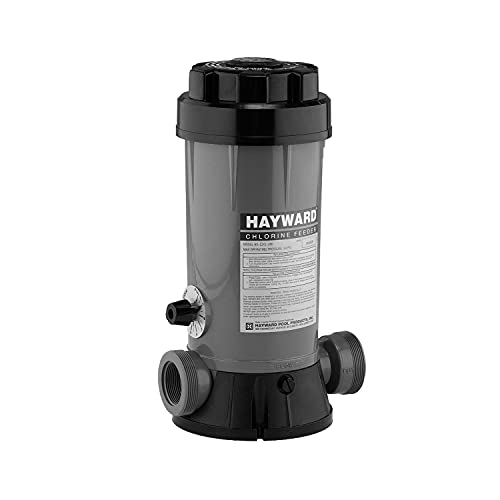
The Hayward CL2002S stands out with a specified operating flow range, making it the clearest choice when matching a feeder to pool circulation. Its 2-inch inlet and outlet connect to above-ground or in-ground pool and spa plumbing, and the dial adjusts feed rate. It accepts slow-dissolving trichlor or bromine tablets or sticks, in large or small formats. An Easy-Lok cover provides tablet access, while the finger-release catch adds a retention feature. The 50–90 gpm range is the key limitation: confirm that your system’s flow falls within it before choosing this model.
Bottom line: Choose this when your return line uses 2-inch ports and runs within its specified flow range.
R171096 / Rainbow 320 Replacement Feeder

The R171096 replacement is the option with the broadest pool-size coverage: its specifications distinguish 6,500–27,000 gallons for bottom feed and 18,000–70,000 gallons for top feed. It is designed to replace Pentair R171096 and Rainbow 320 units, and its closed circulation design holds up to 11 large or 98 small tablets. The adjustable valve lets owners tune output. This model makes most sense when replacing one of those feeder types or when pool volume falls within its range; its dimensions are unusually small for a plumbing feeder, so verify the physical connection and installation fit before ordering.
Bottom line: Pick this for a Rainbow 320 or R171096 replacement, after confirming connection fit.
XtremepowerUS 3-Inch Inline Feeder

The XtremepowerUS feeder is the one explicitly sized for 3-inch tablets and described as compatible with Hayward CL200. It installs in the return line after the filter and heater, and the product features describe a dial for adjusting the dispensing rate. That makes it a narrower match than a feeder with plumbing dimensions and operating flow spelled out. Choose it when its tablet size and compatibility match your existing setup, and verify plumbing connection fit.
Bottom line: Choose this if you need a 3-inch-tablet feeder compatible with a CL200 setup.
How to choose an inline pool chlorinator
Match plumbing size and circulation flow before comparing convenience features. A feeder is installed in the return line, so the connection must match the pipe or its adapters; the Hayward model specifies 2-inch ports and a 50–90 gpm operating range. Tablet capacity and feed adjustment affect refill frequency and output, but they do not replace water testing. Use a pool test kit to monitor free chlorine; a typical residential target is 1–3 ppm, and sunlight, swimmer load and water temperature change chlorine demand.
For a system outside a feeder’s flow range, choose a model with verified compatibility rather than assuming its dial compensates for the mismatch. Keep tablet feeders in the return plumbing as directed by the equipment design; concentrated sanitizer can damage equipment when introduced in the wrong location.
Inline feeder fit and installation
Install an inline chlorinator in the pool return plumbing downstream of the filter and heater, as specified for the XtremepowerUS model. Check the pipe diameter, available straight-run length and service access before cutting or adapting plumbing; a nominal 2-inch port does not establish compatibility with every pipe fitting. The CL2002S is the only item here with a 2-inch inlet and outlet plus a 50–90 gpm range.
Shut down the pump and relieve system pressure before opening a feeder or working on pool plumbing. Chlorine and bromine tablets are concentrated chemicals: do not mix them together, and avoid breathing dust or fumes when handling them. Keep the feeder cover closed during operation and use chemical-resistant gloves when refilling.
Tablet capacity and output control
Capacity determines how many tablets a feeder can hold, while a control valve changes how quickly water contacts the tablets. The replacement feeder specifies up to 11 large or 98 small tablets; the Hayward CL2002S accepts large or small slow-dissolving tablets or sticks but gives no capacity figure in the specifications. A dial cannot promise a fixed chlorine level because pool volume, circulation time, sunlight and bather load all affect sanitizer demand.
Use test results to guide adjustments rather than relying on a dial position alone. A common mistake is adding tablets to correct low chlorine without first checking circulation, stabilizer level or water balance. Never place concentrated tablets in a skimmer unless the pool and equipment manufacturer specifically allows it; highly concentrated water can pass through equipment while the pump is off.
Inline chlorinator fit at a glance
Choose by the installation constraint that matters most: operating flow, replacement compatibility or tablet format.
| Need | Most relevant option | Decision point |
|---|---|---|
| Known circulation rate | Hayward CL2002S | 2-inch ports; 50–90 gpm range |
| Replacing Rainbow 320 | R171096 replacement | Designed for R171096 and Rainbow 320 |
| 3-inch tablets | XtremepowerUS | Verify plumbing connection fit |
Frequently Asked Questions
What flow rate does an inline chlorinator need?
The Hayward CL2002S specifies 50–90 gpm, so compare that range with your pump system’s actual circulation rate. Flow outside that range calls for a feeder with verified compatibility rather than relying on a dial adjustment.
Where should an inline pool chlorinator go?
An inline feeder belongs in the return line, downstream of the filter and heater for the XtremepowerUS unit. Leave enough access to open the feeder safely and service its plumbing connections.
Can I use bromine tablets in a pool chlorinator?
Some feeders accept bromine as well as chlorine: the Hayward CL2002S accepts slow-dissolving trichlor or bromine tablets or sticks. Never mix chlorine and bromine products in the same feeder.
How often should I test pool chlorine?
Test free chlorine at least twice a week during regular use, and more often after heavy swimming, rain or very hot sunny weather. A typical residential target is 1–3 ppm, with local conditions and pool requirements affecting the needed level.
Can a chlorinator connect to any pool pipe?
No; port diameter and connection type must match the return plumbing. The Hayward feeder specifies 2-inch ports, but the XtremepowerUS product’s port dimensions are not given, so confirm the fitting size before installation.