
Bead Sealer for Aluminum Rims: 4 Options Compared

Xtra Seal Extra Heavy Duty 14-101B is the strongest fit for aluminum rims with uneven bead seats because its extra-thick formula is designed to fill gaps; choose a standard sealer for a routine reseal instead.
Bead sealer is a coating applied where the tire bead meets the rim to help seal air leaks. A cracked or visibly bent wheel needs repair or replacement, not sealant.
We earn a commission if you buy through links on this page. As an Amazon Associate I earn from qualifying purchases. Products are compared on manufacturer specifications, not hands-on testing.
- Best overall: Xtra Seal Extra Heavy Duty 14-101B – Its extra-thick formula is made to fill gaps, and the 32-ounce can has a built-in brush.
- Best for two tires: X-tra Seal 14-101 Two-Can Set – The package includes two 32-ounce cans of black bead sealer with a brush.
- Best for layered repairs: Blackjack Extra Thick BS-228 – Its extra-thick consistency and brush-in-cap applicator suit repeated applications on difficult beads.
| Product | Best for | Consistency | Can size | Applicator | Shop |
|---|---|---|---|---|---|
| Xtra Seal Extra Heavy Duty 14-101B | Uneven bead seats | Extra thick | 32 oz | Brush in can | Check Price on Amazon |
| X-tra Seal 14-101 Two-Can Set | Two-wheel jobs | Standard | 2 × 32 oz | Brush | Check Price on Amazon |
| Blackjack Extra Thick BS-228 | Repeated coating | Extra thick | 32 oz | Brush in cap | Check Price on Amazon |
| Xtra-Seal Flammable Bead Sealer TI250 | Single-can use | Standard | 32 oz | — | Check Price on Amazon |
Bead Sealer for Aluminum Rims
Compare formula thickness, package size and application method to match the sealer to the bead-seat condition.
Xtra Seal Extra Heavy Duty 14-101B

For an uneven bead seat, this extra-thick Xtra Seal formula is the clearest match among these options. The maker says it is thicker than 14-101, and the 32-ounce can includes a brush. That consistency can help build material over small gaps where a standard-thickness coating may not bridge them as readily.
Choose it when the wheel is sound but the bead area needs a heavier coating. The can’s extra thickness is less useful for a routine reseal on a clean, even seat, and it cannot correct a crack or bent rim.
Bottom line: Pick this when a sound wheel has small, uneven gaps at the bead seat.
X-tra Seal 14-101 Two-Can Set

This set stands apart by providing two 32-ounce cans, making it a practical match when more than one wheel needs work. The product is black bead sealer, and the can is identified with a brush, so application does not require a separate brush according to the product name.
Choose it for routine bead sealing across multiple wheels rather than for the thickest available coating. The specifications identify a standard sealer, not an extra-thick formula, so buyers dealing with a difficult gap may prefer the thicker options. Clean the bead seat before applying any sealer.
Bottom line: Pick this for a multi-wheel job that calls for standard black bead sealer.
Blackjack Extra Thick BS-228

Blackjack BS-228 is an extra-thick alternative with a brush built into the cap. The maker says its formula clings and fills gaps more effectively than standard bead sealers, and describes adding layers for difficult beads. Its 32-ounce can and integrated brush suit targeted coating without a separate applicator.
Choose it when an intact rim has a stubborn bead leak or an imperfect surface that may benefit from added layers. Layering is not a fix for structural wheel damage, and the product’s extra thickness may be unnecessary on an even, clean bead seat.
Bottom line: Pick this for an intact rim where a thicker, layerable coating is useful.
Xtra-Seal Flammable Bead Sealer TI250
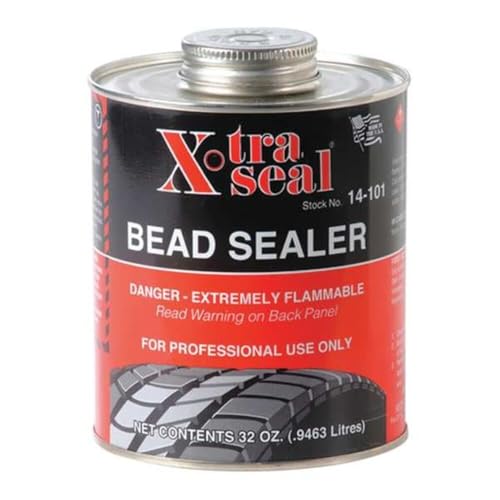
This Xtra Seal option is a single 32-ounce can and is identified as flammable, distinguishing it from the multi-can package and extra-thick formulas. The name identifies it as bead sealer, while its dimensions are about 5.5 inches high and 4.3 inches across.
Choose it when one standard can is the right amount for the repair and you can follow the product label’s handling precautions. Because this product is flammable, keep it away from ignition sources and use it in a well-ventilated area. The specifications do not identify an applicator, so verify the included application method before ordering.
Bottom line: Pick this for a single-can repair if its flammable handling requirements fit your work area.
How to choose bead sealer for aluminum rims
Match the sealer thickness to the bead-seat condition, not to the wheel material alone. Standard bead sealer suits a sound, clean rim with a small leak; an extra-thick formula is a better match when a small irregularity leaves a gap. Bead sealer coats the tire-to-rim interface, while tire lubricant helps the tire slide over the rim during mounting and is not a substitute for a sealing compound.
Clean off old sealer, dirt and corrosion before applying a fresh coat so debris does not create a new leak path. Use only a tire-approved product and keep the coating on the bead-seat area rather than the wheel’s visible face. If the wheel has a crack, a bent flange or deep corrosion at the seat, stop: sealant cannot restore wheel integrity.
Aluminum rim bead-seat fit and leak checks
Inspect both bead seats and the tire beads before choosing a coating; an air leak can originate on either side of the joint. Aluminum wheels can corrode where the tire bead contacts the rim, and corrosion may leave a rough or pitted sealing surface. A thicker compound may help bridge minor surface irregularities, but it cannot compensate for substantial pitting or wheel damage.
Use a measurable stop rule: if you can see a crack, a bent flange, or a missing section of bead-seat metal, do not try to seal it with bead sealer. Have the wheel assessed for repair or replacement. A leak that remains after reseating and applying an appropriate sealer also calls for diagnosis rather than repeated coating.
Bead sealer thickness and application options
Standard and extra-thick bead sealers address different conditions: the first is suited to ordinary sealing work, while extra-thick formulas are intended to cling and fill small gaps. The products here also differ in can quantity and applicator, which matters when preparing several wheels or applying a controlled coat.
Use this comparison to match the type to the job. A built-in brush helps apply the product, but the brush style does not change whether the rim is structurally sound.
| Need | Type to choose | Reason |
|---|---|---|
| Even, clean seat with a small leak | Standard sealer | Designed for routine bead sealing |
| Minor irregularity at a sound seat | Extra-thick sealer | Can build a heavier coating over small gaps |
| Cracked or bent rim | Neither | Requires wheel assessment, not sealant |
Safe bead sealer use and common mistakes
Keep bead sealer away from flames, sparks and hot surfaces, especially any product identified as flammable. Work with ventilation, avoid contact with eyes and skin, and follow the container’s handling and disposal directions. Never use an open flame or flammable starting fluid to seat a tire; tire seating should be done with suitable equipment and controlled air pressure.
A common mistake is applying more compound without cleaning the bead seat or identifying the leak source. Remove old residue as appropriate for the wheel finish, then inspect the tire bead and rim for damage before resealing. Do not exceed the tire or wheel maker’s seating-pressure limit, and do not assume extra-thick sealer makes a damaged rim safe.
Frequently Asked Questions
Does bead sealer work on aluminum rims?
Yes, tire bead sealer can be used at the tire-to-rim interface on a sound aluminum wheel when the product is intended for tire bead sealing. Clean the seat first; visible cracks, bent flanges or deep corrosion require wheel assessment rather than sealant.
Should I use extra-thick bead sealer on aluminum wheels?
Use extra-thick sealer when a sound bead seat has minor irregularities that may leave small gaps. For a clean, even seat with a routine leak, a standard formula is generally the more suitable type.
Is bead lubricant the same as bead sealer?
No. Bead lubricant helps a tire mount or demount by reducing friction, while bead sealer coats the tire-rim interface to address leakage. Lubricant is not a replacement for bead-sealing compound.
Can bead sealer fix a cracked aluminum rim?
No; sealant cannot restore a cracked rim’s structural strength. Stop using the wheel and have it assessed for repair or replacement if you see a crack, bent flange or missing metal.
How should I handle flammable tire bead sealer?
Keep flammable sealer away from flames, sparks and hot surfaces, and work in a ventilated area. Never use an open flame or flammable starting fluid to seat a tire; use suitable tire equipment and observe tire and wheel pressure limits.