
Best Brand Bee Venom Cream: 5 Options Compared

For most people, WFWJ Bee Venom Cream, 2-Pack is the clearest choice because its formula names bee venom, hyaluronic acid and vitamin K12 and comes in two 2.12-ounce jars. Choose another option if you want a single jar or a formula naming different supporting ingredients.
Bee venom creams are topical moisturizers marketed for firmer- or smoother-looking skin; they are not a substitute for sunscreen or medical care.
We earn a commission if you buy through links on this page. As an Amazon Associate I earn from qualifying purchases. Products are compared on manufacturer specifications, not hands-on testing.
- Best overall: WFWJ Bee Venom Cream, 2-Pack – Names hyaluronic acid and vitamin K12 and provides two 2.12-ounce jars.
- Best for vitamin E: Bee Venom Firming Moisturizer, 2-Pack – Pairs bee venom with hyaluronic acid and vitamin E in a two-pack.
- Best for squalane: Bee Venom Skin Restoration Cream, 2.12 oz – Names squalane, hyaluronic acid, jojoba esters and vitamin E in a single jar.
| Product | Best for | Pack size | Named ingredients | Intended use | Shop |
|---|---|---|---|---|---|
| WFWJ Bee Venom Cream, 2-Pack | Two-jar supply | 2 × 2.12 oz | Vitamin K12, hyaluronic acid | Face | Check Price on Amazon |
| Bee Venom Skin Treatment Cream, 2.12 oz | Single-jar option | 1 × 2.12 oz | — | Face | Check Price on Amazon |
| Bee Venom Firming Moisturizer, 2-Pack | Vitamin E formula | 2 × 2.12 oz | Hyaluronic acid, vitamin E | Face, day and night | Check Price on Amazon |
| Bee Venom Skin Restoration Cream, 2.12 oz | Squalane formula | 1 × 2.12 oz | Squalane, hyaluronic acid, vitamin E | Face, neck, body | Check Price on Amazon |
| Bee Venom Skin Treatment Cream, Manuka Honey | Manuka honey formula | 1 × 2.12 oz | Manuka honey, plant essence | Face, dry skin | Check Price on Amazon |
Bee Venom Creams Compared
Compare the jar count and named ingredients to find a formula that matches your routine.
WFWJ Bee Venom Cream, 2-Pack

WFWJ Bee Venom Cream, 2-Pack stands out for naming both vitamin K12 and hyaluronic acid alongside bee venom, with two 2.12-ounce jars in the pack. The formula is marketed for facial moisturizing and a firmer, smoother-looking appearance. Its two-jar format may suit someone who wants a supply on hand rather than a single container. The specifications do not identify the full ingredient list or an application frequency, so buyers with known ingredient sensitivities should review the package before use.
Bottom line: Choose this if you want two jars and the supporting ingredients.
Bee Venom Skin Treatment Cream, 2.12 oz

Bee Venom Skin Treatment Cream, 2.12 oz differs from the other options mainly in being a single 2.12-ounce jar. The title presents it as a bee venom skin treatment cream intended to help with the appearance of fine lines and firmer-looking skin, but its ingredient composition cannot be compared from the specifications. That makes this a less informative choice for shoppers matching a moisturizer to particular ingredients. Consider it only if the package confirms the formula meets your needs, especially if you are avoiding specific actives.
Bottom line: Pick this only if a single jar suits you and the package confirms its formula.
Bee Venom Firming Moisturizer, 2-Pack

Bee Venom Firming Moisturizer, 2-Pack is the option that names vitamin E with hyaluronic acid in a two-pack of 2.12-ounce jars. Its title frames it as a day-and-night face moisturizer, while its maker describes a formula with salicylic acid, glycerin and allantoin as well. Shoppers who are sensitive to exfoliating ingredients should check the package for the salicylic acid concentration and directions before applying it.
Bottom line: Choose this if vitamin E and a two-jar format fit your routine.
Bee Venom Skin Restoration Cream, 2.12 oz

Bee Venom Skin Restoration Cream, 2.12 oz distinguishes itself by naming squalane and jojoba esters alongside hyaluronic acid and vitamin E. The product is presented for face, neck and body use, giving it broader intended coverage than the face-focused alternatives. It comes as one 2.12-ounce jar.
Bottom line: Pick this if you want a single jar with squalane and multi-area use.
Bee Venom Skin Treatment Cream, Manuka Honey
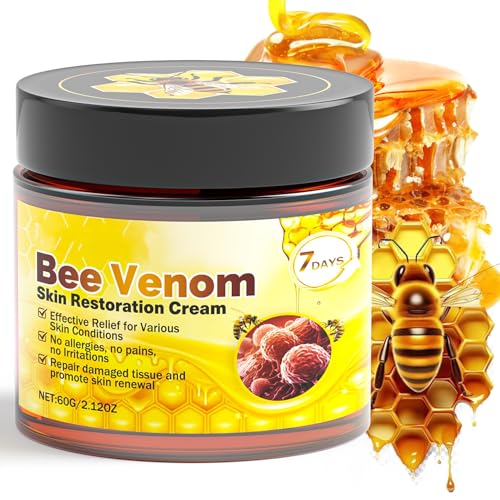
Claims of quick wrinkle changes are not a dependable way to compare moisturizers. If you are considering it for dry skin, favor the ingredient list and your tolerance over promised timelines, and stop use if irritation develops.
Bottom line: Choose this if you prefer the named Manuka honey and plant-essence formula.
How to choose a bee venom cream
Choose by the complete ingredient list, intended use and container amount rather than wrinkle or lifting promises. A facial moisturizer mainly reduces water loss and supports skin comfort; it does not replace broad-spectrum sunscreen, which should be SPF 30 or higher for exposed skin. Compare ingredient names carefully: hyaluronic acid, squalane, vitamin E and salicylic acid serve different formula roles, and ingredient presence alone does not reveal concentration. With sensitive skin or a history of reactions to bee products, avoid assuming a formula is gentle because it says natural; ask a clinician or pharmacist before trying it. Patch-test a small area first and discontinue if burning, swelling or a rash appears.
Pack size and routine fit
Pack count matters when comparing a two-jar set with a single 2.12-ounce container, but the amount used per application determines how long either lasts. Face-only creams and products also described for the neck or body are not automatically interchangeable in practice; larger areas consume more product. Use the jar amount as the comparison point, not the number of jars alone. A two-pack is a sensible fit if you already tolerate the formula and want a spare; if you are trying bee venom cream for the first time, a single jar limits how much remains if the formula does not suit you. The package label should guide where and how often to apply it.
What ingredient claims can tell you
Ingredient names can help narrow a moisturizer, but marketing language does not establish clinical results. Hyaluronic acid is a humectant that binds water near the skin surface, while squalane functions as an emollient that softens skin; formulas can combine both. Salicylic acid is an exfoliating ingredient, so the concentration and directions matter more than its presence in a headline. Product claims about collagen support, brightening, firming or wrinkle reduction should be treated as appearance claims, not guaranteed outcomes. Compare the full ingredient label and avoid layering multiple exfoliating products until you know how your skin responds.
Safe use of bee venom skin cream
Bee venom can trigger allergic reactions, and a topical product is not risk-free simply because it is a cream. Anyone with a known bee-sting allergy should avoid trying a bee venom product without guidance from an allergy specialist. Keep facial creams out of the eyes, and do not apply them to broken or inflamed skin unless a qualified clinician advises it. Introduce one new product at a time and patch-test on a small area for 24 to 48 hours; a patch test cannot rule out every allergy. Stop use and seek urgent medical help for trouble breathing, facial or throat swelling, or widespread hives.
Frequently Asked Questions
Can bee venom cream cause an allergic reaction?
Yes, bee venom can cause an allergic reaction, including in a topical product. People with a known bee-sting allergy should avoid experimenting without advice from an allergy specialist; breathing difficulty or facial swelling requires urgent care.
How should I patch-test a new face cream?
Apply a small amount to an inconspicuous area and watch for irritation over 24 to 48 hours. A patch test can reveal some reactions but cannot guarantee that a product is safe for everyone.
Can bee venom cream replace face sunscreen?
No, a moisturizer does not replace sun protection. For exposed skin, use a broad-spectrum sunscreen with SPF 30 or higher and reapply about every two hours outdoors.