
Self-Adhesive Vinyl Upholstery Repair: 3 Patches Compared

For most small vinyl upholstery repairs, Besezx Black Repair Patch, 3.1 x 60 in is a straightforward pick because its 3.1-by-60-inch roll is self-adhesive and requires no heat or tools. Choose Lifenion Black Repair Patch, 17 x 79 in instead when you need a much wider patch for a larger area; none of these patches is a structural repair for torn upholstery.
Self-adhesive vinyl repair patches cover surface damage with a flexible-looking patch, so match the color and texture and place the patch where it will not have to bridge a seam or moving joint.
We earn a commission if you buy through links on this page. As an Amazon Associate I earn from qualifying purchases. Products are compared on manufacturer specifications, not hands-on testing.
- Best overall: Besezx Black Repair Patch, 3.1 x 60 in – Its 3.1-by-60-inch black patch is sized for small repairs and needs no heat or tools.
- Best for large areas: Lifenion Black Repair Patch, 17 x 79 in – The 17-by-79-inch patch offers substantially more coverage than the narrower rolls.
- Best for simple cuts: ONine Black Repair Tape, 3 x 60 in – The 3-by-60-inch patch can be cut to fit and needs no heat, tools, or stitching.
| Product | Best for | Patch size | Application | Shop |
|---|---|---|---|---|
| Besezx Black Repair Patch, 3.1 x 60 in | Small surface repairs | 3.1 x 60 in | Self-adhesive; no heat | Check Price on Amazon |
| Lifenion Black Repair Patch, 17 x 79 in | Broad furniture coverage | 17 x 79 in | Self-adhesive; press on | Check Price on Amazon |
| ONine Black Repair Tape, 3 x 60 in | Cut-to-fit repairs | 3 x 60 in | Self-adhesive; no heat | Check Price on Amazon |
Self-Adhesive Vinyl Upholstery Repair Patches
Compare the patch dimensions and application notes to choose coverage that suits the damaged area.
Besezx Black Repair Patch, 3.1 x 60 in
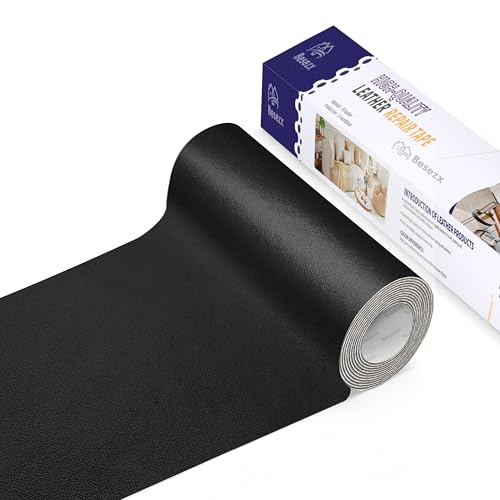
Besezx Black Repair Patch, 3.1 x 60 in is a narrow, long patch suited to small tears, scuffs, or scratches on synthetic leather and vinyl. The 3.1-by-60-inch black strip can be cut for a repair, and the maker says it needs no heat, ironing, tools, or sewing. Its waterproof and wear-resistant qualities are also maker claims. The narrow width limits how much area one strip can cover, so choose a wider patch for broad couch panels rather than joining multiple strips across a prominent surface.
Bottom line: Choose this for small black vinyl or synthetic-leather marks when a narrow strip is enough.
Lifenion Black Repair Patch, 17 x 79 in
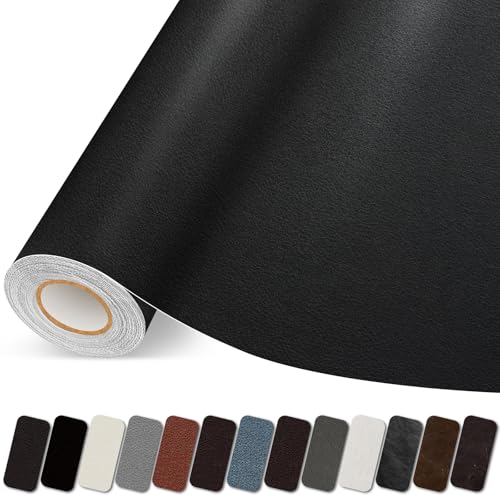
Lifenion Black Repair Patch, 17 x 79 in stands out for its 17-by-79-inch size, giving it much more coverage than the two narrow rolls. The patch can be cut to size and is intended for furniture, car seats, chairs, and other leather products. The maker says it bonds within seconds with a gentle press and reaches optimal adhesion after 24 hours; it also advises against peeling it off or trying to reapply it. Its large format makes it more suitable for broad areas, but a black patch will not blend with upholstery in another color.
Bottom line: Choose this for a large black upholstery area that can be covered with one cut patch.
ONine Black Repair Tape, 3 x 60 in
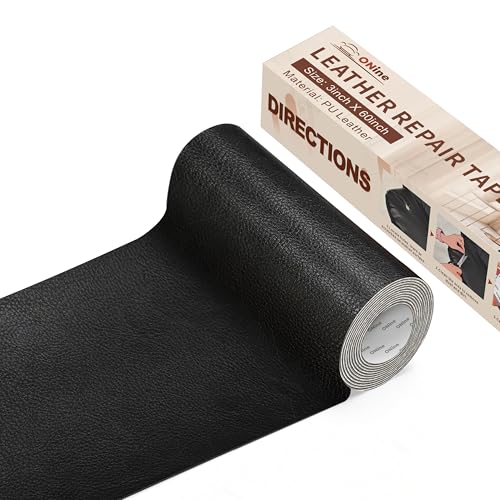
ONine Black Repair Tape, 3 x 60 in is another narrow black roll, measuring 3 by 60 inches, and the maker describes it as a cut-to-size patch for furniture, sofas, car seats, and office chairs. It needs no heat, tools, or stitching, which suits quick surface coverage rather than a sewn or structural repair. The maker also claims waterproof, scratch-proof durability and residue-free adhesion. Its three-inch width is slightly narrower than Besezx Black Repair Patch, 3.1 x 60 in, so it may take more careful placement when covering a small area that is wider than the strip.
Bottom line: Choose this for a narrow black repair that you can cover with a cut-to-fit strip.
How to choose a vinyl upholstery patch
Choose a patch by surface match, repair dimensions, and placement—not roll length alone. Measure the damaged area, then plan for the patch to cover the full mark with a little margin; rounded corners are less likely to catch and peel than sharp corners. Match the patch color and texture as closely as possible, because a visible mismatch can stand out more than the original scuff. Self-adhesive patches cover surface damage, but they do not reconnect torn upholstery or restore a weakened cushion. Avoid spanning seams, folds, and high-flex areas, where repeated movement can stress the adhesive. For broad, flat damage, prefer a single wide patch over narrow strips joined edge to edge.
How much patch coverage do you need
Calculate coverage from the patch dimensions and the damaged area: length multiplied by width gives square inches, but usable coverage depends on the shape and margin around the damage. A 3-inch-wide strip works for narrow marks; choose a 17-inch-wide patch when the damaged area is broad enough that multiple strips would leave visible joins. Cut a paper template first if the tear has an irregular outline, and check that the planned patch fits without crossing a seam. Clean and dry the surface before application, since dust, oil, and moisture can interfere with adhesive contact. Press the patch onto the flat area rather than stretching it over a curve.
| Repair need | Useful patch approach |
|---|---|
| Narrow scuff or scratch | About 3 inches wide |
| Broad, flat damaged area | Wider single patch |
| Damage crossing a seam | Reconsider a surface patch |
Where self-adhesive patches work best
Self-adhesive patches are most suitable for clean, dry, relatively flat vinyl or synthetic-leather surfaces. They can cover a mark, but they cannot replace missing padding, repair a split seam, or make a load-bearing seat safe. Check the upholstery material in an inconspicuous area before applying a patch if the surface has a coating or unusual texture, since adhesion and appearance can vary. Avoid placing a patch where a hinge, recliner mechanism, or frequent fold will repeatedly bend it. If a tear is large enough to expose foam or keep spreading under ordinary contact, a surface patch may not hold the repair together; use a repair method designed for the underlying damage.
How to apply and care for a repair patch
Apply the patch only after the upholstery is clean and completely dry, and cut it to cover the damaged spot with rounded corners. Position it carefully before pressing, because some adhesives are difficult to reposition once they bond; Lifenion Black Repair Patch, 17 x 79 in specifically advises against removal and reapplication and says its adhesive reaches optimal effect after 24 hours. Keep the repaired area free from pulling or abrasion during that period. Avoid scrubbing across the patch edge, which can lift it, and inspect the edges periodically for peeling. A patch is a surface covering, not a permanent fix for damage that continues to grow or upholstery that flexes sharply in daily use.
Frequently Asked Questions
Can a vinyl repair patch fix a torn seat seam?
No; a self-adhesive patch covers the surface and does not reconnect stitching or strengthen the seam. For damage that follows a seam or opens under pressure, use a repair method made for sewn upholstery.
How should I prepare vinyl before applying a patch?
Start with a clean, dry, flat surface so dust, oil, and moisture do not sit between the adhesive and upholstery. Let any cleaning residue dry fully before positioning the patch.
Should I round the corners of a repair patch?
Yes; rounded corners have fewer edges to catch than sharp corners. Leave enough coverage around the mark, but avoid extending the patch across a seam or fold.
How long should I wait before using patched upholstery?
For Lifenion Black Repair Patch, 17 x 79 in, the maker says the adhesive reaches its optimal effect after 24 hours. Keep the area from being pulled or heavily flexed during that period; other patches may have different bonding behavior.
Can a patch be placed over a curved seat edge?
A flat area is a better choice because a curve can keep the patch under tension and encourage edge lifting. Avoid stretching a patch around an edge that bends during normal use.