
Miracle Foot Repair Cream: 3 Sizes Compared

Miracle Foot Repair Cream, 8 oz + 1 oz is the closest match for most shoppers seeking Miracle Foot Repair Cream: it pairs an 8-ounce foot cream with a 1-ounce size. Choose Miracle Foot Repair Cream, 3 x 8 oz instead if you want three 8-ounce containers; choose Miracle of Aloe Foot + Hand Repair Cream if the included hand cream matters more than extra foot cream.
Foot creams moisturize thick, dry skin on the soles and heels, but they are not a substitute for care from a clinician when cracks are deep, bleeding, or worsening.
We earn a commission if you buy through links on this page. As an Amazon Associate I earn from qualifying purchases. Products are compared on manufacturer specifications, not hands-on testing.
- Best overall: Miracle Foot Repair Cream, 8 oz + 1 oz – Its 8-ounce foot cream comes with a 1-ounce size for a smaller companion container.
- Best for a larger supply: Miracle Foot Repair Cream, 3 x 8 oz – The three 8-ounce containers provide 24 ounces of foot cream.
- Best for hand care: Miracle of Aloe Foot + Hand Repair Cream – The package pairs 8 ounces of foot cream with 1 ounce of hand cream.
| Product | Best for | Package contents | Total amount | Shop |
|---|---|---|---|---|
| Miracle Foot Repair Cream, 8 oz + 1 oz | Mixed-size routine | 8 oz foot cream + 1 oz size | 9 oz | Check Price on Amazon |
| Miracle Foot Repair Cream, 3 x 8 oz | Multi-container supply | 3 x 8 oz foot cream | 24 oz | Check Price on Amazon |
| Miracle of Aloe Foot + Hand Repair Cream | Foot and hand care | 8 oz foot + 1 oz hand cream | 9 oz | Check Price on Amazon |
Miracle Foot Repair Cream Options
Compare the package contents and total amounts to find the format that fits your foot-care routine.
Miracle Foot Repair Cream, 8 oz + 1 oz

Miracle Foot Repair Cream, 8 oz + 1 oz is the two-size option, with an 8-ounce container and a 1-ounce size. Its formula contains 60% UltraAloe, and the maker says it is intended to moisturize and soften dry, rough feet and callused areas. This package suits someone who wants a larger container plus a smaller one for occasional use or travel. The smaller size is only 1 ounce, so it is not the best fit if you need several full-size containers or want the largest total amount of foot cream.
Bottom line: Choose this package for a full-size container plus a small companion size.
Miracle Foot Repair Cream, 3 x 8 oz

Miracle Foot Repair Cream, 3 x 8 oz provides three 8-ounce containers of foot cream, the largest total amount among these options. The formula contains 60% UltraAloe; the maker says it moisturizes and softens dry, rough skin and calluses. This format suits a household that wants multiple containers or someone who prefers keeping a separate container in different places. Its package is all foot cream, rather than a mix of foot and hand products. If you do not expect to use 24 ounces, the three-container bundle may be more than your routine calls for.
Bottom line: Pick this option if you want three full-size foot cream containers.
Miracle of Aloe Foot + Hand Repair Cream
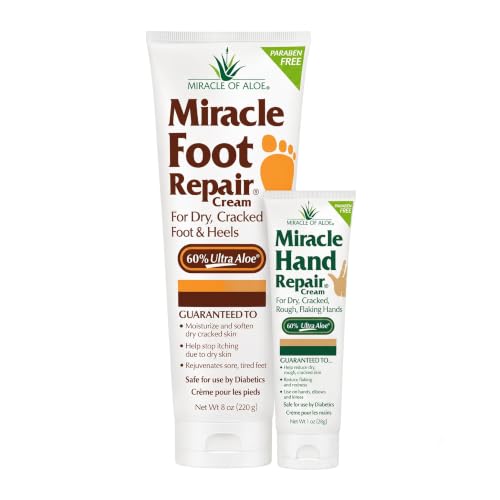
Miracle of Aloe Foot + Hand Repair Cream is the only option that explicitly includes a separate hand repair cream: 8 ounces for feet and 1 ounce for hands. The foot cream contains 60% UltraAloe, and the maker describes the formulas as fast-absorbing and non-greasy. Choose this set if you want products for both feet and hands in one package. The hand cream is a small 1-ounce portion, and the set has less foot cream overall than the three-container option.
Bottom line: Choose this set when a separate hand cream is useful.
How to choose a foot repair cream
For rough heels, choose a moisturizer you can apply consistently and compare the active ingredients, not just the front-label claims. Many foot moisturizers use humectants such as glycerin to attract water, while occlusives such as petrolatum help reduce water loss; formulas may combine both. Urea is also common in foot creams: lower concentrations are used for dry skin, while stronger formulations are intended for very thick, rough areas. The products compared here identify aloe content but do not give a urea concentration, so they cannot be ranked by that ingredient. A practical rule is to choose the package you can finish comfortably and use on intact skin; painful fissures, bleeding, or redness call for medical guidance rather than escalating cosmetic care.
Compare package sizes and included products
Package format is the clearest difference among these options: two include 9 ounces total in mixed sizes, while one contains 24 ounces of foot cream. An ounce is a measure of weight for creams in these package descriptions, not a promise of how many applications you will get; the amount used per application changes that. The 1-ounce portions are smaller than the 8-ounce containers and can be handy for occasional use, but each is a limited supply. Use the table to match the amount and product type to your routine rather than treating total package weight as a measure of formula strength.
| Need | Package format | Amount |
|---|---|---|
| Foot cream in multiple full-size containers | Three 8-ounce foot creams | 24 oz |
| Foot cream plus a smaller size | 8-ounce foot cream plus 1-ounce size | 9 oz |
| Foot cream and hand cream | 8-ounce foot cream plus 1-ounce hand cream | 9 oz |
Applying cream to dry heels safely
Apply moisturizer after washing and drying the feet, when the skin is clean; avoid leaving moisture between the toes, where dampness can encourage irritation. A thin layer is a sensible starting point, since a thicker layer can make floors slippery if you walk barefoot immediately afterward. Do not apply cosmetic cream to open or bleeding cracks without medical advice. People with diabetes or reduced foot sensation should be cautious with foot products and avoid self-treating wounds, because reduced sensation can make injury harder to notice. Stop use if a product causes burning, rash, or increasing redness, and seek care for persistent or worsening symptoms.
When dry, cracked heels need more than moisturizer
Moisturizer can help dry skin feel softer, but deep heel fissures may need assessment, especially if they bleed, become painful, or show signs of infection such as spreading redness or drainage. Avoid cutting thick skin with blades or razors; even small cuts can become significant wounds, particularly for people with diabetes or poor circulation. For intact, thickened skin, gentle use of a pumice stone after bathing is safer than aggressive scraping, and it should never cause pain or bleeding. A clinician can distinguish simple dryness from other causes of scaling or cracking and recommend treatment appropriate to the skin condition.
Frequently Asked Questions
How often should I moisturize dry heels?
Many people apply foot moisturizer once or twice daily, especially after bathing, when skin is clean and dry. Use a light layer and avoid the spaces between the toes.
Can foot cream go between the toes?
Avoid leaving cream between the toes, where trapped moisture can irritate skin. Apply it to dry heel and sole skin instead.
Should I use a pumice stone on cracked heels?
Only use gentle friction on intact, thickened skin; stop if the area hurts or bleeds. Do not use a blade or pumice stone on open cracks or wounds.
When should cracked heels be checked by a clinician?
Get medical advice for deep, bleeding, painful, or worsening cracks, or for redness or drainage. People with diabetes or reduced foot sensation should seek guidance before self-treating foot wounds.
Does a larger package mean stronger foot cream?
No; package amount measures how much product is included, not its strength. Compare the formula ingredients and concentrations when they are provided.