
ZHOU Black Seed Oil: Capsules and Liquid Compared

For a ZHOU black seed oil option, choose the 4 fl oz liquid if you prefer oil by volume, or the 60-count capsules if you want a capsule format. The products here are the ZHOU organic liquid and capsule; the other choices are alternatives with different formulas and are not ZHOU products.
We earn a commission if you buy through links on this page. As an Amazon Associate I earn from qualifying purchases. Products are compared on manufacturer specifications, not hands-on testing.
- Best overall: ZHOU Black Seed Oil Capsules, 60 Count – The ZHOU capsule option offers 60 capsules in a compact format.
- Best for liquid format: ZHOU Organic Black Seed Oil, 4 fl oz – The ZHOU option is a 4 fl oz black seed oil liquid.
- Best for added oregano: Cold-Pressed Black Seed Oil with Vitamin E – The alternative combines black seed oil with oregano oil.
| Product | Best for | Form | Container amount | Added ingredients | Shop |
|---|---|---|---|---|---|
| ZHOU Black Seed Oil Capsules, 60 Count | Capsule format | Capsules | 60 capsules | — | Check Price on Amazon |
| ZHOU Organic Black Seed Oil, 4 fl oz | Liquid format | Liquid | 4 fl oz | — | Check Price on Amazon |
| Cold-Pressed Black Seed Oil with Vitamin E | Vitamin E formula | Softgels | 120 capsules | Vitamin E | Check Price on Amazon |
| Black Seed Oil with Oregano, 240 Softgels | Oregano blend | Softgels | 240 softgels | Oregano oil | Check Price on Amazon |
| Micro Ingredients Black Seed Oil with Oregano | Tested oregano blend | Softgels | 240 softgels | Oregano oil | Check Price on Amazon |
ZHOU black seed oil options and alternatives
Compare the ZHOU formats first, then consider alternatives if their capsule count or added ingredients better match your preferences.
ZHOU Black Seed Oil Capsules, 60 Count

The main distinction is format: this ZHOU product comes as 60 capsules rather than a liquid bottle. The maker describes the oil as cold-pressed, pure and unrefined, and says it includes thymoquinone; its claims include support for immune, hair, skin, joint and digestive health. Those are the maker’s claims, not a reason to treat the supplement as medicine. The capsule option suits buyers who prefer a counted serving format. The maker does not give the oil amount per capsule or serving directions, so those are important label checks if dosage is a deciding factor.
Bottom line: Choose this if you want ZHOU in a capsule format and 60 capsules is suitable.
ZHOU Organic Black Seed Oil, 4 fl oz

Unlike the capsule option, this ZHOU product is a 4 fl oz liquid, and its name identifies it as organic. The maker describes the oil as cold-pressed and unrefined and says it contains omega 3, 6 and 9 fatty acids and thymoquinone; it claims support for immune, hair, skin, joint and digestive health. Consider this format if you prefer liquid oil and can measure servings. The maker gives no serving size or serving count, so verify those on the package before comparing how long the bottle may last.
Bottom line: Choose this if you prefer liquid oil and want the ZHOU organic option.
Cold-Pressed Black Seed Oil with Vitamin E

This alternative stands out for its added vitamin E and 120-count softgel bottle, rather than the ZHOU products’ capsule or liquid options. The maker says each 500 mg capsule contains black seed oil and natural vitamin E, and describes the softgels as cold-pressed and easy to swallow without a foul taste. It may suit someone seeking this combination in softgel form. The name includes 1,000 mg per serving, but the maker does not clarify how many capsules make a serving; check the package serving directions before comparing amounts with another product.
Bottom line: Pick this if vitamin E alongside black seed oil is a priority.
Black Seed Oil with Oregano, 240 Softgels
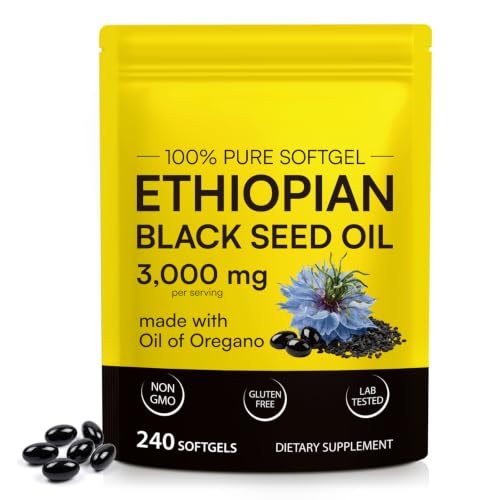
The defining difference here is the oregano addition: the maker says each serving provides 3,000 mg of black seed oil and 100 mg of oregano leaf extract. The product is cold-pressed and comes in a 240-softgel bottle, unlike the ZHOU 60-count capsule or 4 fl oz liquid. It suits buyers specifically looking for a combined botanical formula.
Bottom line: Choose this if you want a black seed oil and oregano combination.
Micro Ingredients Black Seed Oil with Oregano
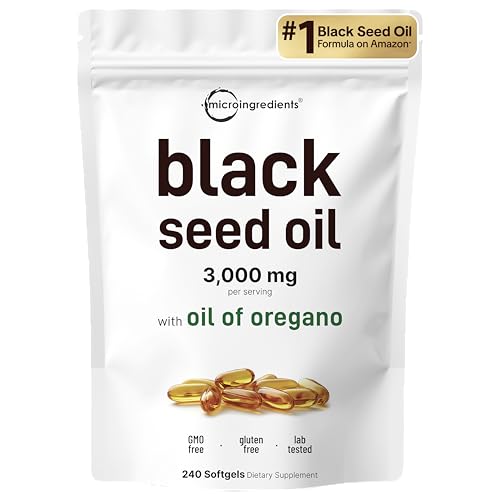
This alternative also combines black seed oil and oregano, but its maker identifies it as a Micro Ingredients formula and says it is third-party lab tested, non-GMO, gluten free and made in a cGMP-compliant facility. The maker gives 3,000 mg black cumin seed oil and 100 mg oregano oil per serving and describes the pouch as an 80-day supply with 240 softgels. It suits buyers who value those stated quality attributes and a pouch format. Check the serving directions to confirm the number of softgels per serving; the ZHOU choices do not share this oregano blend.
Bottom line: Pick this if the testing and oregano blend match your preferences.
How to choose a black seed oil format
Choose capsules for a pre-portioned form or liquid when you prefer oil measured by volume. A fluid ounce contains 2 tablespoons, so a 4 fl oz bottle holds 8 tablespoons total; that is the bottle volume, not a serving count. Capsule counts also do not reveal serving size: the label must say how many capsules make a serving. If you want to compare products by amount, use the labeled serving size and amount per serving rather than comparing bottle counts alone. With the products here, check whether you want a single black seed oil or an added botanical such as oregano or vitamin E before weighing container size.
| Preference | What to compare |
|---|---|
| Capsules | Capsules per serving and oil amount per serving |
| Liquid | Serving volume and total bottle volume |
| Added ingredients | Ingredient identity and amount per serving |
How to compare serving amounts
Compare black seed oil products by the serving amount on the Supplement Facts panel, not by the largest number in a product name. A capsule’s milligrams per unit and milligrams per serving are different if a serving uses multiple capsules. For liquids, the serving volume is usually shown in milliliters or teaspoons; 5 mL equals 1 teaspoon. A bottle’s 4 fl oz is about 118 mL, but that does not tell you how many servings it contains without the labeled serving volume. Check whether added oils are counted separately from the black seed oil amount when comparing blended formulas.
What to check on a supplement label
Supplement labels identify serving size, servings per container, and the amount of each dietary ingredient per serving. Use those three fields to estimate routine fit: divide the container’s servings by the number of servings you plan to take each day. The FDA does not approve dietary supplements for safety and effectiveness before they are marketed, so terms such as organic or third-party tested are not a substitute for checking the actual ingredient panel and certifications. Supplements can interact with medicines or affect health conditions; ask a clinician or pharmacist before use if you take medication, are pregnant, or have a medical condition. Do not use a supplement in place of prescribed treatment.
Frequently Asked Questions
How many servings are in 4 fluid ounces?
A 4 fl oz bottle contains about 118 mL, or 24 teaspoons total. The serving count depends on the label’s serving volume; at 1 teaspoon per serving, that would be 24 servings.
Is black seed oil better as capsules or liquid?
Neither format is universally better; choose capsules for a counted form and liquid if you prefer measuring oil by volume. Compare the labeled serving amount and ingredient panel because capsule count or bottle volume alone does not show a serving.
What does thymoquinone mean on black seed oil?
Thymoquinone is a naturally occurring compound associated with Nigella sativa, the plant used for black seed oil. A label mentioning it does not establish the amount unless the product provides a quantified amount per serving.
Can black seed oil interact with medications?
Supplements can interact with medicines, so ask a pharmacist or clinician before combining black seed oil with a prescription or over-the-counter drug. Check first especially when you take ongoing medication or have a health condition.
How do I compare capsule serving sizes?
Check both capsules per serving and milligrams per serving on the Supplement Facts panel. A 120-capsule container may have fewer servings than a 60-capsule product if its serving uses more capsules.