
ZenSweet Monk Fruit Sweetener: Alternatives Compared

ZenSweet monk fruit sweetener is not among these options, so choose a substitute by form: Monk Fruit Granules with Erythritol, 4 lb offers a 1:1 granulated blend for sugar-style measuring. Buyers seeking pure monk fruit without erythritol should consider WHYZ Organic Monk Fruit Powder, 5 oz or a liquid extract instead.
We earn a commission if you buy through links on this page. As an Amazon Associate I earn from qualifying purchases. Products are compared on manufacturer specifications, not hands-on testing.
- Best overall: Monk Fruit Granules with Erythritol, 4 lb – Its granules are a 1:1 sugar substitute suited to baking, drinks and other recipes.
- Best for pure extract: WHYZ Organic Monk Fruit Powder, 5 oz – It is powdered pure monk fruit without erythritol or other fillers.
- Best for beverages: NOW Organic Monk Fruit Liquid, 2 fl oz – The liquid sweetener uses a 5-to-8-drop serving for foods and drinks.
- Best for small servings: Monk Fruit Extract Drops, 1.7 fl oz – The maker says six drops provide sweetness comparable to one teaspoon of sugar.
| Product | Best for | Form | Package size | Sweetness or ratio | Shop |
|---|---|---|---|---|---|
| Monk Fruit Granules with Erythritol, 4 lb | Sugar-style baking | Granules | 64 oz | 1:1 sugar substitute | Check Price on Amazon |
| WHYZ Organic Monk Fruit Powder, 5 oz | Pure monk fruit | Powder | 5 oz | 200 times sweeter than sugar | Check Price on Amazon |
| NOW Organic Monk Fruit Liquid, 2 fl oz | Liquid sweetening | Liquid | 2 fl oz | 5–8 drops per serving | Check Price on Amazon |
| Monk Fruit Extract Drops, 1.7 fl oz | Small liquid servings | Liquid drops | 1.7 fl oz | 15–20 times sweeter than sugar | Check Price on Amazon |
| Lakanto Classic Monk Fruit Sweetener, 5 lb | Larger granulated bag | Granules | 80 oz | White sugar substitute | Check Price on Amazon |
Monk Fruit Sweeteners
These alternatives vary most in whether they measure like sugar or use concentrated extract in powder or liquid form.
Monk Fruit Granules with Erythritol, 4 lb
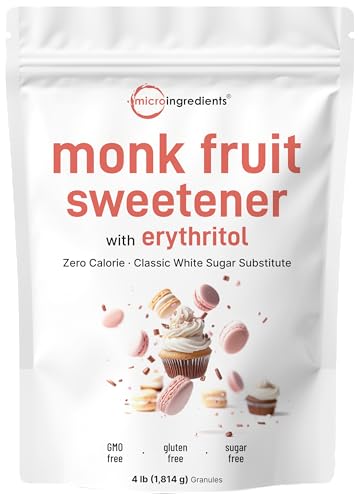
For recipes that measure sweetener by the cup, this granulated blend is the most direct swap among these options: the maker describes it as a 1:1 sugar substitute. The 4-pound bag contains monk fruit and erythritol, and a scoop is included. Its uses include drinks, baking, smoothies, coffee and tea, making it a flexible pantry choice. The limitation is that it is not a pure monk fruit extract; buyers avoiding erythritol should choose a different form, such as a pure powder or liquid extract.
Bottom line: Choose this if you want granules that measure like sugar in recipes.
WHYZ Organic Monk Fruit Powder, 5 oz

Unlike the granulated blends, this is a concentrated powdered monk fruit sweetener with no erythritol, fillers or added sugar. The maker says it is 200 times sweeter than sugar and recommends using a small amount, so it is better suited to controlled sweetening than cup-for-cup measuring. The 5-ounce container is described as having 458 servings. Use care when adapting a recipe: a concentrated extract does not provide the bulk or texture of sugar, and the maker’s sweetness comparison is not a 1:1 baking ratio.
Bottom line: Choose this if you want powdered monk fruit without erythritol.
NOW Organic Monk Fruit Liquid, 2 fl oz

For adding sweetness without scooping granules or powder, this organic monk fruit extract comes in liquid form. The maker recommends shaking the 2-fluid-ounce bottle and sweetening to taste with 5 to 8 drops; it also describes the liquid as zero-calorie and suitable for beverages and foods. Liquid drops are practical for coffee, tea and other moist mixtures, but they do not replace the structure or bulk of sugar in most baking recipes. Choose a granulated blend when recipe volume and texture matter.
Bottom line: Choose this for drop-by-drop sweetening of beverages and foods.
Monk Fruit Extract Drops, 1.7 fl oz

These drops offer a different concentration claim from the other liquid option: the maker says they are 15 to 20 times sweeter than sugar, with six drops matching the sweetness of a teaspoon. The 1.7-fluid-ounce bottle is also described as having 167 servings and contains monk fruit extract without erythritol. Its serving guidance is useful for drinks such as coffee and tea, but drops are not a granulated, cup-for-cup substitute for baking. Start with less than the target sweetness and adjust gradually.
Bottom line: Choose these drops when you want a small liquid serving and no erythritol.
Lakanto Classic Monk Fruit Sweetener, 5 lb

Compared with the 4-pound granulated option, this 5-pound bag gives buyers a larger package of monk fruit sweetener blended with erythritol. The maker says its texture and taste are similar to white sugar and that it dissolves in liquids and performs in baked goods. That makes it a fit for shoppers who want a white-sugar-style replacement for cooking, coffee or tea.
Bottom line: Choose this if you want a larger granulated blend for baking and drinks.
How to Choose Monk Fruit Sweetener
Choose by form first: granules are easier to measure in recipes, while concentrated powder and drops suit small, adjustable additions. A 1:1 granulated blend is the closest match when a recipe calls for a cup of sugar, but sugar also adds bulk and browning; replacing it can change a baked good’s texture. Pure extracts are much sweeter per spoonful than sugar, so they are not automatic cup-for-cup swaps. For drinks, start with a small amount and adjust to taste. If you are following a plan that limits a specific ingredient such as erythritol, check the ingredient list rather than relying on the words “monk fruit” alone. That ingredient distinction separates pure extract from blends.
| Need | Form to consider | Reason |
|---|---|---|
| Measure like sugar | Granules | A 1:1 blend supports direct measuring |
| Sweeten a drink gradually | Liquid drops | Small amounts are easy to adjust |
| Avoid erythritol | Pure extract | Choose a product identified as erythritol-free |
Granules, Powder and Drops Compared
Granulated blends and concentrated extracts solve different kitchen problems. Granules combine a sweetener with a bulking ingredient and can be used by volume where the product gives a sugar-substitution ratio. Powdered monk fruit and liquid drops concentrate sweetness, so a small dose can sweeten without replacing sugar’s bulk. The maker’s ratio or serving guidance is product-specific: one brand’s drop count should not be assumed for another bottle. For baking, use a granule blend when the recipe needs a larger measured quantity, and reserve extract for recipes that can handle less bulk. For beverages, either form can work, but liquid is easiest to adjust drop by drop.
How to Adapt Recipes with Monk Fruit
Use a product’s conversion as the starting point, then account for what sugar contributes beyond sweetness. Sugar adds volume, helps baked goods brown, and affects moisture and texture, so a concentrated extract alone may leave cookies or cakes with a different structure. A 1:1 blend is more convenient for measuring, although the finished result can still differ from sugar. In drinks, sweetness is easier to fine-tune: add a little, stir, taste, then increase in small increments. Do not treat “zero calorie” or a sweetener’s relative sweetness claim as proof that every recipe will behave the same way; baking depends on the full ingredient balance.
Storage and Measuring Tips
Keep powdered and granulated sweeteners dry and close containers after scooping; moisture can cause powders and granules to clump. Use a clean, dry spoon, and store liquid drops upright with the cap closed to prevent spills and contamination. Concentrated monk fruit extract can be easy to overuse because a small amount may provide substantial sweetness, so measure carefully instead of pouring freely. For a new recipe, test the sweetener in a single serving or small batch before changing a full recipe. Do not confuse a serving count with a sugar-equivalent volume: serving size and sweetness strength differ across powder, drops and granulated blends.
Frequently Asked Questions
Can monk fruit sweetener replace sugar cup for cup?
Only a product with a 1:1 ratio supports cup-for-cup measuring. Concentrated monk fruit powder and drops use much smaller amounts and do not replace sugar’s bulk in baking.
Does pure monk fruit sweetener contain erythritol?
Pure extract can be sold without erythritol, while many granulated monk fruit blends combine it with erythritol. Check the product’s ingredient wording if avoiding that ingredient matters to you.
How much monk fruit liquid should I add to coffee?
Start with the maker’s suggested serving and adjust gradually after stirring. The NOW liquid maker recommends 5 to 8 drops, while another product gives a six-drop serving, so drop counts are not interchangeable.
Why does monk fruit change baked goods?
Sugar contributes bulk, browning and moisture as well as sweetness, so concentrated extract alone can alter a recipe’s texture. A granulated blend with a 1:1 ratio is easier to measure, but results may still differ.
How should I store monk fruit sweetener?
Keep powders and granules dry in closed containers, since moisture can cause clumping. Close liquid bottles after use and keep them upright to reduce spills.