
Clear Coat for Cars: 3 Automotive Finishes Compared

For overall automotive refinishing, Sherwin-Williams Finish 1 FC720 with FH612 is the strongest fit because it is a high-solids urethane clearcoat made for basecoats and cured single-stage enamel. Choose SprayMax 2K Glamour Clear Coat instead for a smaller repair area that suits an activated spray can, or Sherwin-Williams Finish 1 FC720 with FH611 if you need a fast hardener.
Automotive clearcoat is the transparent top layer over paint; the right format depends on whether you are refinishing a full panel or touching up a smaller area.
We earn a commission if you buy through links on this page. As an Amazon Associate I earn from qualifying purchases. Products are compared on manufacturer specifications, not hands-on testing.
- Best overall: Sherwin-Williams Finish 1 FC720 with FH612 – A gallon-size urethane clearcoat kit is designed for overall refinishing and includes medium hardener.
- Best for small repairs: SprayMax 2K Glamour Clear Coat – The 11.8-ounce 2K aerosol has a fan nozzle and does not require a compressor.
- Best for fast hardener: Sherwin-Williams Finish 1 FC720 with FH611 – This gallon-size clearcoat kit includes fast hardener and supports air-dry or force-dry use.
| Product | Best for | Format | Size | Mixing ratio | Shop |
|---|---|---|---|---|---|
| Sherwin-Williams Finish 1 FC720 with FH612 | Overall refinishing | Urethane kit | 1 gal + 1 qt hardener | 4:1 | Check Price on Amazon |
| SprayMax 2K Glamour Clear Coat | Small spray repairs | 2K aerosol | 11.8 oz | — | Check Price on Amazon |
| Sherwin-Williams Finish 1 FC720 with FH611 | Fast hardener use | Urethane kit | 1 gal + hardener | 4:1 | Check Price on Amazon |
Clear Coat for Cars Compared
Match the coating format and amount to the repair area, then check compatibility with the paint underneath.
Sherwin-Williams Finish 1 FC720 with FH612
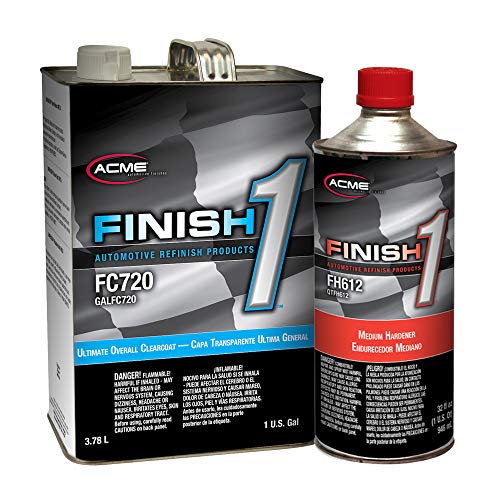
For overall refinishing, this high-solids urethane clearcoat is the most complete kit of the group: the package pairs 1 gallon of FC720 with 1 quart of medium universal hardener. The maker says it can go over automotive basecoats and cured single-stage enamels, with two coats applied using a cross-coat technique. The 4:1 mix ratio and supplied hardener make it suited to a prepared spray setup rather than a quick touch-up. Its gallon quantity may be more than a small repair needs, so choose another format for an isolated chip or narrow scratch.
Bottom line: Choose this for an overall refinish when you have a compatible spray setup and need a gallon-size kit.
SprayMax 2K Glamour Clear Coat

Unlike the gallon kits, this 2K clearcoat comes in an 11.8-ounce aerosol with a fan nozzle, making it the more compact option for a limited spray job. The maker says the polyurethane finish is UV-, gasoline-, and chemical-resistant; the can must be activated and shaken before spraying. It is intended for automotive refinishing and new paint jobs, and avoids the separate compressor and mixing cup associated with bulk coatings. The single can is not a practical choice for broad overall refinishing, and 2K coatings require careful attention to label safety directions and suitable spray conditions.
Bottom line: Pick this for a smaller automotive spray job where an activated aerosol is more practical than a gallon kit.
Sherwin-Williams Finish 1 FC720 with FH611

This Finish 1 kit differs from Sherwin-Williams Finish 1 FC720 with FH612 by pairing FC720 with fast hardener FH611 instead of medium hardener FH612. The maker says the clearcoat works in air-dry or force-dry environments and offers blending and buffing characteristics; its 4:1 mix ratio is intended for a spray refinishing workflow. That makes it a fit when a fast-hardener option is specifically needed, rather than a ready-to-use aerosol. The included amount is aimed at larger refinishing work, so a single small blemish may call for a smaller format; confirm the hardener choice suits the shop conditions before mixing.
Bottom line: Choose this when the fast-hardener version is the better match for your refinishing conditions.
How to choose clear coat for cars
Choose the clearcoat format by repair area and application equipment: an overall refinish favors a mixable gallon kit, while a small spray job may suit an aerosol. Automotive clearcoats are commonly urethane systems, and two-component (2K) products combine clear and hardener to cure into a film; mixing ratios are product-specific, so do not transfer a ratio from one system to another. A measurable rule: if the job covers a full panel or more, favor a refinishing kit intended for overall work; for a spot-size repair, compare an aerosol format and its coverage instructions. Also verify that the clearcoat is compatible with the underlying basecoat or cured single-stage finish before applying it.
What 2K clearcoat means for application
A 2K clearcoat uses two components that are combined or activated before application, unlike a simple one-component spray finish. Pot life—the usable time after activation—varies by formulation and temperature, so prepare the work area and equipment before activating a can or mixing a batch. Spray technique matters: maintain consistent overlap and follow the maker’s coat schedule rather than adding extra coats to hide uneven coverage. Two-component automotive coatings can present serious inhalation hazards, including isocyanate exposure; use the label-required respiratory protection and spray controls, not an ordinary dust mask, and do not spray in an occupied living area. A spray booth and trained handling are appropriate for professional refinishing.
Prepare the painted surface before clearcoat
Clearcoat bonds best to a properly prepared, compatible color coat, not to dirt, wax, or loose paint. Remove contamination and mask adjacent areas before spraying; keep the basecoat within its recoat window because a cured or over-aged basecoat may need different preparation. Use a clean, dry surface and avoid spraying when dust, wind, or condensation can settle into the finish. Temperature and humidity affect flow and curing, so work within the product’s environmental range. A common mistake is applying clear over peeling paint: clearcoat is transparent and cannot stabilize a failing substrate, so repair the loose coating first rather than sealing over it.
Choose a clearcoat format by job size
Format helps narrow the choice, but it does not replace checking substrate compatibility or application instructions. A mixed gallon kit is aimed at broad refinishing work and calls for accurate measuring and spray equipment; an activated aerosol is a compact option for limited spray areas. The practical distinction is the amount and setup, not a guarantee that either format will match existing paint. For a decision rule, reserve gallon kits for larger areas where a consistent spray setup is available, and consider an aerosol only when its usable quantity and fan pattern fit the repair. Keep overspray away from glass, trim, and people, and follow the coating label’s ventilation and protective-equipment requirements.
Frequently Asked Questions
How many coats of automotive clearcoat are typical?
Two coats are a common starting point for automotive clearcoat, but the product schedule controls the actual number and flash time. Applying extra coats can cause runs or other finish defects rather than correcting poor coverage.
Can clearcoat go over any car paint?
No; clearcoat needs a compatible, properly prepared color coat or cured finish. Check the coating system’s compatibility and recoat window, since basecoat condition and cure state can change preparation needs.
How long should clearcoat dry before driving?
Dry-to-touch and safe-to-drive times are different, and automotive coatings may require hours or longer to cure depending on formulation, film thickness, and temperature. Use the product’s cure schedule before exposing a fresh finish to road debris, water, or washing.
Is a 2K clearcoat safe to spray at home?
A 2K automotive coating can expose the sprayer to hazardous vapors or aerosols, including isocyanates in some formulations. Use the label-required respiratory protection and professional-grade ventilation; an ordinary dust mask or an occupied garage is not an adequate substitute.