
Best Travel Fishing Rod Case: 4 Options Compared

The Plano Airliner suits most anglers who need a travel fishing rod case because it collapses to 47 inches and extends to 88 inches, with room for up to eight 7-foot rods. Choose a different case if you need reel storage, a padded soft bag, or a rigid tube for two-piece rods.
A rod case protects fishing rods during transport; match its usable length and shape to rods with reels attached or detached.
We earn a commission if you buy through links on this page. As an Amazon Associate I earn from qualifying purchases. Products are compared on manufacturer specifications, not hands-on testing.
- Best overall: Plano Airliner Telescoping Rod Case – Its telescoping length accommodates rods up to 88 inches and it stores as many as eight 7-foot rods.
- Best for rigid protection: Cwanluu 50-Inch Hard-Shell Case Set – The hard-shell set has a 49.6-inch outer case for 7-foot, two-piece rods.
- Best for compact combos: PEKREWS 46–52-Inch Rod Case – Adjusts from 46 to 52 inches and is designed for one or two breakdown rod-and-reel combos.
| Product | Best for | Case length | Rod capacity | Construction | Shop |
|---|---|---|---|---|---|
| Plano Airliner Telescoping Rod Case | Multiple long rods | 47–88 in | Up to 8 rods | Polypropylene | Check Price on Amazon |
| Cwanluu 50-Inch Hard-Shell Case Set | Two-piece rods | 49.6 in outer case | For 7-ft, 2-piece rods | PC+ABS shell | Check Price on Amazon |
| PEKREWS 46–52-Inch Rod Case | Freshwater combos | 46–52 in | 1–2 rod-and-reel combos | Padded soft bag | Check Price on Amazon |
| Booms Fishing PB4 Extendable Rod and Reel Case | Long soft-bag carry | 76–96 in | 2–3 rods | Nylon with foam | Check Price on Amazon |
Best travel fishing rod cases
Compare case length, rod capacity and construction against the way your rods break down and travel.
Plano Airliner Telescoping Rod Case
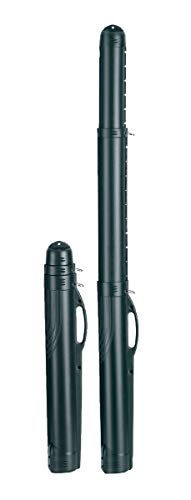
The Plano Airliner stands out for its telescoping length and high rod capacity: it collapses to 47 inches and extends to 88 inches, with space for up to eight 7-foot rods. Its three-tier design uses polypropylene, and a locking device holds the case at the chosen length. The molded handle gives you a direct carry point.
This case fits anglers transporting several rods, but it does not describe dedicated reel compartments or soft padding. Check that your rod sections fit inside the 88-inch maximum and that the 4.5-inch diameter suits your bundle.
Bottom line: Pick this if you need an adjustable rigid case for several rods.
Cwanluu 50-Inch Hard-Shell Case Set

The Cwanluu set differs from soft bags by using a rigid shell, and it includes four nesting cases for compact storage. Its outer case measures 49.6 by 7.5 by 5.1 inches; the set is intended for 7-foot, two-piece rods. The shell material is a PC+ABS hybrid.
This option suits anglers who want a hard carrier for broken-down rods. The 49.6-inch length limits what fits, and the dimensions do not establish room for reels attached to rods. Confirm the packed rod-section length is no more than the interior can accommodate before buying.
Bottom line: Choose it for two-piece rods that need a rigid outer shell.
PEKREWS 46–52-Inch Rod Case

The PEKREWS case is built around compact breakdown spinning combos rather than long one-piece rods. Its adjustable length runs from 46 to 52 inches and it holds one or two 7-foot takedown rod-and-reel combos. A padded divider separates reels, while two side pockets accommodate tackle and accessories; the reel pouch fits standard 1000–3000 freshwater spinning reels.
This is a useful choice when you want reels and small gear carried together. It is unsuitable for larger saltwater rods or oversized reels, so check reel size and packed rod length before choosing it.
Bottom line: Pick this for short breakdown spinning combos and organized tackle.
Booms Fishing PB4 Extendable Rod and Reel Case

The Booms Fishing PB4 covers a longer range than the compact soft case: it extends from 76 to 96 inches and is designed to carry two or three rods with reels. Its nylon exterior, built-in cushioning foam and rod-retaining straps help organize the contents during transport.
Choose it for longer setups that benefit from a soft bag and reel storage. The maker advises against using it for surf or ocean rods, so it is not the right match for those larger rod styles. Measure the packed rods and reel bundle against the case length before setting out.
Bottom line: Choose this for longer rods and reels in a padded soft case.
How to choose a travel fishing rod case
Choose by packed rod length first, then decide whether you need reels inside the case. A one-piece rod needs a case long enough for its full length; a two-piece rod can use a case sized for its longest section. Rod cases commonly use rigid tubes for crush resistance or padded fabric bags for easier carrying and storage. Confirm the maker’s usable interior length rather than relying on the outside measurement, since end caps and padding take up space.
Capacity counts vary in what they mean: a case may hold bare rods, or rods with reels attached. If your reel stays on, allow room for its body and handle as well as the rod guides. For travel in a vehicle or checked luggage, use a rigid tube when compression is a concern; for walking with gear, a shoulder strap and lower weight may matter more.
Rod length and case fit
Measure each rod in its travel configuration before choosing a case. For a two-piece rod, measure the longest section from end to end; for a telescoping rod, measure it fully collapsed. A 7-foot rod breaks into sections around 42 inches only when its sections are equal, so confirm the actual section length rather than assuming. Reel-on storage needs extra width and clearance around the reel seat.
Use this fit rule: if a packed section is longer than the case’s usable interior length, it will not fit safely, even if the outside length seems close. Allow a little extra clearance so the tip does not press against an end cap. The case’s diameter or width also matters when carrying multiple rods with guides, reel handles or protective sleeves.
Hard tubes and soft rod bags compared
Rigid rod tubes protect against direct compression better than fabric bags, while padded soft cases are easier to fold and can be more convenient for carrying reels and tackle. Neither style automatically fits every rod: tube diameter, bag length, reel placement and the number of rods all affect fit. This comparison can narrow the choice by travel need.
| Travel need | Case type | Trade-off |
|---|---|---|
| Risk of gear being crushed | Rigid tube or hard shell | More rigid, usually bulkier |
| Rods with reels attached | Roomy padded bag | Check reel clearance and capacity |
| Flexible packing and carrying | Soft bag | Less crush protection than a hard shell |
| Several rods of different lengths | Telescoping case | Confirm diameter and locked length |
Safe packing and care for rod cases
Pack rods with the tips protected and guides facing inward where the case design allows; loose guides can snag fabric or strike other rods. Separate rods with sleeves or dividers to reduce contact between blanks, guides and reel handles. Never force a rod into a case that is too short, because pressure at the tip or ferrule can damage it.
After a wet trip, open the case and let both the rods and interior dry before storage; trapped moisture can encourage corrosion on metal guides and reel parts. Keep a hard tube’s locking sections clear of grit so they can extend and retract smoothly. A shoulder strap should carry the case securely without letting it swing into people or other equipment.
Frequently Asked Questions
Can a 7-foot fishing rod fit in a 50-inch case?
A 7-foot one-piece rod is 84 inches long and will not fit inside a 50-inch case. A two-piece 7-foot rod may fit if its longest section is shorter than the case’s usable interior length; measure that section before choosing.
Should I travel with reels attached to the rods?
Reels can travel attached when the case is designed with enough width and protection around them. Leave the reel off if its handle or body presses against the case or neighboring rods; that pressure can damage equipment.
Are hard fishing rod tubes better for air travel?
A rigid tube resists crushing better than a soft fabric bag, which helps when baggage is stacked. Check the carrier’s current baggage-size and handling rules before travel, since case dimensions and policies differ.
How many rods should one travel case hold?
Choose capacity based on the number of rods plus whether reels stay attached. A case rated for several bare rods may not have room for the same count with reels, guides and handles in place.
How do I protect rod tips inside a case?
Use a tip protector or padded sleeve and keep rods from sliding lengthwise inside the case. Leave clearance at the ends so a rod tip does not rest against a hard cap during transport.