
Dryer Vents for Vinyl Siding: 5 Options Compared

For a 4-inch dryer duct and a siding-matched trim ring, Builders Edge 4-Inch Hooded Ventilator is the clearest fit; it includes an 8-inch aluminum tube and comes in colors intended to match siding manufacturers. Choose Funmit 4-Inch Vinyl Dryer Vent Cover if you specifically want a plastic cover labeled for vinyl siding, but its removable screen needs special consideration for dryer exhaust.
These exterior terminations carry moist dryer air through an outside wall. Before choosing a generic wall vent, check that its mounting method works with your siding and that the termination is suitable for dryer exhaust.
We earn a commission if you buy through links on this page. As an Amazon Associate I earn from qualifying purchases. Products are compared on manufacturer specifications, not hands-on testing.
- Best overall: Builders Edge 4-Inch Hooded Ventilator – Includes an 8-inch aluminum tube and a snap-on trim ring, with colors intended to match siding manufacturers.
- Best for vinyl-specific fit: Funmit 4-Inch Vinyl Dryer Vent Cover – The 4-inch plastic cover is explicitly described as a vinyl dryer vent cover and has a 6-by-6-inch face.
- Best for metal construction: Hydencamm 4-Inch Stainless Steel Louvered Cover – Uses stainless steel and a louvered outlet without a screen.
| Product | Best for | Duct size | Material | Siding or mounting feature | Shop |
|---|---|---|---|---|---|
| Builders Edge 4-Inch Hooded Ventilator | Siding color match | 4 in | Aluminum tube; hood material — | Snap-on trim ring; 24 colors | Check Price on Amazon |
| Funmit 4-Inch Vinyl Dryer Vent Cover | Plastic cover | 4 in | Plastic | 6 × 6 in face; described for vinyl siding | Check Price on Amazon |
| Hydencamm 4-Inch Stainless Steel Louvered Cover | Stainless steel | 4 in | Stainless steel | Exterior-wall cover; 5 screws | Check Price on Amazon |
| 4-Inch Galvanized Steel Hooded Vent | Long wall sleeve | 4 in | Galvanized steel | 8¼ in pipe; screen and damper | Check Price on Amazon |
| Builders Edge Scalloped Exhaust Vent | Scalloped wall finish | — | — | Side-wall vent; snap-on trim ring | Check Price on Amazon |
Dryer vents for vinyl siding
Compare the duct connection, cover material and siding-related features before selecting an exterior termination.
Builders Edge 4-Inch Hooded Ventilator

A siding-focused trim ring and included tube distinguish this hooded ventilator from the standalone covers. Builders Edge says the 4-inch vent includes an 8-inch aluminum tube, and its snap-on trim ring is intended to make installation easier. It is offered in 24 colors to match siding manufacturers, plus a paintable option. Consider it when the exterior finish and trim interface matter as much as the duct connection. The specifications do not establish the hood material, so confirm that it suits the exposure and installation you have in mind before choosing it.
Bottom line: Choose this if a siding-oriented trim ring and color selection are priorities.
Funmit 4-Inch Vinyl Dryer Vent Cover
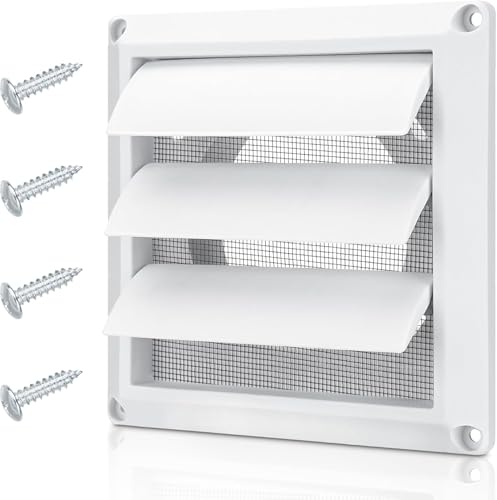
The vinyl-specific wording and square face set this cover apart from the metal options. The white plastic cover fits a 4-inch pipe and measures 6 by 6 inches across the face; it includes a removable mesh screen and four screws. The maker says the cover helps limit wind, rain, snow, birds and rodents from entering. This can suit someone seeking a plastic exterior cover, but the screen is a meaningful drawback for dryer exhaust: lint can build up at the termination. Dryer vents should not use a screen, so do not install it with the screen in place.
Bottom line: Choose it only if you can use the cover without its lint-trapping screen.
Hydencamm 4-Inch Stainless Steel Louvered Cover

Stainless steel construction and a screen-free outlet distinguish this exterior-wall cover from the plastic and screened choices. It is sized for a 4-inch vent and includes five screws and a rubber gasket; its louvered design is intended for dryer, air-conditioning and range-hood uses. The maker describes an interlocking design and foam tape for noise reduction. The fields do not specify a vinyl-siding mounting block or trim ring, so this is a partial fit for siding projects. Confirm how it will mount to your siding before choosing it.
Bottom line: Choose it when stainless steel and a screen-free outlet matter more than a siding-specific trim ring.
4-Inch Galvanized Steel Hooded Vent
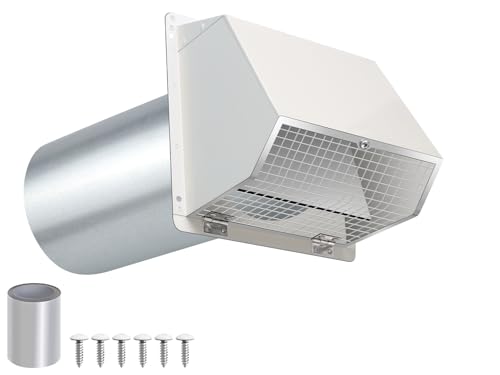
An 8¼-inch wall pipe and spring-loaded backdraft damper distinguish this hooded galvanized-steel vent. It connects to a 4-inch dryer duct and has an openable screen intended to keep animals and insects out. The maker says the damper opens for exhaust and helps prevent outside air from flowing back through the vent. The screen is a poor match for dryer exhaust because lint can collect there; remove it only if the design permits, or choose a screen-free dryer termination. Its fields do not describe a siding mounting block.
Bottom line: Consider it only if its sleeve length suits the wall and the screen can be safely omitted.
Builders Edge Scalloped Exhaust Vent

A scalloped profile and exhaust flaps distinguish this side-wall vent from the round-duct covers. The flaps stay closed when the vent is not in use, and its mounting block is described as UV-stabilized and maintenance-free. A snap-on trim ring is intended to simplify installation. Confirm the duct connection and dryer suitability before selecting it.
Bottom line: Choose it only if the scalloped wall style fits and the duct connection is confirmed.
How to choose a dryer vent for vinyl siding
Start with a 4-inch duct connection, then choose a termination with a damper and a siding-compatible mounting method. Most residential dryers use a 4-inch exhaust duct; a hood, louver or flap opens when the dryer runs and closes when it stops. Dryer exhaust terminations should not have screens because lint can accumulate and restrict airflow. Vinyl siding also has a stepped profile rather than a flat wall surface, so a mounting block or trim ring designed for siding can provide a stable, weather-resistant interface. A generic exterior-wall cover may fit the duct but still require a separate mounting solution. If a product includes a screen, select a different termination unless the screen can be omitted as designed.
| Need | What to prioritize |
|---|---|
| Siding fit | Mounting block or trim ring for siding |
| Dryer exhaust | 4-inch duct and damper, without a screen |
| Color coordination | Trim or cover with a compatible finish |
Mounting a vent through vinyl siding
Use a siding mounting block or compatible trim ring rather than fastening a flat vent face over the siding profile. Vinyl siding expands and contracts as temperatures change, so the siding should not be pinched tightly by the vent flange or screws. A mounting block creates a flatter surface for the termination and helps direct water away from the wall opening. Keep the duct connection aligned with the wall opening and seal the exterior perimeter with an exterior-grade sealant appropriate for the siding and vent materials. Do not rely on caulk alone to bridge a deep siding profile. If the vent kit does not describe a siding-specific interface, verify the mounting plan before cutting the wall.
Dryer vent duct length and airflow
A typical residential dryer duct is 4 inches in diameter and should be smooth-walled metal, not plastic flex duct hidden inside a wall. The International Residential Code uses 35 feet as a baseline maximum exhaust-duct length, with reductions for elbows; the dryer manufacturer’s instructions and local code may set a shorter limit. Each bend adds resistance, so a short, direct route is preferable to extra turns. Use rigid or semi-rigid metal duct where appropriate, secure joints with foil tape rather than screws that protrude into the airflow, and avoid crushing flexible sections. Before buying a wall sleeve, measure the wall assembly and verify that the duct can connect without a sharp kink.
Dryer vent maintenance and safety
Clean the lint screen in the dryer before or after each load, and inspect the outdoor termination regularly for lint, stuck flaps or animal nesting. A termination that cannot open freely can restrict exhaust and contribute to overheating or fire risk. Disconnect power before servicing an electric dryer; shut off the gas supply before moving a gas dryer, and restore the connection safely. Keep the outdoor flap clear of snow, leaves and landscaping, and never add a fine mesh screen to keep pests out of a dryer exhaust. If the vent route is long or the flap fails to open during operation, stop using the dryer until the airflow restriction is corrected.
Frequently Asked Questions
Can a dryer vent have a screen on the outside?
No; dryer exhaust terminations should not have screens because lint can collect and block airflow. Choose a dampered termination without mesh, even if a screen is removable.
What size duct does a standard dryer vent use?
Most residential dryers use a 4-inch exhaust duct. Measure the existing duct and termination before replacing a cover, since a matching nominal diameter does not confirm the wall sleeve length.
How long can a residential dryer vent duct be?
A common code baseline is 35 feet of equivalent duct length, reduced for elbows; the dryer maker’s limit or local code can be shorter. Keep the route direct and include elbow allowances in the measurement.
Should dryer ducting be plastic or metal?
Use smooth-walled metal duct for the concealed exhaust run rather than plastic flex duct. Flexible sections can crush or trap lint, so keep any permitted transition short and unobstructed.
How often should I inspect an outdoor dryer vent?
Check the outside flap regularly for lint buildup, blockage or a flap that sticks shut, and clean the full duct at least annually. A long or heavily used route may need more frequent cleaning.