
Beet Root With Maca: 5 Capsule Formulas Compared

VINATURA Fermented Beet Root with Maca is the clearest starting point for beet root with maca because its formula identifies 1,000 mg of fermented beet root and 200 mg of maca per serving. Choose another formula if you want black maca, a broader botanical blend or more capsules; these are dietary supplements, not substitutes for a varied diet or medical care.
We earn a commission if you buy through links on this page. As an Amazon Associate I earn from qualifying purchases. Products are compared on manufacturer specifications, not hands-on testing.
- Best overall: VINATURA Fermented Beet Root with Maca – It specifies 1,000 mg fermented beet root and 200 mg maca in each serving.
- Best for black maca: Nutricost Organic Beet Root + Black Maca – Its formula pairs 600 mg fermented beet root with 100 mg black maca per serving.
- Best for extra botanicals: Herbpy 6-in-1 Beet Root Capsules – The six-ingredient formula adds grape seed, ginger, turmeric and black pepper.
| Product | Best for | Capsules | Beet root per serving | Maca type and amount | Shop |
|---|---|---|---|---|---|
| VINATURA Fermented Beet Root with Maca | Clear serving amounts | 90 | 1,000 mg | Maca, 200 mg | Check Price on Amazon |
| Nutricost Organic Beet Root + Black Maca | Black maca formula | 120 | 600 mg | Black maca, 100 mg | Check Price on Amazon |
| EVERYDAY NUTRITION Organic Fermented Beet Root & Black Maca | Multi-plant blend | 90 | — | Black maca; amount — | Check Price on Amazon |
| PRSPR Fermented Beet Root Maca | Smaller capsule count | 60 | — | Maca; amount — | Check Price on Amazon |
| Herbpy 6-in-1 Beet Root Capsules | Six-herb blend | 100 | Beetroot extract; amount — | Black maca; amount — | Check Price on Amazon |
Beet Root With Maca Capsules Compared
Compare the serving amounts and additional ingredients to find a formula that fits your preferences.
VINATURA Fermented Beet Root with Maca

VINATURA Fermented Beet Root with Maca is the most clearly quantified option in this group: each serving combines 1,000 mg fermented beet root with 200 mg maca, and the 90-capsule bottle contains 45 servings. The formula is described as organic and uses fermented beet powder with maca root. That split is useful when comparing ingredient amounts rather than relying on a combined blend total. Match the serving size on the container to the amounts shown here.
Bottom line: Pick this if you want a beet root and maca amount for each serving.
Nutricost Organic Beet Root + Black Maca
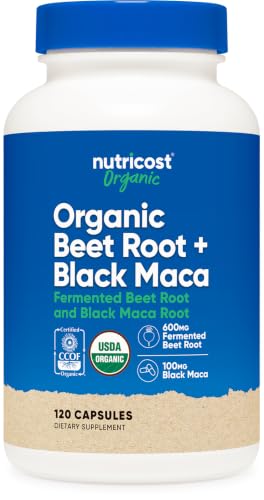
Nutricost Organic Beet Root + Black Maca combines fermented beet root and black maca with carrot, cranberry, ginger and spinach powders, giving it a broader botanical mix than a two-ingredient formula. Each serving has 600 mg beet root and 100 mg black maca; the 120-capsule bottle provides 60 servings. The specifications also identify USDA Organic and CCOF certification, plus vegan, non-GMO and gluten-free attributes. Those details may matter when choosing a supplement around dietary preferences or certification. Its amounts per serving are lower than VINATURA Fermented Beet Root with Maca, so it is a better match for someone prioritizing the black maca variety and extra plant ingredients than the largest beet root amount.
Bottom line: Choose this if black maca and the added botanical powders suit your ingredient preferences.
EVERYDAY NUTRITION Organic Fermented Beet Root & Black Maca

EVERYDAY NUTRITION Organic Fermented Beet Root & Black Maca stands out for its mix of organic fermented beet root and black maca with carrot, spinach, cranberry and ginger. The 90-capsule bottle gives shoppers who want several plant ingredients a different formula from the more narrowly quantified options. The brand also says the supplement is non-GMO, made in the USA and third-party tested for quality and purity. No ingredient amounts per serving appear in the specifications, so this option is less suited to buyers comparing exact beet-to-maca ratios. Confirm the serving directions and ingredient amounts on the container if those figures determine your choice.
Bottom line: Pick this if the multi-plant blend matters more to you than stated ingredient amounts.
PRSPR Fermented Beet Root Maca

PRSPR Fermented Beet Root Maca is the only 60-capsule option here and combines fermented beet root with organic maca, carrot and spinach. Its plant-based formula is described as having no artificial preservatives or stimulants, making the ingredient approach distinct from formulas with additional cranberry, ginger or extract blends. Buyers who need a specific maca variety or a defined beet-to-maca ratio should verify those points before choosing it. The smaller capsule count may suit someone looking for a bottle with fewer capsules rather than a long supply.
Bottom line: Choose this if you prefer its shorter ingredient list and 60-capsule bottle.
Herbpy 6-in-1 Beet Root Capsules

Herbpy 6-in-1 Beet Root Capsules differs from the fermented beet root powders by using a 10:1 beetroot extract and combining it with black maca, grape seed, ginger, turmeric and black pepper. Each capsule is listed as 755 mg, with one capsule per day and 100 capsules per jar. That makes its labeled serving straightforward to count, although the specifications do not break out the amounts for beetroot, maca or the other ingredients individually. The blend is suited to shoppers seeking several named botanicals in one capsule; buyers who want a quantified beet-to-maca split should favor a formula that gives both amounts.
Bottom line: Pick this if a one-capsule, six-herb blend matches your priorities.
How to Choose Beet Root With Maca Capsules
Choose by ingredient amounts first, then by maca type and added botanicals. A supplement facts panel separates the serving size from the amount of each ingredient; a combined blend weight does not tell you how much beet root or maca it contains. Compare the same units, usually milligrams per serving, and check whether the named serving is one or several capsules. As a practical rule, if you need to compare ratios, choose a formula that states both ingredient amounts rather than one that gives only a total capsule weight. Maca may be identified by type, such as black maca, but color alone does not establish a serving amount. Extra powders or extracts also change the ingredient profile, not necessarily the amount of either primary ingredient.
Dietary supplements are regulated differently from medicines in the United States: FDA does not approve supplements for effectiveness before marketing. A certification or quality-testing statement is a separate attribute and should not be treated as proof that a supplement will produce a particular result.
How Serving Size and Capsule Count Compare
Capsule count is not the same as servings per bottle: a serving may require more than one capsule. Check the serving directions and divide bottle count by capsules per serving to estimate servings; for example, 90 capsules at two capsules per serving equals 45 servings. Compare ingredient amounts per serving, not per capsule, when formulas use different serving sizes. The labels in this comparison include a 90-count bottle with 45 servings and another with 120 capsules for 60 servings, while other formulas give capsule counts without a serving count. If the number of days a bottle lasts matters, use the daily serving rather than the front-label capsule total. The actual serving directions on the container should guide use.
Use this quick guide to prioritize the specification that affects your choice.
| Buyer priority | What to compare |
|---|---|
| Set an ingredient ratio | Milligrams of beet root and maca per serving |
| Choose a maca variety | Whether the formula names black maca or another type |
| Estimate bottle duration | Capsules per bottle and capsules per serving |
| Limit extra ingredients | Full ingredient panel, including powders and extracts |
Fermented Beet Root Powder Versus Beetroot Extract
Fermented beet root powder and beetroot extract are different forms, so their milligram amounts are not directly interchangeable. An extract ratio such as 10:1 describes a concentrated extract relative to its starting material; it does not mean the capsule supplies ten times the usable nitrate or a predictable effect. Fermentation describes a processing step, but the word alone does not tell you the final nitrate level or ingredient potency. For a fair comparison, look for an amount per serving and any standardized constituent the label identifies. These specifications do not provide nitrate standardization, so do not infer it from the words fermented, organic or extract. Choose based on the form you prefer and the label quantities you can compare.
Safety and Label Checks for Beet Root Supplements
Beetroot can temporarily turn urine or stool pink to red, a benign color change that can be surprising. Beetroot also contains oxalate, so people with a history of calcium oxalate kidney stones should ask a clinician whether a beet supplement is appropriate. Maca and multi-herb formulas add ingredients beyond beetroot, so review the full panel for allergies and potential medication interactions; ask a pharmacist or clinician before combining supplements with prescription medicines. Do not use a supplement to replace prescribed care, and stop and seek medical advice if you have a concerning reaction. If pregnant, nursing, or managing a chronic condition, consult a healthcare professional before starting a multi-ingredient supplement.
Frequently Asked Questions
Does fermented beet root mean more nitrates?
Not necessarily; fermentation describes processing, not a guaranteed nitrate concentration. Compare a label only when it provides a nitrate amount or standardization, since a beet root milligram figure alone does not establish nitrate content.
How do I compare maca amounts between capsules?
Compare milligrams per serving, not bottle totals or capsule weight. If a label does not separate maca from beet root or other ingredients, the maca amount cannot be directly compared with a formula that does.
Can beetroot supplements change urine color?
Yes, beetroot can temporarily tint urine or stool pink to red. If discoloration persists after stopping beetroot or comes with pain or other symptoms, contact a healthcare professional.
Should people with kidney stones take beet root?
People with a history of calcium oxalate kidney stones should check with a clinician before using beetroot supplements because beetroot contains oxalate. Individual stone risk and dietary guidance can differ.
Are dietary supplements approved like medicines?
No; FDA does not approve dietary supplements for effectiveness before they are marketed. Quality certifications or testing statements do not establish that a product treats a condition or works for every person.