
Timing Light With Advance: 5 Models Compared

For a timing light with advance, Innova 3568 Digital Timing Light is the strongest match for most buyers because its scale adjusts from 0–90 degrees and its display combines advance with tachometer readings. Choose Innova 3555 Advance Timing Light instead if a 0–60-degree scale is sufficient, or Innova 5568 Pro Digital Timing Light or ANCEL LT70 PRO Timing Light if you also need dwell or voltage readings.
A timing light flashes in sync with ignition pulses so you can see timing marks while the engine runs; advance controls let you check timing at a selected offset.
We earn a commission if you buy through links on this page. As an Amazon Associate I earn from qualifying purchases. Products are compared on manufacturer specifications, not hands-on testing.
- Best overall: Innova 3568 Digital Timing Light – Its 0–90-degree advance scale and split-screen tachometer/advance display suit common timing checks.
- Best for dwell and voltage: Innova 5568 Pro Digital Timing Light – Its four-function readout adds dwell and voltage to tachometer and advance.
- Best for five measurements: ANCEL LT70 PRO Timing Light – It covers timing, 0–90-degree advance, RPM, dwell and voltage.
| Product | Best for | Advance range | Readouts | RPM range | Shop |
|---|---|---|---|---|---|
| Innova 3568 Digital Timing Light | Wide advance range | 0–90° | Tachometer, advance | 249–9,990 RPM | Check Price on Amazon |
| Innova 5568 Pro Digital Timing Light | Dwell and voltage | — | Tachometer, advance, dwell, voltage | Up to 9,990 RPM skip test | Check Price on Amazon |
| KZYEE KT60 Digital Timing Light | Digital RPM display | 0–90° | Tachometer, advance | — | Check Price on Amazon |
| Innova 3555 Advance Timing Light | Basic advance checks | 0–60° | Advance | Up to 9,990 RPM skip test | Check Price on Amazon |
| ANCEL LT70 PRO Timing Light | Multiple diagnostics | 0–90° | Timing, advance, tachometer, dwell, voltage | 200–9,999 RPM | Check Price on Amazon |
Timing lights with advance
Compare the advance range and extra readings to match a light to the checks you need to make.
Innova 3568 Digital Timing Light

Innova 3568 Digital Timing Light pairs a 0–90-degree direct-reading advance scale with a split-screen display for tachometer and advance readings. The digital tachometer covers 249–9,990 RPM, and the slim rotating barrel helps aim at the timing mark. Innova says it works with conventional, electronic and computer-controlled ignition systems, for domestic and import vehicles. It suits buyers who want a wide adjustment range and an RPM readout in one tool. The readout does not include dwell or voltage, so choose a different model if those measurements are part of your tuning checklist.
Bottom line: Choose it for a 0–90-degree scale and simultaneous RPM and advance readings.
Innova 5568 Pro Digital Timing Light

Innova 5568 Pro Digital Timing Light stands out for its four-function display, which adds dwell and voltage to tachometer and advance readings. Its patented skip circuitry tests up to 9,990 RPM; detachable 6-foot leads with an inductive pickup connect the tool to the ignition system. A shock-proof housing with a molded protective boot and included plastic storage case make it suited to buyers who need several diagnostic readings in one tool.
Bottom line: Pick it when dwell and voltage readings matter alongside timing and RPM.
KZYEE KT60 Digital Timing Light

KZYEE KT60 Digital Timing Light combines a digital tachometer with a 0–90-degree advance setting, and its display switches between real-time RPM and the selected advance value. A xenon strobe makes timing marks easier to see in dim engine bays, according to the product claims. The tool is intended for compatible distributor-equipped gasoline engines, so it suits owners working on that engine type rather than systems without a distributor. The maker does not identify additional measurements such as dwell or voltage; choose a model with those functions if you need them.
Bottom line: Choose it for distributor-equipped gasoline engines and a switchable RPM/advance display.
Innova 3555 Advance Timing Light
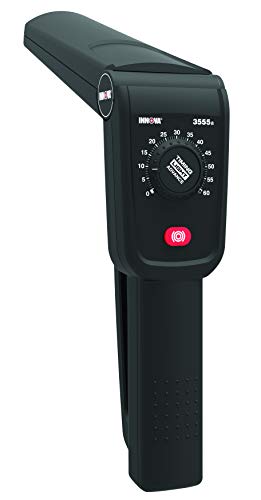
Innova 3555 Advance Timing Light uses a direct-reading 0–60-degree advance scale, a narrower range than the 0–90-degree options. Its advance dial supports checking base timing as well as mechanical or electronic advance and retard applications. Innova says it works with conventional, electronic and computer-controlled ignition systems, and its patented skip circuitry tests up to 9,990 RPM. This model suits buyers who need advance checks across those ignition types but do not need a digital tachometer or extra dwell and voltage functions. Confirm that 60 degrees covers the timing procedure for your engine.
Bottom line: Pick it if a 0–60-degree scale covers your engine’s timing procedure.
ANCEL LT70 PRO Timing Light

ANCEL LT70 PRO Timing Light adds a fifth measurement—ignition timing—to advance, tachometer, dwell and voltage functions. Its ranges are 0–90 degrees for advance, 200–9,999 RPM, 0–99.9% dwell and 0–35V DC. That breadth makes it suited to buyers checking both timing and basic electrical readings with one tool.
Bottom line: Choose it for five functions and the specified RPM, dwell and voltage ranges.
How to choose a timing light with advance
Start with the advance range your engine procedure calls for, then decide whether RPM, dwell or voltage readings matter. A 0–90-degree scale covers a wider adjustment span than a 0–60-degree scale, but the procedure for the specific engine determines what you need. Tachometer readings help you check timing at a target engine speed; dwell measures the ignition-point closed interval on systems where that measurement applies. Voltage is useful for basic electrical checks, but it does not replace a dedicated diagnostic procedure. The table compares the main tool types by what they measure, not by a universal ranking. If the procedure requires an advance setting above 60 degrees, choose a model with a 0–90-degree scale rather than one capped at 60.
| Need | Choose a light with |
|---|---|
| Advance checks up to 60° | 0–60° scale |
| Wider advance adjustment | 0–90° scale |
| Dwell or voltage checks | Those functions on the display |
How advance readings work
An advance control lets you offset the strobe so a timing mark can be compared with the engine’s specified timing value. Set the desired advance on the tool and aim the flash at the timing marks; the engine service procedure determines the RPM and conditions for the check. Do not assume every engine uses the same base timing or advance curve: specifications vary by engine and operating condition. A timing light’s adjustment range is not the engine’s permitted timing specification. A 0–90-degree tool provides more adjustment span than a 0–60-degree tool, but the right choice is the one that covers the procedure without exceeding it.
Compatibility and safe setup
Inductive pickup lights trigger from an ignition lead, while engine compatibility still depends on the ignition system and setup. Several models here identify conventional, electronic and computer-controlled ignition support; the KT60 instead specifies compatible distributor-equipped gasoline engines. Read the vehicle procedure for the correct pickup connection and timing conditions before starting. Keep leads, hands and clothing clear of belts, fans and other moving parts while the engine runs, and avoid contact with ignition components because ignition systems produce high voltage. Work in a ventilated area, secure the vehicle, and do not leave the tool or its leads where they can touch hot or moving parts.
Frequently Asked Questions
Can a timing light check mechanical advance?
Yes, a timing light with an advance control can help check mechanical advance when the engine procedure calls for it. The procedure specifies the engine speed and timing values; the tool’s adjustment range must cover those values.
What is the difference between 0–60 and 0–90 degrees?
The figures describe the tool’s advance adjustment span. Choose a 0–90-degree scale if your engine procedure calls for a setting above 60 degrees; otherwise, a 0–60-degree range may cover the check.
What does a timing light tachometer measure?
A tachometer reads engine speed in revolutions per minute (RPM). Use the RPM specified by the engine timing procedure, since timing checks can call for different speeds or operating conditions.
Why does a timing light use an inductive pickup?
An inductive pickup detects ignition pulses from a spark-plug lead to trigger the strobe. Attach it to the lead specified by the tool and engine procedure, keeping the cable clear of hot and moving engine parts.
Is an advance timing light compatible with every engine?
No; compatibility depends on the engine and ignition system. Some models identify support for conventional, electronic and computer-controlled systems, while the KT60 specifies compatible distributor-equipped gasoline engines.