
110 Volt AC to 12 Volt DC Converters Compared

ALITOVE 15A 180W Adapter is a practical starting point for a 110V AC to 12V DC converter because its 15A, 180W output suits many smaller car accessories. Choose a higher-capacity model for a device drawing more than 15A, or a wired power supply if you need terminals rather than a cigarette-lighter socket.
We earn a commission if you buy through links on this page. As an Amazon Associate I earn from qualifying purchases. Products are compared on manufacturer specifications, not hands-on testing.
- Best overall: ALITOVE 15A 180W Adapter – Its 15A, 180W output and 11.5-foot cord balance capacity and reach for smaller automotive accessories.
- Best for higher draw: ALITOVE 30A 360W Adapter – It supports up to 30A and 360W with an 11-foot cord for compatible 12V devices.
- Best for wired equipment: Yaheeda 12V 600W Wired Supply – Its switchable AC input and 12V output are intended for wired loads, with 40A recommended maximum.
| Product | Best for | Input | Cord length | Shop |
|---|---|---|---|---|
| ALITOVE 15A 180W Adapter | Smaller car accessories | 100–240V AC | 11.5 ft | Check Price on Amazon |
| ALITOVE 30A 360W Adapter | Higher-draw accessories | 110V AC | 11 ft | Check Price on Amazon |
| Aletbo 15A 180W Adapter | Home plug-in use | 100–240V AC | — | Check Price on Amazon |
| Yaheeda 12V 600W Wired Supply | Wired equipment | 85–145V or 185–265V AC | — | Check Price on Amazon |
| ALITOVE 10A 120W Adapter | Low-draw devices | 100–240V AC | 8 ft | Check Price on Amazon |
110 Volt AC to 12 Volt DC Converters
Match the converter’s output and connection style to the accessory before choosing a model.
ALITOVE 15A 180W Adapter

For many smaller 12V car accessories, this adapter offers a middle-ground 15A, 180W maximum output and an 11.5-foot cord. It converts household AC to 12V DC through a car cigarette-lighter adapter, so it is suited to accessories with a compatible plug rather than equipment meant for direct wiring. The maker says it has overvoltage, overcurrent, overtemperature and short-circuit protection. The key limit is its 180W maximum: a device drawing more than 15A needs a higher-rated converter, and a motor may draw extra current briefly when starting.
Bottom line: Choose this for a plug-in 12V accessory drawing no more than 15A.
ALITOVE 30A 360W Adapter
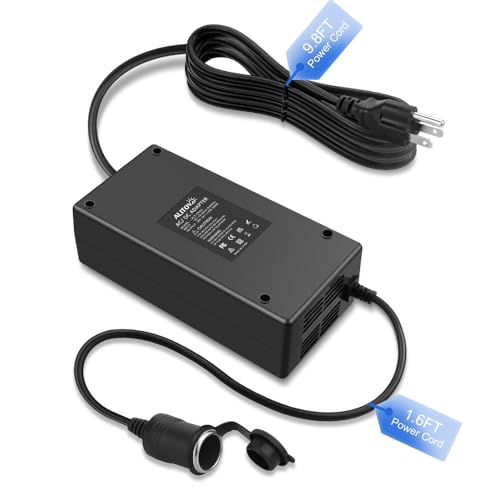
This is the highest-output cigarette-lighter-style adapter in the group, with a 30A, 360W maximum rating and an 11-foot cord. Its plug format is useful for compatible automotive accessories, including devices whose current draw exceeds the 15A limit of smaller adapters. The maker says it includes overvoltage, overcurrent, overtemperature and short-circuit protection, and warns against sustained loads above 360W. The important constraint is that the accessory must use a cigarette-lighter plug and stay within the converter’s rating; its higher capacity does not make it suitable for direct-wired equipment.
Bottom line: Choose this for a compatible plug-in device drawing more than 15A but no more than 30A.
Aletbo 15A 180W Adapter

The Aletbo is another 15A, 180W cigarette-lighter-to-wall adapter, with a 100–240V AC input range for household-power use. Its 12V output is intended for car accessories such as a refrigerator, tire inflator or vacuum that have a matching plug and remain within that output rating. The maker says the unit has overload, overheating, overvoltage and short-circuit protection. Unlike the ALITOVE alternatives with cord lengths, this model’s specs do not give a reach figure, so buyers who need to place the accessory far from an outlet should verify cord reach before ordering.
Bottom line: Choose this for a 12V plug-in accessory when its input range and stated protection features fit your needs.
Yaheeda 12V 600W Wired Supply

Unlike the plug-in adapters, this Yaheeda unit is a wired switching power supply for equipment such as an RV accessory, pump, LED strip or monitor. It accepts selectable 110V or 220V AC ranges and supplies 12V DC, with 50A peak current and a recommended load below 40A. The maker says motor loads need a power supply rated above twice the motor’s power, while resistive loads need at least 1.25 times the device power. That makes startup demand important. The limitation is its wired connection: it is not the straightforward choice for a car device that expects a cigarette-lighter plug.
Bottom line: Choose this for compatible equipment that connects by wiring rather than a car socket.
ALITOVE 10A 120W Adapter
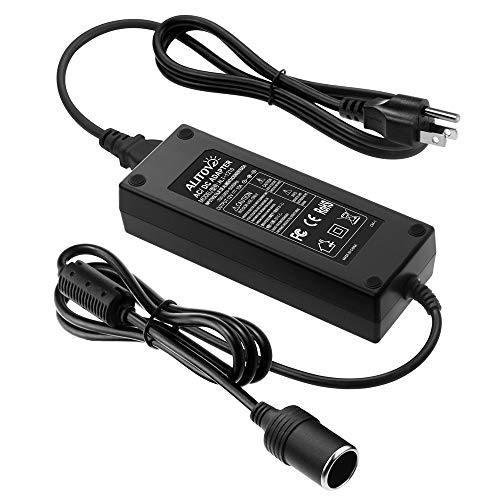
This adapter is the lowest-capacity plug-in option here, with a 10A, 120W maximum output and an 8-foot cord. It fits lower-draw 12V automotive electronics that use a cigarette-lighter plug, such as smaller inflators or coolers, but leaves less headroom than the 15A and 30A options. The maker says it includes overload, overvoltage, overtemperature and short-circuit cutoffs. Its shorter cord and 120W ceiling matter when the outlet is distant or the device draws close to 10A; check the accessory’s current rating rather than relying only on its 12V label.
Bottom line: Choose this for a low-draw plug-in accessory within 10A and 120W.
How to size a 12V converter
Match the converter’s current rating to the accessory’s maximum draw, not just its voltage. At 12V, watts equal volts multiplied by amps: 10A is 120W, 15A is 180W, and 30A is 360W. Leave headroom when a device’s draw is near the converter limit, and check the device label or manual for its maximum input current. Motors and compressors can demand a brief startup surge above their running draw, so a converter that only matches steady-state amps may shut down or overheat. As a practical rule, if the accessory exceeds 15A, skip a 15A adapter and compare a 30A model or a wired supply with an adequate continuous rating.
Choosing a plug-in adapter or wired supply
A cigarette-lighter adapter is designed for a car accessory with a matching plug; a wired switching supply connects to equipment terminals or leads. The plug-in format is convenient for household use of portable car accessories, but the converter and device must both match at 12V DC and stay within the adapter’s output limit. Wired supplies suit fixed installations, LED strips or equipment without a car plug, but polarity matters: connect positive to positive and negative to negative. A wrong connection can damage electronics. Decide first how the accessory connects, then compare output capacity; a high-amp wired supply is not a substitute for a plug-in adapter when the device requires a socket.
Input voltage and outlet compatibility
Check the AC input range against the wall supply where the converter will be used. US household outlets are nominally 120V AC, although products may use “110V” as a familiar label; a 100–240V input range covers a broader supply range than a unit with only a 110V input specification. Some wired supplies have separate 110V and 220V input ranges or a selector, so the selected range must match the actual source before energizing the unit. Use the correct household outlet and keep the converter ventilated; enclosed or obstructed airflow can add heat during sustained loads. Do not assume a 12V output makes a converter suitable for every 12V device: plug shape, polarity and current demand still need to match.
Using converters safely
Keep the load within the converter’s continuous rating and treat overload cutoffs as protection, not as a way to run above capacity. A fuse is intended to interrupt excessive current; never replace it with a higher-rated fuse unless the manufacturer specifies that rating. Place the converter on a stable, dry surface with open airflow, and keep it away from moisture and combustible materials. For a wired supply, disconnect AC power before changing output wiring, verify polarity, and cover exposed conductors to prevent shorts. With any accessory that starts a motor or compressor, allow extra capacity for startup and stop using the setup if the converter repeatedly shuts down, beeps or becomes unusually hot.
Frequently Asked Questions
Can a 12V converter run a car refrigerator at home?
Yes, if the refrigerator accepts 12V DC through a compatible car plug and its maximum draw stays within the converter’s rating. Compressor refrigerators can have a higher startup demand than their running draw, so allow current headroom.
How many watts does a 15 amp 12V converter provide?
A 15A converter at 12V provides 180W, using watts = volts × amps. That is a maximum output calculation; the accessory’s rated draw should remain within the converter’s limit.
Why does a converter shut off when a pump starts?
A pump motor can draw more current briefly at startup than during normal operation. Choose a converter with capacity for the pump’s startup demand, not only its running amps, and do not repeatedly restart a unit that is triggering its protection.