
Coco Liners for Planters: 3 Shapes Compared

For a long window box or fence planter, HHTHH 36-Inch Trough Coco Liner is the closest fit because its preformed coco liners are sized for a 36-inch trough. Choose 14-Inch Round Coco Liners, 6-Pack for a 14-inch round hanging basket, or Yarrdfir 12-by-80-Inch Coco Coir Mat when you need to cut a liner to fit an unusual shape.
Coco liners are porous coconut-fiber inserts that hold potting mix in open planters and baskets; measure the planter’s inside dimensions and shape before choosing.
We earn a commission if you buy through links on this page. As an Amazon Associate I earn from qualifying purchases. Products are compared on manufacturer specifications, not hands-on testing.
- Best overall: HHTHH 36-Inch Trough Coco Liner – Its preformed 36-inch trough shape suits long window boxes and fence planters.
- Best for round baskets: 14-Inch Round Coco Liners, 6-Pack – Six 14-inch round liners fit the hanging-basket size.
- Best for custom cuts: Yarrdfir 12-by-80-Inch Coco Coir Mat – The 12-by-80-inch mat can be cut to fit different containers.
| Product | Best for | Shape and size | Thickness or depth | Pack count | Shop |
|---|---|---|---|---|---|
| HHTHH 36-Inch Trough Coco Liner | Long window boxes | Trough, 36 × 8 × 8 in | 8 in depth | 2 liners | Check Price on Amazon |
| 14-Inch Round Coco Liners, 6-Pack | Round hanging baskets | Round, 14 in diameter | 7 in depth | 6 liners | Check Price on Amazon |
| Yarrdfir 12-by-80-Inch Coco Coir Mat | Custom-shaped planters | Mat, 12 × 80 in | 1/4 in thick | 1 mat | Check Price on Amazon |
Coco Liners for Planters Compared
Match the liner’s shape and measurements to the planter before filling it with potting mix.
HHTHH 36-Inch Trough Coco Liner
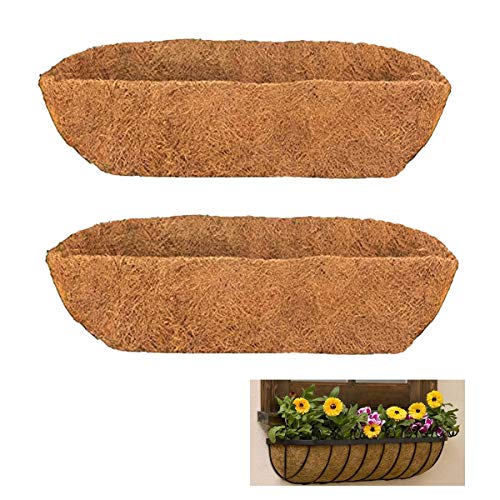
For a long, narrow planter, this preformed trough insert has a 36-inch length and 8-inch width and depth. The package contains two liners made from natural coconut fiber, intended for window boxes and fence flower baskets. Its molded shape saves the cutting and fitting needed with a flat mat, making it a fit for standard trough-style containers close to those dimensions. The limitation is its fixed form: it will not suit a round basket or a trough whose interior dimensions differ substantially, so measure the planting area rather than relying on the planter’s outside size.
Bottom line: Choose it for a trough planter with an interior near 36 by 8 inches.
14-Inch Round Coco Liners, 6-Pack

Unlike a long trough insert or a sheet to cut, this six-pack is made for round hanging baskets with a 14-inch diameter. Each liner is 7 inches deep and has a woven coconut-fiber construction. The maker says the fiber allows drainage and aeration while retaining some moisture, which suits flower baskets where water can escape through the sides. This fixed round shape is convenient when replacing several matching basket liners, but it is not a cut-to-size mat; a rectangular window box or a basket of a different diameter calls for another shape.
Bottom line: Choose these for multiple round hanging baskets measuring 14 inches across.
Yarrdfir 12-by-80-Inch Coco Coir Mat
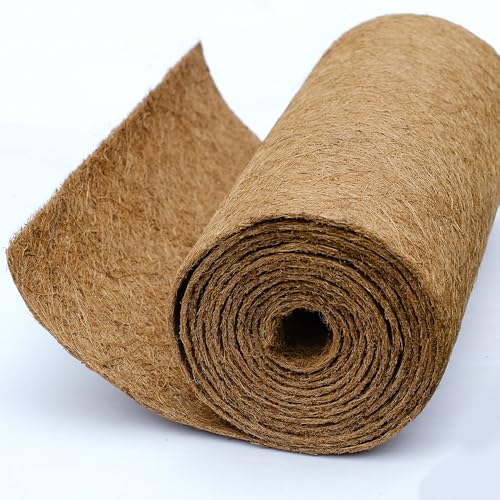
For planters that do not match a ready-made insert, this flexible 12-by-80-inch mat can be cut into custom shapes. At 1/4 inch thick, it can line window boxes, flower baskets and other containers, and the maker also describes uses beyond planters. Its flat format gives more fitting flexibility than a molded trough or round bowl, particularly when one long strip needs several cuts. The tradeoff is the extra work: measure and cut the mat to the container, and do not assume it will arrive shaped to hold potting mix on its own.
Bottom line: Choose it when a standard round or trough liner will not fit your planter.
How to choose a coco liner for a planter
Choose by the planter’s inside shape and dimensions, not by appearance alone. Round hanging baskets use bowl-shaped liners; window boxes and fence planters usually need a trough liner, while a flat coir mat works when you need to cut a custom shape. Measure the opening’s inside diameter for a round basket, or its inside length and width for a trough. Also check the interior depth: a liner that is too shallow can leave gaps, while an oversized insert may buckle or bunch. As a practical decision rule, choose a preformed liner when its shape and measurements match within about 1 inch; use a cuttable mat for an irregular container or a larger mismatch. Allow room for the liner’s thickness when measuring.
How coco liners handle water and potting mix
Coconut-fiber liners are porous, so water can pass through the liner and drain from an open basket; that airflow also means exposed sides can dry faster than potting mix in a solid pot. Plants in coir-lined baskets may need more frequent moisture checks during hot, sunny or windy weather. Water until the mix is evenly moist and excess drains, then check again before watering rather than keeping the basket continually saturated. Use a potting mix intended for containers, not dense garden soil, which can compact and impede drainage. Coir does not replace a drainage plan: a solid outer planter still needs a way for excess water to escape.
Preformed liners versus cut-to-fit coir mats
Preformed liners are ready to fit a specific basket or trough shape; a flat mat trades that convenience for flexibility. Use this comparison to narrow the format before checking dimensions.
| Format | Typical use | Fit check |
|---|---|---|
| Round bowl | Hanging basket | Match inside diameter and depth |
| Trough insert | Window box or fence planter | Match inside length, width and depth |
| Flat mat | Custom or irregular container | Cut to cover the interior |
A ready-made insert is the simpler choice when a planter closely matches its shape and size. A mat is more adaptable, but the cut edges and corners may need careful fitting so the liner stays in place while you add mix.
How to fit and maintain a coco-lined basket
Fit the liner before adding potting mix, and press it into the planter’s corners or bowl so it sits evenly without large gaps. For a hanging basket, attach the liner securely before filling; a loaded basket is harder to reposition and can be heavy. Add container mix, leaving room at the rim for watering, and monitor moisture because coir sides can lose water. At the end of a growing season, inspect the liner for thinning, loose fibers or sagging; replace it if it no longer holds the mix securely. Do not lift a heavily planted basket by a liner that is torn or pulling away from its support.
Frequently Asked Questions
How do I measure a planter for a coco liner?
Measure the interior, not the outside: take the opening’s diameter for a round basket and the length and width for a trough. Check depth too, since an insert that is too shallow may leave the sides uncovered.
Do coco liners need drainage holes?
Water can pass through porous coir, but the planter itself still needs an outlet for excess water. A solid outer pot with no drainage can leave roots sitting in pooled water.
How often should I water plants in coco-lined baskets?
Check the potting mix regularly, since exposed coir sides can dry faster in sun, heat and wind than mix in a solid pot. Water when the mix needs it and allow excess to drain rather than keeping it saturated.
Can I cut a coco liner to fit a planter?
A flat coir mat can be cut to fit a custom shape, while a preformed bowl or trough is intended for its matching container shape. Measure first and trim gradually so the liner still covers the planter’s interior.
When should I replace a coco basket liner?
Inspect a liner between growing seasons and replace it if it is thinning, torn or sagging enough that it no longer holds potting mix securely. A weakened liner can pull away when a filled basket is lifted.