
Sergand Microneedling Pen: 3 At-Home Options Compared

A Sergand microneedling pen is not among these options; for a rechargeable pen with a 0.25 mm setting, choose Rechargeable 0.25 mm Microneedling Pen. Microneedling pens use a moving needle cartridge, unlike rollers that pass across the skin, so choose a roller-style tool only if that motion is what you want.
These are cosmetic tools, not medical treatments. Because even shallow needles can irritate or break skin, choose a different routine if your skin is inflamed, broken, or prone to infection.
We earn a commission if you buy through links on this page. As an Amazon Associate I earn from qualifying purchases. Products are compared on manufacturer specifications, not hands-on testing.
- Best overall: Rechargeable 0.25 mm Microneedling Pen – Rechargeable pen with a 0.25 mm setting and a one-hand format.
- Best for travel: M8 0.25 mm Microneedling Pen – Includes a compact case for home or travel storage.
- Best for 0.26 mm: Dr.pen M8S 0.26 mm Pen – Its needle length is 0.26 mm rather than 0.25 mm.
| Product | Best for | Needle length | Shop |
|---|---|---|---|
| Rechargeable 0.25 mm Microneedling Pen | Rechargeable use | 0.25 mm | Check Price on Amazon |
| M8 0.25 mm Microneedling Pen | Travel storage | 0.25 mm | Check Price on Amazon |
| Dr.pen M8S 0.26 mm Pen | 0.26 mm setting | 0.26 mm | Check Price on Amazon |
At-Home Microneedling Pens
Compare the needle length and handling features that distinguish these cosmetic tools.
Rechargeable 0.25 mm Microneedling Pen
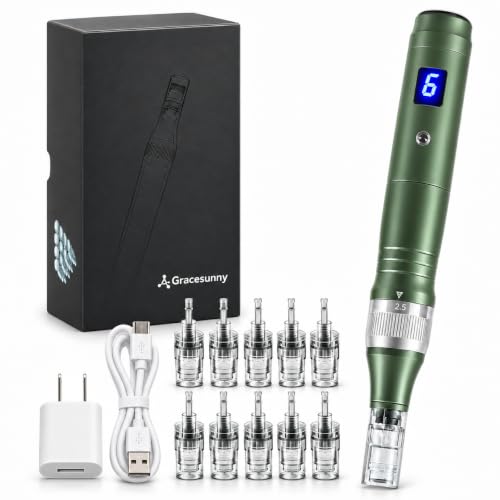
Rechargeable 0.25 mm Microneedling Pen is the rechargeable option in this group, with a 0.25 mm setting and a one-hand format. Its guidance emphasizes seating the head until it clicks and sits flush, then wiping the pen before and after use. The tool is intended for a home cosmetic routine; a serum is not included. This may suit someone who wants a pen rather than a roller and values charging over a replaceable battery setup. The tradeoff is that it requires charging and careful head seating, so buyers who want a no-charge tool or are unsure about handling a needle device should choose another approach.
Bottom line: Choose this if you want a rechargeable pen and can manage careful cleaning and head installation.
M8 0.25 mm Microneedling Pen

M8 0.25 mm Microneedling Pen stands out for including a compact case, while its 0.25 mm length matches the shallow setting of the other 0.25 mm pen. The ergonomic handle is intended to make it easier to hold, and its purpose is cosmetic exfoliation and personal beauty care. The case makes it a fit for someone who wants a dedicated place to store the tool between uses or pack it for travel.
Bottom line: Choose this if a compact storage case matters more than a specified power method.
Dr.pen M8S 0.26 mm Pen

Dr.pen M8S 0.26 mm Pen differs from the 0.25 mm choices by a small increment in needle length: 0.26 mm. It is described as a home-use skincare accessory for gentle use on the skin surface and cosmetic purposes only. That makes it relevant to a buyer specifically comparing the 0.26 mm setting, rather than looking for a travel case or rechargeable feature. The available attributes do not identify a power method or an included accessory, so this is a less suitable choice for shoppers who need either feature confirmed before making a decision.
Bottom line: Choose this if the 0.26 mm needle length is your deciding specification.
How to Choose an At-Home Microneedling Pen
Start with the needle length and the device type, not the handle color. The options here cluster at 0.25 mm, with one at 0.26 mm; a difference of 0.01 mm is small, so prioritize a feature you will actually use, such as a rechargeable format or storage case. A pen moves a cartridge in and out against the skin, while a roller drags needles across it. Those motions are not interchangeable, especially if you have a preference for how the tool contacts skin. For a cosmetic routine, avoid treating longer needle length as a shortcut to better results. A measurable rule: if your goal requires breaking skin or reaching beyond the surface, do not use an at-home cosmetic tool for that purpose; seek guidance from a qualified clinician instead.
Needle Length and Skin Contact
These choices specify 0.25 mm or 0.26 mm, but needle length alone does not determine how your skin will respond. Pressure, repeated passes, angle, skin condition and hygiene all affect irritation and injury risk. Avoid using a microneedling device over active acne, cold sores, open cuts, rashes or irritated skin; do not share a device or cartridge. Do not assume a serum is appropriate for use on freshly needled skin: cosmetic products can irritate when the skin barrier is disrupted. Choose a non-needling routine if you cannot keep the device clean or your skin is already compromised. Stop use if you experience unusual pain, persistent redness or signs of infection, and consult a medical professional rather than continuing sessions.
Pen Versus Roller Motion
A pen-style device drives needles vertically, while a roller carries needles along the skin as its drum turns. The distinction matters because dragging can add friction and because a roller-style product is not a substitute for a pen simply because both mention microneedling. Use this comparison to match the mechanism to your preference; it is not a ranking of results.
| Tool style | Needle movement | Choose when |
|---|---|---|
| Pen | Vertical in-and-out motion | You specifically want a pen format |
| Roller | Needles travel across skin | You specifically want rolling contact |
For either type, do not share a device, and follow hygiene guidance for the tool and any replaceable cartridge. A clean-looking needle head is not proof that it is sterile.
Cleaning and Safe Home Use
Cleaning matters because microneedling can compromise the skin barrier, allowing contamination to cause problems. Wash hands before handling the device, clean the tool as its maker directs, and never share it. A reusable handle and a replaceable cartridge are different parts: cleaning the handle does not make a used cartridge safe to reuse. Do not use a cartridge that is damaged, contaminated or loose, and do not force a head that will not seat securely. Avoid applying unverified products to freshly needled skin. If you have a skin condition, take medication that affects healing, or are unsure whether needling is appropriate, ask a qualified healthcare professional before use.
Frequently Asked Questions
Can I use a microneedling pen every day?
At-home cosmetic devices should not be used more often than their maker directs, and persistent redness or soreness is a reason to stop.
Should I apply serum while microneedling at home?
Do not assume an ordinary serum is safe on skin immediately after needling. A disrupted skin barrier can react differently to cosmetic ingredients, so avoid applying products unless a qualified clinician has confirmed they are appropriate for that use.
Can I reuse a microneedling cartridge?
Do not reuse a cartridge unless its maker explicitly identifies it as reusable and provides a validated cleaning method. Never share cartridges, and discard any that are loose, damaged or contaminated.
Is a 0.25 mm pen the same as a roller?
No; a pen moves needles vertically, while a roller carries needles across the skin. Choose by mechanism as well as needle length, since the two motions create different skin contact.
When should I avoid microneedling at home?
Avoid needling over broken, inflamed or infected skin, including active acne, sores or rashes. If you have a skin condition or a medicine that may affect healing, ask a clinician before using a device.