
Best Cervical Neck Traction Device: 5 Types Compared

For most people comparing home cervical traction devices, the ComforTrac-Deluxe is the most adaptable pick because its incline adjusts to 10, 15 or 20 degrees. Choose a different style if you need a wearable inflatable collar, a specific neck-size fit or an over-door setup.
Cervical traction applies a pulling or lifting force to the neck; get a clinician’s guidance on whether it is appropriate and what force and duration to use.
We earn a commission if you buy through links on this page. As an Amazon Associate I earn from qualifying purchases. Products are compared on manufacturer specifications, not hands-on testing.
- Best overall: ComforTrac-Deluxe Home Cervical Traction Kit 2.0 – Three incline settings let you adjust the unit without ordering extra parts.
- Best for force adjustment: iSTIM WeTrac Cervical Traction Device – The knob-controlled system offers intensity adjustment up to 50 pounds.
- Best for a wearable fit: S Inflatable Cervical Neck Traction Device – The inflatable brace adjusts for neck circumferences from 12 to 17 inches.
- Best for an over-door setup: comness Over-Door Cervical Traction Hammock – The hammock uses an adjustable pulling system and a door-mounted stop.
| Product | Best for | Traction style | Fit range | Adjustment | Shop |
|---|---|---|---|---|---|
| ComforTrac-Deluxe Home Cervical Traction Kit 2.0 | Adjustable incline | Home traction unit | — | 10°, 15° or 20° incline | Check Price on Amazon |
| iSTIM WeTrac Cervical Traction Device | Force adjustment | Knob-adjusted home unit | — | Up to 50 lb intensity | Check Price on Amazon |
| S Inflatable Cervical Neck Traction Device | Wearable neck fit | Inflatable neck brace | 12–17 in neck circumference | Air volume and two straps | Check Price on Amazon |
| Air Collar Neck Traction Device, 2nd Gen Pump | Mid-size neck fit | Electric-pump air collar | 13.7–16.8 in neck circumference | Side knobs, up to 20 lb | Check Price on Amazon |
| comness Over-Door Cervical Traction Hammock | Door-mounted setup | Over-door hammock | Door thickness 6.6–7.32 in | Adjustable pull height | Check Price on Amazon |
Cervical Neck Traction Devices Compared
Compare the setup, fit and adjustment style before choosing a device for home use.
ComforTrac-Deluxe Home Cervical Traction Kit 2.0
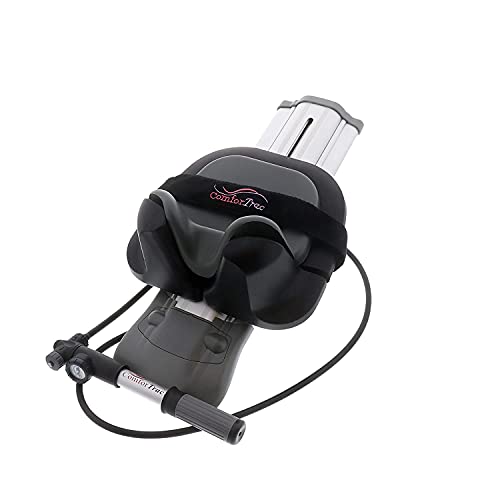
The ComforTrac-Deluxe stands apart with three selectable incline angles: 10, 15 and 20 degrees, adjusted without ordering extra parts. The home kit includes a contouring memory-foam headrest and a carrying case, so it suits someone who wants a supported setup rather than a wearable collar or door-mounted sling. The maker describes it as intended for neck discomfort, but traction is not appropriate for every cause of neck symptoms. Its angle choices do not tell you what force to use, so get clinician guidance on a safe setting and session plan.
Bottom line: Choose this if multiple incline options matter more than a wearable design.
iSTIM WeTrac Cervical Traction Device

The iSTIM WeTrac is distinguished by knob control and an intensity range that the maker says reaches 50 pounds. Its cable-based home design is aimed at users who want to adjust traction rather than inflate a collar; a travel bag is included. The maker also describes short stretching sessions as helpful for discomfort, but that performance claim should not replace clinical advice. The maximum force is not a target for everyone: ask a clinician to specify whether traction is suitable and what load and duration to use before turning the knob.
Bottom line: Pick this if you need knob-based intensity control and have clinician guidance.
S Inflatable Cervical Neck Traction Device

The S inflatable cervical device is a wearable brace, unlike the head-supported units and hammock in this group. Its fit range is 12 to 17 inches around the neck, and air volume plus two Velcro straps let the wearer adjust support and tightness. The flocked fabric is described as soft and breathable by the maker. This format suits buyers who want an inflatable collar, but the neck-size range is a firm fit constraint; measure around the neck with a flexible tape before selecting it. The feature claims about symptom relief are not a substitute for professional advice.
Bottom line: Choose this if your neck circumference falls within its 12-to-17-inch range.
Air Collar Neck Traction Device, 2nd Gen Pump

The Air Collar pairs an electric pump with side knobs, setting it apart from the manually inflated brace and non-collar systems. The neck circumference fit is 13.7 to 16.8 inches, and its maker says the adjustable pressure reaches 20 pounds. It is suited to buyers whose measured neck falls in that narrower range and who prefer an air collar. The fit is more limited than the 12-to-17-inch inflatable brace, and the pressure ceiling is not a recommended setting; have a clinician guide use and force.
Bottom line: Pick this if your neck measures 13.7 to 16.8 inches and you want pump-assisted adjustment.
comness Over-Door Cervical Traction Hammock

The comness device uses an over-door hammock and adjustable pulling system, so it differs from inflatable collars and headrest units by relying on a door setup. Its maker gives a door measurement range of 0.55 to 0.61 feet, equivalent to 6.6 to 7.32 inches. The compact, non-marring door stop is intended for compatible doors. This choice suits buyers who can use a secure door and want a sling-style setup; confirm the door measurement before ordering, since an incompatible door prevents proper installation. Get clinical advice before applying neck traction.
Bottom line: Choose this if an over-door hammock suits your room and the door fits its range.
How to Choose a Cervical Neck Traction Device
Choose first by traction style, then by fit and clinician-approved adjustment. Home devices commonly use a head-supported base, inflatable collar or over-door sling; those setups apply force differently and are not interchangeable. Measure neck circumference with a flexible tape for a wearable collar, and check door dimensions for a door-mounted model. If a device gives a force limit, treat that as a maximum, not a personal target. A practical decision rule is to skip any collar whose range does not include your measured circumference, even if its adjustment appears flexible. Because neck pain can have causes that traction may not suit, ask a clinician whether traction is appropriate and what load and session length to use.
Neck Fit and Device Setup
Measure neck circumference at the level where a collar will sit, keeping the tape snug without compressing soft tissue. A collar range of 12 to 17 inches and one of 13.7 to 16.8 inches are meaningfully different: someone measuring 13 inches falls within only the broader range. For an over-door device, measure the door dimension specified by its maker before installation; do not assume that “most doors” means every door. Keep the setup stable and stop if the device shifts, pinches or makes breathing uncomfortable. A wearable device that feels tight around the throat is not a fit to force; loosen or remove it and seek guidance.
Traction Styles and Adjustment
Head-supported devices, air collars and over-door hammocks differ in how they position the head and apply pulling force. An incline adjustment changes the angle of a supported setup, while an inflatable collar changes its shape through added air; a knob or pull system controls a different type of adjustment. Do not compare degrees of incline directly with pounds of force: they describe different properties. For the same reason, a device’s maximum force is not evidence that a higher setting is better. Use an adjustment only within a plan given by a qualified clinician, and avoid improvised weights, straps or door anchors.
| Need | Style to consider | Fit check |
|---|---|---|
| Changeable incline | Head-supported home unit | Verify clinician-approved angle and setup |
| Wearable format | Inflatable neck collar | Match measured neck circumference |
| Door-mounted sling | Over-door hammock | Match the door dimension specified |
Safe Use and Common Mistakes
Do not begin neck traction after a neck injury or when you have a known neck condition without medical clearance; force on an unstable or injured neck can be unsafe. Stop use and get prompt medical advice if traction brings on new weakness, numbness, severe pain, dizziness or trouble breathing. A common mistake is choosing force by comfort alone: nerve or spinal conditions can make symptoms an unreliable guide to safe loading. Another is treating “minutes a day” or a maximum load as a universal prescription. Ask the clinician who knows your history to set the device, load and duration, and make sure you can release or remove it promptly.
Frequently Asked Questions
How do I measure my neck for a traction collar?
Use a flexible tape around the neck where the collar will sit, snug but not tight. Compare that number with the device’s circumference range; for example, 13 inches fits a 12-to-17-inch range but falls below a 13.7-to-16.8-inch range.
Can I use cervical traction without a clinician?
Get clinician guidance before starting, especially after an injury or with a known neck condition. Ask for a specific force and session duration rather than relying on a device’s maximum setting or general use claims.
What should I do if traction causes tingling?
Stop traction if new tingling, weakness, dizziness, severe pain or breathing difficulty occurs, and seek medical advice. Do not increase force or resume to see whether the symptom passes.
Are inflatable collars and over-door traction the same?
No; an inflatable collar is worn around the neck, while an over-door setup uses a hammock and door-mounted pull system. The collar needs a matching neck circumference, while the sling requires a compatible door.
Is a higher traction force more effective?
A higher force is not automatically more effective or safer. A device’s force ceiling is a limit, so use only a load and duration selected with a clinician.