
ATS Chemical 505 CRF Fuel Treatment Compared by Fit

ATS Chemical 505 CRF, 16 oz suits buyers seeking the ATS Chemical 505 CRF fuel system treatment, with a dose range of 5 to 20 gallons of gasoline or diesel. Choose ATS Chemical 505 CRF with Anti-Spill Spout if you prefer its anti-spill spout, or consider Chevron Techron Concentrate Plus, 20 oz as a different fuel-system cleaner.
We earn a commission if you buy through links on this page. As an Amazon Associate I earn from qualifying purchases. Products are compared on manufacturer specifications, not hands-on testing.
- Best overall: ATS Chemical 505 CRF, 16 oz – Treats 5 to 20 gallons of gasoline or diesel.
- Best for easier pouring: ATS Chemical 505 CRF with Anti-Spill Spout – Includes a screw-on anti-spill spout.
- Best for a larger bottle: Chevron Techron Concentrate Plus, 20 oz – The bottle holds 20 fluid ounces.
| Product | Best for | Bottle size | Fuel type | Pouring feature | Shop |
|---|---|---|---|---|---|
| ATS Chemical 505 CRF, 16 oz | Standard CRF treatment | 16 oz | Gasoline and diesel | Easy-pour bottle | Check Price on Amazon |
| ATS Chemical 505 CRF with Anti-Spill Spout | Spill-conscious pouring | 16 fl oz | Gasoline and diesel | Anti-spill spout | Check Price on Amazon |
| Chevron Techron Concentrate Plus, 20 oz | Alternative fuel cleaner | 20 fl oz | — | — | Check Price on Amazon |
ATS Chemical 505 CRF Fuel System Treatment
Compare the matching CRF treatments by bottle size, fuel compatibility, and pouring feature.
ATS Chemical 505 CRF, 16 oz
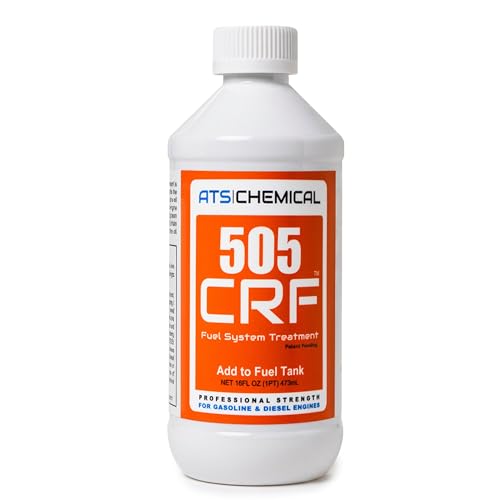
ATS Chemical 505 CRF, 16 oz is the standard 16-ounce ATS 505 CRF option, with a treatment range of 5 to 20 gallons. The maker says its formula removes carbon deposits from port and direct injectors, induction ports, and induction valves. That fuel-volume range makes it relevant for buyers treating different tank amounts; match the dose to the amount of fuel rather than assuming one bottle suits every fill.
Bottom line: Choose this if you want the 16-ounce CRF treatment for gasoline or diesel.
ATS Chemical 505 CRF with Anti-Spill Spout

ATS Chemical 505 CRF with Anti-Spill Spout stands out for its screw-on anti-spill spout, rather than a different fuel-treatment purpose: it is also a 16-ounce 505 CRF product for gasoline or diesel. The maker says the formula helps remove carbon deposits from injectors, induction ports, induction valves, and combustion chambers, and gives a treatment range of 5 to 20 gallons. Buyers who want that pour feature can choose this version; those who do not need the spout can compare it with ATS Chemical 505 CRF, 16 oz. Check that the fuel amount falls within the treatment range before pouring.
Bottom line: Choose this if a screw-on anti-spill spout is your priority.
Chevron Techron Concentrate Plus, 20 oz

Chevron Techron Concentrate Plus, 20 oz is a different fuel-system cleaner, not an ATS 505 CRF treatment. Its 20-ounce bottle is larger than the 16-ounce CRF bottles, and its benefits include reducing rough idle, engine surge, hesitation, and spark plug fouling. The maker also says it improves cold-start performance and fuel stability for up to one year.
Bottom line: Choose this if you want a different fuel-system cleaner in a 20-ounce bottle.
How to choose a fuel system treatment
Choose a cleaner by matching its dose to the amount of fuel in the tank and checking that it is meant for the fuel type in your vehicle. Fuel-system cleaners are added to fuel so the product can travel through the fuel path; they are not a substitute for diagnosing a persistent drivability problem. A rough idle or hesitation can have causes beyond deposits, including ignition or mechanical faults. Treat the range as a limit: for a dose range of 5 to 20 gallons, use it only when the tank contains an amount within that range, and do not assume a larger tank is fully treated. For an ongoing symptom, avoid repeated additive doses as a stand-in for inspection.
Fuel volume and dosing basics
Fuel volume is the key decision rule when a product gives a range: with a 5-to-20-gallon treatment range, select it only when the tank’s fuel amount falls between those endpoints. A product dose mixed into too little or too much fuel will not match its intended concentration. Tank capacity is not the same as the amount of fuel currently in the tank, so estimate the remaining fuel before adding a treatment. If the tank holds more than the upper dose limit, divide the amount according to the product’s label rather than assuming one bottle covers it. Never combine additives or exceed label directions to compensate for symptoms.
Fuel cleaner types and claims
Fuel-system cleaners are distinct from oil-system treatments: fuel additives enter through the tank, while oil additives are poured into the engine’s lubrication system. Within fuel cleaners, compare stated fuel compatibility, dose range, and any provided use instructions rather than treating bottle size alone as proof of broader coverage. Cleaner claims about carbon removal or drivability are manufacturer claims, not a guarantee that an additive will correct a mechanical fault. Deposits in injectors and intake components are only one possible contributor to performance concerns. If a problem continues after maintenance, diagnosis is more useful than stacking additional treatments.
Safe handling and common mistakes
Fuel treatments are concentrated chemicals used with flammable gasoline or diesel, so keep them away from flames, sparks, and hot surfaces while pouring. Turn the vehicle off, avoid splashing the product, and keep it out of reach of children; follow the container’s handling and disposal directions. A common mistake is pouring based on total tank capacity instead of the fuel currently present, which can put the dose outside its intended range. Another is using a fuel cleaner to address a warning light or persistent misfire without checking the underlying cause. Stop and clean up spills promptly using the product label’s guidance.
Frequently Asked Questions
How much fuel does one 505 CRF treatment cover?
The treatment range is 5 to 20 gallons of gasoline or diesel. Match the dose to the actual fuel amount in the tank, not just the tank’s total capacity.
Can a fuel system cleaner fix a rough idle?
A cleaner may address deposits, but a rough idle can also come from ignition, air, or mechanical problems. If the symptom persists, seek diagnosis instead of repeatedly adding cleaner.
Should I add fuel treatment before or after filling up?
Use the container’s directions for the correct order, since the product facts here do not set one. Whichever order the label specifies, calculate the dose using the fuel amount being treated.
Can I use gasoline treatment in a diesel vehicle?
Only use a product whose label says it is suitable for diesel. The 505 CRF options are described for gasoline or diesel, but never assume that compatibility applies to another cleaner.
Is a fuel cleaner the same as an oil additive?
No. Fuel cleaners are added to the tank, while oil additives go into the engine’s lubrication system; use only the product type intended for the system you are servicing.