
Patterns for Renaissance Clothing: 4 Sewing Options Compared

For patterns for Renaissance clothing, Handmade Renaissance Faire Fashion Pattern Book is the broadest match because its title promises 20+ patterns for capes, cloaks, and crowns. Choose Simplicity S3127 Overdress & Chemise, Sizes 8–16 or Simplicity S3127 Overdress & Chemise, Sizes 18–26 instead for a specific overdress-and-chemise project, or Simplicity S5794 Women’s Cape, XS–L if a cape is the main goal.
These options range from a project-pattern book to individual costume patterns. Compare the garment and size range before choosing; for the book, confirm its sizing meets your needs.
We earn a commission if you buy through links on this page. As an Amazon Associate I earn from qualifying purchases. Products are compared on manufacturer specifications, not hands-on testing.
- Best overall: Handmade Renaissance Faire Fashion Pattern Book – Its title promises 20+ Renaissance faire patterns spanning capes, cloaks, and crowns.
- Best for sizes 8–16: Simplicity S3127 Overdress & Chemise, Sizes 8–16 – The overdress-and-chemise pattern covers women’s sizes 8–16.
- Best for sizes 18–26: Simplicity S3127 Overdress & Chemise, Sizes 18–26 – The same overdress-and-chemise design is offered in women’s sizes 18–26.
- Best for a cape: Simplicity S5794 Women’s Cape, XS–L – This individual costume pattern focuses on a cape and includes sizes XS–L.
| Product | Best for | Garment or project | Size range | Pattern format | Shop |
|---|---|---|---|---|---|
| Handmade Renaissance Faire Fashion Pattern Book | Multiple projects | Capes, cloaks, crowns | — | Pattern book | Check Price on Amazon |
| Simplicity S3127 Overdress & Chemise, Sizes 8–16 | Sizes 8–16 | Overdress and chemise | Women’s 8–16 | Printed tissue | Check Price on Amazon |
| Simplicity S3127 Overdress & Chemise, Sizes 18–26 | Sizes 18–26 | Overdress and chemise | Women’s 18–26 | Printed tissue | Check Price on Amazon |
| Simplicity S5794 Women’s Cape, XS–L | Cape project | Cape | Women’s XS–L | Printed tissue | Check Price on Amazon |
Patterns for Renaissance Clothing Compared
Start with the garment you want to sew, then check the pattern’s size range and included format.
Handmade Renaissance Faire Fashion Pattern Book
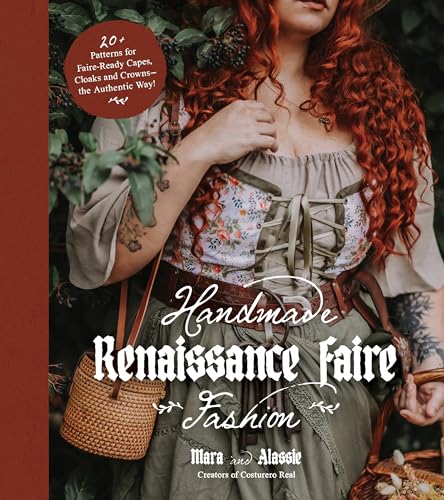
This book is the broadest project option here: its title promises 20+ patterns for Renaissance faire capes, cloaks, and crowns. The dimensions are 8 inches long, about 8.95 inches high, and 0.5 inch wide, with a weight of about 2.31 pounds. It suits a sewist looking to explore several accessory and costume projects rather than one specific garment.
Bottom line: Choose this if you want a collection of Renaissance faire projects rather than one garment pattern.
Simplicity S3127 Overdress & Chemise, Sizes 8–16

This option gives you an overdress and chemise pattern in women’s sizes 8–16, rather than the multi-project accessory range of Handmade Renaissance Faire Fashion Pattern Book or a cape-only pattern. The envelope includes printed tissue pieces and illustrated step-by-step sewing instructions; it also identifies suggested fabrics and notions. Pattern sizing differs from ready-to-wear sizing, so measure against the body-size chart before cutting. The limitation is its size range: sewists outside sizes 8–16 should compare it with the companion size range in Simplicity S3127 Overdress & Chemise, Sizes 18–26, not assume the tissue can be adjusted easily.
Bottom line: Choose this for an overdress-and-chemise project if your measurements match sizes 8–16.
Simplicity S3127 Overdress & Chemise, Sizes 18–26

This size range extends the overdress-and-chemise option to women’s sizes 18–26, while Simplicity S3127 Overdress & Chemise, Sizes 8–16 covers sizes 8–16. The pattern comes as printed tissue pieces with illustrated sewing instructions, and its envelope identifies suggested fabric and notions. Use the body-size chart rather than ready-to-wear sizing when selecting a pattern size; the pattern’s range is most useful when your measurements fall within it. This is a focused two-garment pattern, not a general Renaissance wardrobe collection, so it is less suited to someone seeking several distinct project types.
Bottom line: Choose this if you want an overdress and chemise and your measurements fall within sizes 18–26.
Simplicity S5794 Women’s Cape, XS–L

This pattern is the focused choice for making a cape, unlike the overdress-and-chemise pattern in Simplicity S3127 Overdress & Chemise, Sizes 8–16 and Simplicity S3127 Overdress & Chemise, Sizes 18–26. It covers women’s sizes XS–L and includes printed tissue pattern pieces plus illustrated instructions. The envelope also identifies suggested fabrics and notions, which helps you plan materials before sewing. Pattern sizes differ from ready-to-wear sizing, so compare your body measurements with its size chart. The main limitation is its narrow project scope: it is a cape pattern, not a complete clothing pattern or a collection of multiple Renaissance garments.
Bottom line: Choose this for a cape-focused costume project when your measurements fit XS–L.
How to Choose a Renaissance Clothing Pattern
Choose by garment first, then use the size chart to decide whether the pattern is workable. A chemise is a loose undergarment, while an overdress is worn over it; a cape is a separate outer layer. Patterns that name a specific garment give a clearer project than a general collection, but a collection can offer more variety when you want to sew accessories as well. Compare the finished garment measurements with your own body measurements when the envelope provides them: ease is the extra room between the body and garment, and a close-fitting bodice needs a different amount than a loose chemise. For these choices, select Simplicity S3127 Overdress & Chemise, Sizes 8–16 or Simplicity S3127 Overdress & Chemise, Sizes 18–26 for the two-piece outfit, and Simplicity S5794 Women’s Cape, XS–L for a cape.
How Pattern Size Ranges Affect Fit
Pattern size numbers are not interchangeable with ready-to-wear sizes, so select a sewing size from body measurements, not the number on a store-bought garment. Measure bust, waist, and hip with a flexible tape held level and comfortably snug; compare each measurement with the pattern chart before cutting. When measurements fall in different chart columns, use the pattern’s fitting guidance and check the finished measurements before committing to fabric. The two S3127 options divide the same overdress-and-chemise project into sizes 8–16 and 18–26, while the cape pattern covers XS–L. That makes size range a practical first filter: if your measurements do not fit the chosen range, compare another option or confirm whether an adjustment is feasible.
What Comes in a Printed Sewing Pattern
Printed tissue patterns use paper pieces that you pin or weigh onto fabric, mark, and cut; they are different from digital patterns that you print at home. The two S3127 size offerings and the cape pattern include tissue pieces and illustrated instructions. Pattern envelopes typically identify fabric suggestions and notions such as closures or thread, so check those before buying yardage. Fabric width and garment length affect yardage, and the same pattern can require different amounts for different sizes or fabric layouts; use its cutting layout rather than guessing from the garment name. Keep the tissue pieces and instructions together after cutting, since a missing piece can stop a project before sewing begins.
Choosing Fabric and Preparing to Cut
Match fabric weight and drape to the garment: a cape generally needs enough body to hang well, while a chemise benefits from fabric that gathers and moves comfortably. The pattern envelope’s suggested fabrics are the best starting point for the specific design, and notions should be checked before cutting. Prewash washable fabric as you intend to care for the finished garment, because shrinkage after sewing can change fit. Press fabric flat and align its grain before laying out tissue pieces; cutting off-grain can make panels hang unevenly. If the pattern’s fabric quantity or cutting layout does not suit your fabric width, confirm the yardage and layout before purchasing materials.
Frequently Asked Questions
How do I choose a sewing pattern size?
Choose from body measurements rather than ready-to-wear size numbers. Measure bust, waist, and hip and compare them with the pattern chart before cutting; use finished measurements to judge ease.
What is the difference between a chemise and an overdress?
A chemise is a loose undergarment, and an overdress is worn over it. A pattern that includes both makes a two-layer outfit, while a cape is a separate outer layer.
Should I wash fabric before cutting a costume?
Prewash fabric if it is washable and you plan to launder the finished garment, since fabric can shrink. Press it flat and let it cool before arranging and cutting tissue pieces.
How can I tell how much fabric a sewing pattern needs?
Use the pattern’s yardage guide and cutting layout for your selected size and fabric width. Fabric requirements change with size and layout, so do not estimate from the garment name alone.
Can I use a cape pattern for an overdress?
No, a cape pattern makes a separate outer layer rather than an overdress. Choose an overdress pattern for that garment, and check its size chart before cutting.