
Binding Wires for the Cinch: 4 Options Compared

We R Memory Keepers Cinch Wires, 5/8-Inch is the clearest match for the Cinch because it is specifically made for that binding machine and comes in 5/8-inch size sets. For standard 2:1 pitch wire, compare loop count, length, and diameter as well; choose a different option if you need a particular capacity or color assortment.
Binding wire spines are double loop metal rings that pass through punched pages and close around them. Before choosing, confirm that your machine’s pitch and hole count match the spine.
We earn a commission if you buy through links on this page. As an Amazon Associate I earn from qualifying purchases. Products are compared on manufacturer specifications, not hands-on testing.
- Best overall: We R Memory Keepers Cinch Wires, 5/8-Inch – Explicitly intended for the Cinch and supplied in 5/8-inch sets with eight color options.
- Best for color variety: 50-Piece 5/8-Inch Double Loop Wire – Offers 50 metal spines in 10 colors with 2:1 pitch and 21 rings.
- Best for stated capacity: QWORK 5/8-Inch Wire Spines, 50-Pack – Specifies up to 140 sheets of 20 lb paper and 21 loops for letter-size paper.
| Product | Best for | Diameter | Pitch / loops | Pack and colors | Shop |
|---|---|---|---|---|---|
| We R Memory Keepers Cinch Wires, 5/8-Inch | Cinch-specific sets | 5/8 in | — | 16 sets; 8 colors | Check Price on Amazon |
| 50-Piece 5/8-Inch Double Loop Wire | Bulk color choices | 5/8 in | 2:1; 21 rings | 50 pieces; 10 colors | Check Price on Amazon |
| QWORK 5/8-Inch Wire Spines, 50-Pack | Capacity guidance | 5/8 in | 2:1; 21 loops | 50 pieces; 5 colors | Check Price on Amazon |
| Binditek 2:1 Double Loop Wires, 50-Pack | Five color assortment | — | 2:1; 21 loops | 50 pieces; 5 colors | Check Price on Amazon |
Binding Wires for the Cinch
Compare the spine size and hole pattern with your punched pages before binding.
We R Memory Keepers Cinch Wires, 5/8-Inch

Made specifically for the Cinch, these 5/8-inch wire sets are the most direct choice when you want Cinch-branded binding supplies. The package includes 16 sets in eight color options: white, black, gold, rose gold, mint, navy, red, and pink. Choose these when color variety and the Cinch use matter more than a large bulk quantity. The specifications do not give a sheet capacity or a hole count, so confirm the spine diameter and punched-page pattern against your project before binding, especially if you are matching an existing stack of pages.
Bottom line: Choose this when you want wire sets specifically intended for the Cinch in several colors.
50-Piece 5/8-Inch Double Loop Wire

This bulk assortment pairs a 5/8-inch diameter with 2:1 pitch and 21 rings, giving it a clearly described hole pattern for compatible projects. The 50 metal spines come in 10 colors, useful when you want to sort separate notebooks or presentations by appearance. Check that your Cinch punching setup produces 21 holes across the spine and that the finished stack suits this diameter.
Bottom line: Choose this for a larger assortment when the 2:1, 21-ring pattern matches your pages.
QWORK 5/8-Inch Wire Spines, 50-Pack
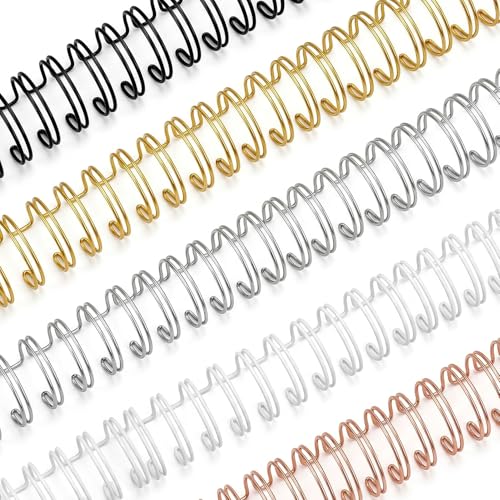
QWORK gives a specific capacity reference: up to 140 sheets of 20 lb paper per 5/8-inch spine. It also identifies a 2:1 pitch, 21 loops, and 11-inch length for letter-size paper, making the fit criteria unusually clear for standard letter projects. The pack includes 50 metal spines in five colors. The capacity is tied to 20 lb paper, so thicker stock or covers change the page count that fits comfortably. Confirm the actual stack height rather than relying on the maximum figure for mixed or heavier materials.
Bottom line: Choose this when a 20 lb paper capacity and letter-size length are useful.
Binditek 2:1 Double Loop Wires, 50-Pack

Binditek identifies a 2:1 pitch and 21-loop design, plus a 50-piece assortment in black, gold, silver, white, and rose gold. Its maker claims capacity for up to 140 sheets of standard 20 lb paper, giving a reference point for similarly weighted pages. There is a size conflict in the specifications: the name says 1/2 inch, while the capacity text says 5/8 inch. Confirm the actual diameter before ordering, since spine size is central to matching page thickness; this option is less certain when a precise diameter is required.
Bottom line: Choose this for the color assortment only after confirming its actual diameter.
How to Match Cinch Binding Wire
Match the wire’s pitch and loop count to the holes punched in your pages before considering color or capacity. In a 2:1 pattern, holes are spaced two per inch; a common letter-size spine has 21 loops across an 11-inch length. A mismatch can leave loops off-center or prevent the wire from passing through every hole. Measure the punched edge and count its holes, then compare those measurements with the wire. Diameter is a separate choice: it determines the space available around the bound stack, not the hole pattern. For a standard 21-hole letter project, favor a wire whose fields identify both 2:1 pitch and 21 loops, rather than relying on “Cinch” in a product name alone.
Choose Wire Diameter for Your Page Stack
Pick a diameter that closes around the complete stack without forcing the loops, including covers and dividers. A 5/8-inch spine is the most common size represented among these choices, while the 1-inch option is larger; larger diameters generally leave more room for thicker projects, but the maker’s page-capacity claim is the better guide when one is provided. Paper weight changes the number of sheets that fit: 140 sheets of 20 lb paper is not a dependable count for heavier stock. Stack the exact materials you plan to bind and compare the stack thickness with the spine. With mixed cardstock or laminated covers, leave room for the wire to close and pages to turn freely.
Wire Binding Patterns and Lengths
Two wire spines can share a diameter and still be incompatible if their pitch or hole count differs. The specifications here include 2:1 pitch with 21 loops on several options, while one option identifies 23 holes; those patterns should not be treated as interchangeable. Standard letter-size binding wire is often 11 inches long, corresponding to the page edge, while smaller notebooks may need a shorter spine or trimming. A simple choice rule: if the punched edge has 21 holes and is letter width, select a spine explicitly marked 21 loops and 2:1 pitch. For other formats, count holes and compare the spine length before binding. Always keep hands clear of closing mechanisms and avoid forcing wire through misaligned holes.
Common Cinch Binding Mistakes
The most common fit mistake is choosing by diameter alone and overlooking hole count. A 5/8-inch spine with the wrong loop pattern will not align with the punched pages, while a correct pattern can still be too small for the stack. Another mistake is treating a capacity number as universal: paper thickness and added covers affect the final stack, so the 140-sheet figure applies only to the paper weight stated with it. Check both the product’s diameter and its pitch/loop count, then test alignment with the pages before closing the wire. Avoid overfilling; a tightly packed spine can limit page movement and strain the loops. When the size conflicts, verify the actual diameter before choosing.
Frequently Asked Questions
What pitch does Cinch binding wire need?
A common Cinch wire setup uses 2:1 pitch, or two holes per inch. Match the punched holes and loop count as well, since pitch alone does not guarantee the spine length fits.
How many holes are on letter-size Cinch pages?
A common letter-size 2:1 wire pattern has 21 loops across an 11-inch spine. Count the holes in your punched pages before binding, since a 23-hole spine will not match that pattern.
How do I choose a wire diameter for my notebook?
Choose a diameter that accommodates the full stack, including covers and dividers. For a 140-sheet reference, one option gives that capacity for 20 lb paper; heavier stock may require a larger spine or fewer sheets.
Can I use 1-inch wire on the Cinch?
Diameter by itself does not determine compatibility; pitch, hole count, and length must also match. The 1-inch option here identifies 23 holes, so compare that count with your punched pages before using it.
Does 2:1 pitch mean two holes per inch?
Yes, 2:1 pitch means two holes per inch. A spine also needs the right total loop count and length for your paper edge, such as 21 loops across a standard letter-size spine.