
Rival Electric Food Slicer Alternatives Compared by Fit

The Rival electric food slicer is not among these options, so choose a substitute by blade size and the foods you plan to slice. CUSIMAX 8.7-Inch Meat Slicer offers an 8.7-inch blade and two blades, while Foldable Slicer with 6.7-Inch Blade folds for compact storage; choose a different option if you specifically need a Rival model.
We earn a commission if you buy through links on this page. As an Amazon Associate I earn from qualifying purchases. Products are compared on manufacturer specifications, not hands-on testing.
- Best overall: CUSIMAX 8.7-Inch Meat Slicer – Its 8.7-inch blade and 1-20 mm adjustment range offer the broadest size and thickness range here.
- Best for two blades: 200W Slicer with Two 7.5-Inch Blades – It includes two 7.5-inch stainless steel blades and a 0-15 mm thickness range.
- Best for compact storage: Foldable Slicer with 6.7-Inch Blade – The foldable design is intended to reduce storage footprint when the slicer is not in use.
| Product | Best for | Blade size and count | Thickness range | Storage design | Shop |
|---|---|---|---|---|---|
| CUSIMAX 8.7-Inch Meat Slicer | Wider blade range | 8.7 in; 2 blades | 1-20 mm | Not foldable | Check Price on Amazon |
| OSTBA 7.5-Inch Food Slicer | Two-button operation | 7.5 in; 1 blade | 0-15 mm | Not foldable | Check Price on Amazon |
| 200W Slicer with Two 7.5-Inch Blades | Blade choice | 7.5 in; 2 blades | 0-15 mm | Not foldable | Check Price on Amazon |
| Foldable Slicer with 6.7-Inch Blade | Compact storage | 6.7 in; 1 blade | 0-20 mm | Foldable | Check Price on Amazon |
Electric Food Slicers Like the Rival
These alternatives vary in blade size, adjustment range and how they store between uses.
CUSIMAX 8.7-Inch Meat Slicer

The 8.7-inch blade sets this slicer apart from the smaller-blade options, and the thickness control spans 1-20 mm. It includes serrated and non-serrated stainless steel blades, a removable food carriage, and a removable food pusher. Those features suit households that want to switch between foods and remove parts for cleaning. The larger overall footprint—17.72 inches long and 12 inches wide—matters if counter or cabinet space is tight. A non-slip base and blade guard are also included.
Bottom line: Choose this if a larger blade and a 1-20 mm adjustment range matter more than compact storage.
OSTBA 7.5-Inch Food Slicer
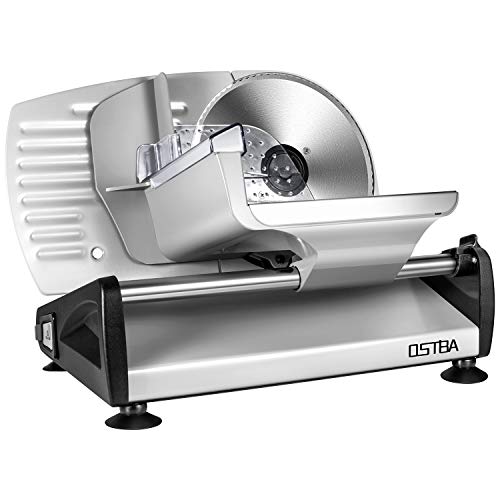
The two-button start is the key distinction: operation requires pressing the safety lock and power button together. This model has one 7.5-inch stainless steel blade, a 150-watt rating, and an adjustment range from very thin cuts to about 3/4 inch. The blade, carriage, slide-rod extension and food pusher are removable, with a ring-guard cover intended to limit debris buildup. It suits buyers who prioritize removable parts and a deliberate start sequence; its single blade offers less blade choice than models supplied with two.
Bottom line: Choose this for its two-button start and removable components, if one blade is sufficient.
200W Slicer with Two 7.5-Inch Blades

The two removable 7.5-inch stainless steel blades distinguish this slicer from the single-blade option. A 200-watt DC motor, stainless steel tray, and 0-15 mm adjustment range round out the setup. The detachable blade and food tray are designed to simplify cleanup, making this a reasonable fit for people who want two blade options and removable food-contact parts. Its 7.5-inch blade and maximum 15 mm setting are more limited than the larger-blade, 20 mm option. A child lock is included.
Bottom line: Pick this if two blades and a stainless steel tray are your priorities.
Foldable Slicer with 6.7-Inch Blade

The foldable body is the standout difference, designed to tuck into a drawer, cabinet or closet between uses. This slicer uses a 6.7-inch German RSG stainless steel blade and offers thickness adjustment from 0 to 20 mm. Its shorter 12.32-inch length and 8.07-inch height provide a smaller overall footprint than the full-size models here, though the blade is also the smallest. It suits kitchens where storage space is a priority and the shorter blade meets the intended slicing needs. A child lock is included.
Bottom line: Choose this for fold-away storage and a 0-20 mm setting range.
How to Choose an Electric Food Slicer
Start with blade size, then compare the thickness range and removable parts. The options here use blades from 6.7 to 8.7 inches, and their adjustment limits range from 15 to 20 mm. A wider blade can accommodate larger foods, while a wider setting range allows thicker slices; neither spec alone guarantees a particular cut. If you regularly slice wider loaves or roasts, favor the 8.7-inch model; for occasional smaller items, a 6.7- or 7.5-inch blade may be adequate. Consider cleanup too: removable blades and carriages can be separated for washing, but sharp blades require careful handling.
Blade Size and Thickness Settings
Blade diameter and thickness control answer different questions: diameter affects the food size that can pass the blade, while the dial controls slice thickness. The settings range from 0-15 mm on two models to 1-20 mm or 0-20 mm on the others. A setting of 20 mm is about 0.79 inch, and 15 mm is about 0.59 inch. Use a simple fit rule: if your typical food is wider than the blade’s usable cutting area, select a larger blade rather than relying on the thickness dial. Check that the food carriage and guard accommodate the food shape, and use the pusher rather than fingers near the blade.
| Priority | Compare | Tradeoff |
|---|---|---|
| Wider foods | 8.7-inch blade | Larger footprint |
| Compact storage | Foldable 6.7-inch model | Smallest blade |
| Blade selection | Two-blade models | Both use 7.5-inch blades |
| Thicker cuts | 20 mm maximum setting | Blade size still matters |
Cleaning and Safe Slicer Use
Unplug an electric slicer before removing its blade or carriage for cleaning; the exposed blade is sharp even when the motor is off. The models here include removable food-contact parts, though the components differ, so verify the lift range before ordering if a specific part must come apart for your routine. Keep the food pusher between your hand and the blade, and do not push food directly with fingers. A child lock or two-button start can reduce accidental activation, but it does not make blade contact safe. Dry parts fully before reassembly, and store the slicer where children cannot reach its blade or controls.
Frequently Asked Questions
How thick is a 20 mm food slice?
A 20 mm slice is about 0.79 inch, just under 13/16 inch. A 15 mm setting is about 0.59 inch, so compare the maximum range with the thickness you actually need.
Can an electric slicer cut frozen meat?
Partially frozen meat is generally easier to slice cleanly than rock-hard frozen meat, which can strain a home slicer’s blade or motor. Let meat firm in the freezer rather than freeze solid, and use the appliance only within its maker’s use.
How should I clean a food slicer blade?
Unplug the slicer before removing the blade, then wash removable parts carefully without placing fingers along the cutting edge. Dry the blade and components completely before putting them back together.
Is a larger slicer blade always better?
No; blade diameter should match the width of the foods you slice and the space available for the appliance. The options here range from 6.7 to 8.7 inches, and larger models can take more storage room.
What safety features matter on a home slicer?
Look for a food pusher, blade guard or safety lock, and use the pusher to keep hands away from the cutting edge. Unplug the appliance before cleaning or removing parts, because a stationary blade can still cut.