
Best Clothes Line Rope: 4 Cord Options Compared

SMART&CASUAL Polyester Utility Rope suits most people because its 1/4-inch polyester construction combines a resistance to sun and moisture with 100 feet of line. Choose a different cord if you want a cotton feel for crafts or need a shorter length for a compact span.
A clothesline rope is a cord stretched between supports for air-drying laundry; its diameter, material and span all affect handling and sag.
We earn a commission if you buy through links on this page. As an Amazon Associate I earn from qualifying purchases. Products are compared on manufacturer specifications, not hands-on testing.
- Best overall: SMART&CASUAL Polyester Utility Rope – Its 1/4-inch polyester cord is 100 feet long and intended for outdoor use.
- Best for cotton feel: Amazon Basics Cotton Braided Rope – The 3/16-inch cotton braid is 50 feet long and can be dyed.
- Best for longer cotton cord: 100 ft Cotton Rope with Synthetic Core – The 3/16-inch cotton exterior and synthetic core come in a 100-foot length.
| Product | Best for | Diameter | Length | Material | Shop |
|---|---|---|---|---|---|
| SMART&CASUAL Polyester Utility Rope | Outdoor long spans | 1/4 in | 100 ft | Polyester | Check Price on Amazon |
| Amazon Basics Cotton Braided Rope | Cotton feel | 3/16 in | 50 ft | Cotton | Check Price on Amazon |
| 100 ft Cotton Rope with Synthetic Core | Long cotton line | 3/16 in | 100 ft | Cotton / synthetic core | Check Price on Amazon |
| TECEUM Polypropylene Utility Rope | Weather-resistant cord | 1/4 in | 90 ft | Polypropylene | Check Price on Amazon |
Best clothes line rope options
Compare these cords by length, diameter and fiber to match the span and handling you need.
SMART&CASUAL Polyester Utility Rope

For a longer outdoor span, this polyester rope is thicker than the 3/16-inch cords here and comes in a 100-foot length. Its diamond-braid construction has a dual-layer core and outer skin, and the maker says the material resists sun and moisture better than polypropylene. The white cord is also intended for flag poles, camping and crafts, so it can serve other utility jobs between laundry uses. Choose it when outdoor exposure and extra diameter matter; its 1/4-inch size may be more cord than needed for a small indoor span.
Bottom line: Pick this cord for a long outdoor line where a 1/4-inch diameter suits the supports.
Amazon Basics Cotton Braided Rope
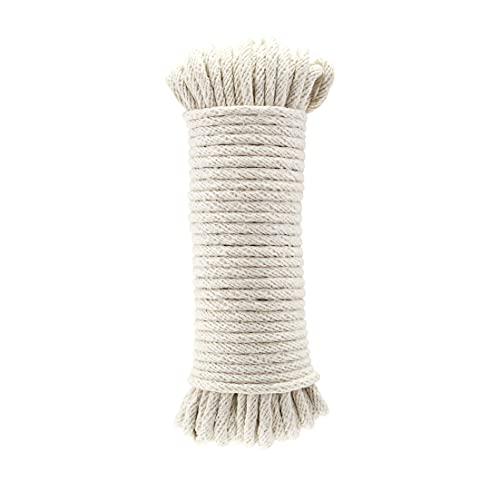
This is the shortest of the cotton options, making its 50-foot length a useful distinction for a modest span or a supply that will also serve crafts. The 3/16-inch braid has a natural off-white color that can be dyed, and the maker says it resists abrasion and UV light. Cotton has a softer hand than the synthetic cords, but it can absorb water and take longer to dry after rain. Choose this rope when cotton texture and dyeability matter more than a long continuous run.
Bottom line: Choose this for a shorter run when cotton texture or dyeing is important.
100 ft Cotton Rope with Synthetic Core

This cord pairs a soft cotton exterior with a synthetic core, unlike the all-cotton braid or the all-polyester and polypropylene choices. At 100 feet, it provides twice the length of the other cotton option while keeping a 3/16-inch diameter. The maker says the core resists abrasion and UV wear, and the cord is also positioned for crafts and macramé. The cotton surface may appeal where a smooth, gentle grip matters; buyers wanting a thicker line should instead compare 1/4-inch cord.
Bottom line: Choose this when you want a 100-foot cord with a cotton exterior.
TECEUM Polypropylene Utility Rope
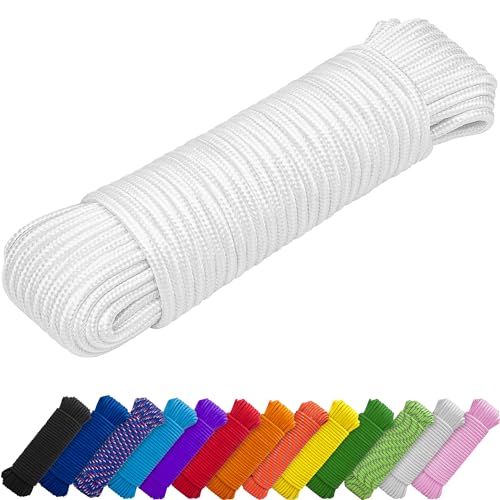
This 1/4-inch polypropylene cord is a 90-foot option, shorter than the 100-foot polyester rope but thicker than the 3/16-inch cotton choices. Its white diamond braid is described by the maker as UV- and fade-resistant and waterproof, with intended use for clotheslines and flag poles. Polypropylene is a synthetic choice for users who want a moisture-resistant line; the shorter length may not cover a span that a 100-foot cord can. Check the line path and available support points before selecting a length.
Bottom line: Pick this for a 90-foot polypropylene line with a 1/4-inch diameter.
How to choose clothes line rope
Start with the span and the line’s exposure: a longer run needs enough length to reach both supports with room to tie off, while an outdoor cord should tolerate sun and wet conditions. Clothesline rope commonly comes in cotton or synthetic fibers; cotton feels softer and can be dyed, while synthetic options are generally less absorbent. Diameter affects handling and compatibility with hooks or pulleys, so measure the support opening before choosing. As a practical rule, favor a 1/4-inch cord when you need a thicker line and its diameter fits the hardware; use 3/16-inch cord when narrower line is the better fit. Do not assume a rope’s general utility use establishes a safe laundry load rating.
Clothesline rope material differences
Polyester, polypropylene and cotton behave differently around moisture and handling. Polyester is a synthetic choice often selected for outdoor exposure; polypropylene does not absorb water as cotton does, while cotton can hold moisture and dry more slowly after rain. Cotton also provides a soft surface for crafts and can be dyed. The exact construction matters: a cotton-covered cord with a synthetic core is not the same as an all-cotton braid. Match the material to how often the line gets wet and how you plan to handle it, rather than treating one fiber as best for every setting. The maker’s weather-resistance claims describe those particular products, not every rope made from that fiber.
This table compares the common tradeoffs by cord type.
| Type | Useful trait | Consideration |
|---|---|---|
| Cotton braid | Soft feel; can be dyed | Can absorb water |
| Polyester | Synthetic outdoor option | Check diameter and span |
| Polypropylene | Low water absorption | Check product’s use and length |
| Cotton shell with synthetic core | Soft exterior with synthetic core | Not an all-cotton cord |
Measure the span and avoid sag
Measure the full route between attachment points before cutting or tying a clothesline; add enough working length for secure knots or hardware. A long unsupported span sags more under wet laundry than a short span, so adding more tension is not always the answer. Use sound supports and hardware designed for the rope diameter, and avoid pulling so tightly that anchors or fittings are strained. Wet garments add substantial load, and rope diameter alone does not tell you a safe working load. Keep the line clear of sharp edges that can abrade fibers, and inspect for fraying or damage before hanging laundry.
Care for an outdoor clothesline
Remove dirt and check the cord periodically, especially where it passes through a pulley or rubs against a support. UV exposure gradually weakens many fibers, while repeated wetting and drying can contribute to wear; shade and dry storage when the line is not needed can reduce exposure. Retie or replace a rope if it shows fraying, flattened sections or damage near a knot. Do not leave a line under high tension during severe weather, and do not use a clothesline cord as a lifting or climbing rope. Those applications require known load ratings and equipment made for that purpose.
Frequently Asked Questions
How much extra rope should I allow for tying a clothesline?
Allow extra length beyond the measured span so the cord can reach and secure around both supports. The amount depends on the knot or hardware, so make a trial fit before trimming excess.
Does a thicker clothesline rope prevent sagging?
A thicker rope can be easier to grip, but diameter alone does not determine sag. Span length, wet laundry weight, material stretch and support spacing also matter; shorten or add support to reduce a long unsupported run.
Can cotton rope stay outside in the rain?
Cotton rope can get wet and hold moisture, so it may dry more slowly than synthetic cord. Bring it under cover to dry when practical and inspect it for wear before reuse.
How often should I inspect an outdoor clothesline rope?
Check the cord before hanging laundry and periodically during the season, especially at knots, pulleys and points that rub. Replace it if you find fraying, cuts or flattened, weakened sections.