
Singer 44s Heavy Duty Machines: 5 Models Compared

For most sewists looking for a Singer 44-series heavy duty machine, the SINGER 4452 Holiday Bundle stands out for its extension table and bonus presser feet. Choose SINGER 4423 Meltwater Blue instead if you want a 4423 with 23 stitches and 97 applications; the other options are related models, not 44-series machines.
Heavy duty sewing machines are home machines designed to handle a range of fabrics and project types; match stitch functions and accessories to the work you actually do.
We earn a commission if you buy through links on this page. As an Amazon Associate I earn from qualifying purchases. Products are compared on manufacturer specifications, not hands-on testing.
- Best overall: SINGER 4452 Holiday Bundle – The bundle pairs 32 stitches and 110 applications with an extension table and two bonus presser feet.
- Best for stitch variety: SINGER 4423 Meltwater Blue – It offers 23 stitches, 97 applications and a one-step buttonhole.
- Best for DC motor: SINGER Heavy Duty 4552 Next Evolution – Its DC motor and 32 stitches suit shoppers considering a related 45-series model.
| Product | Best for | Stitches / applications | Buttonhole | Weight | Shop |
|---|---|---|---|---|---|
| SINGER 4452 Holiday Bundle | Accessory bundle | 32 / 110 | — | 13.2 lb | Check Price on Amazon |
| SINGER 4423 Meltwater Blue | Stitch variety | 23 / 97 | 1-step | 17.1 lb | Check Price on Amazon |
| SINGER Heavy Duty 4552 Next Evolution | DC motor option | 32 / 110 | 1-step | 17.2 lb | Check Price on Amazon |
| SINGER Heavy Duty 4511 Next Evolution | Everyday sewing | 11 / 69 | 4-step | 16.6 lb | Check Price on Amazon |
| Singer HD8832FR Refurbished | Refurbished option | 110 applications | — | 16.6 lb | Check Price on Amazon |
Singer 44s Heavy Duty Machines Compared
Compare the 44-series choices first, then consider related Singer heavy duty machines if their features better suit your projects.
SINGER 4452 Holiday Bundle
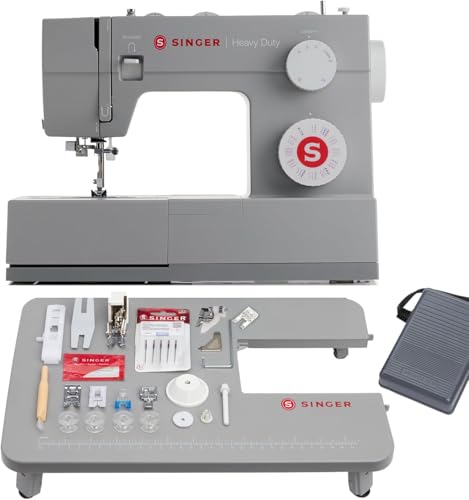
The 4452 bundle stands apart by adding a removable extension table and two bonus presser feet to the machine. Its 32 built-in stitches deliver 110 applications, and the included blind hem and open toe feet add options for garment hems and work where visibility matters. The table creates a larger, level surface for quilts, costumes and home décor projects. SINGER says the machine has 50% more power for thick fabrics. This bundle suits sewists who expect to use the extra workspace or specialty feet; buyers who only need a basic machine may not need those additions.
Bottom line: Choose this bundle if the extension table and bonus feet fit your project plans.
SINGER 4423 Meltwater Blue

The 4423 offers a middle ground in stitch count, with 23 stitches providing 97 applications. Its one-step buttonhole is a practical distinction for garment sewing, where repeatable buttonholes matter. The machine has a metal frame and stainless-steel bedplate; its maximum speed is 1,100 stitches per minute, and SINGER says it has 50% more power for denim and canvas. The Meltwater Blue finish also sets it apart from the gray and charcoal options. It suits sewists who want more stitch choices than a basic utility set, though it does not include the extension table and bonus feet found with SINGER 4452 Holiday Bundle.
Bottom line: Pick this model if stitch variety and a one-step buttonhole matter more than bundled accessories.
SINGER Heavy Duty 4552 Next Evolution

The 4552 is a related 45-series alternative, not a 44-series model. It has 32 built-in stitches and 110 applications, plus a one-step buttonhole and bonus presser feet. Its DC motor is a distinguishing feature; SINGER says it provides more power, speed and smoother sewing. A full metal interior frame is also part of its construction. This model suits shoppers willing to consider a different series for its motor and stitch set. Its features do not include the extension table bundled with SINGER 4452 Holiday Bundle, so that accessory difference may matter for larger projects.
Bottom line: Consider this related model if its DC motor and one-step buttonhole match your priorities.
SINGER Heavy Duty 4511 Next Evolution

The 4511 is a related 45-series machine with a smaller stitch set than the 44-series options: 11 built-in stitches provide 69 applications. Its four-step buttonhole distinguishes it from machines with one-step buttonholes, and its adjustable stitch length and width allow stitch customization. The metal frame and DC motor are additional features; SINGER says the motor provides 50% extra power for denim, canvas and layered fabrics. It suits everyday utility sewing where its 11 stitch choices are sufficient. Sewists who want more decorative or stretch-stitch options may prefer the broader sets on SINGER 4452 Holiday Bundle or SINGER 4423 Meltwater Blue.
Bottom line: Choose this alternative if 11 stitches cover your everyday sewing needs.
Singer HD8832FR Refurbished

The HD8832FR is a factory-refurbished 8832, making it a different model and condition category from the new 44-series machines. Its features include 110 stitch applications, a built-in needle threader and extra-high sewing speed. Those details may appeal to sewists who prioritize application count and threading assistance over a specific 44-series model. The maker gives its weight as 16.55 pounds and its dimensions as 18 by 14 by 9 inches. Because the feature set does not give a stitch count or buttonhole style, buyers comparing those functions should verify them before choosing this refurbished alternative.
Bottom line: Consider it only if you are open to a refurbished 8832 rather than a 44-series machine.
How to choose a Singer 44s heavy duty machine
Start with the work and accessories that matter most: stitch applications, buttonhole style and added workspace separate these models more clearly than the heavy duty label. A one-step buttonhole completes the buttonhole in one cycle, while a four-step version requires separate stages; either can work, but the one-step method is simpler for repeated garment buttonholes. Stitch applications are not the same as stitch count: one built-in stitch can have adjustable length or width, creating several uses. For occasional repairs and straight seams, a large stitch menu may add little value. For garment sewing, check that stretch stitches and the buttonhole method suit the patterns you use.
Stitching denim, canvas and layered fabric
Needle choice and fabric preparation matter as much as a machine’s power claim when sewing thick material. A size 90/14 needle is a common starting point for medium-weight denim, while heavier denim may call for a 100/16; match needle type and thread to the fabric, and test on scraps first. Folded hems and intersecting seams create abrupt thickness changes, so slow down at bulky joins rather than pulling fabric through the machine. SINGER describes some models as having extra power for thick fabrics, but that does not mean every stack is suitable. Keep fingers clear of the needle and switch the machine off before changing the needle or presser foot.
Extension tables and project fit
An extension table supports fabric beside the machine bed, helping large pieces lie flatter as they feed. It is useful for quilts, curtains and home décor, but it does not increase the machine’s throat space—the area between the needle and machine body. For quilting, measure the rolled or folded bulk of your project and check that it can pass through that throat area. A free arm, by contrast, exposes a narrower surface for sewing cuffs and pant legs. Larger work benefits from table support, while tubular garment sections benefit from free-arm access. Choose based on the shape of your projects, not just the table’s presence.
Needle and machine care for heavy duty sewing
Replace a sewing-machine needle after about 6 to 8 hours of sewing, or sooner if it bends, snags fabric or skips stitches; a dull needle can damage both fabric and thread. Use the needle system and size recommended for the machine, and insert it fully with the flat side oriented as the manual specifies. Lint from cotton and fleece can gather around the bobbin area, so remove it with a small brush after dusty or lint-heavy projects rather than blowing debris deeper inside. Unplug the machine before cleaning or servicing. Avoid sewing over pins, which can break a needle and send fragments toward the operator.
Comparing buttonhole methods and stitch applications
Buttonhole style affects workflow more directly than the headline number of applications. A one-step buttonhole generally uses a buttonhole foot and completes the sequence without moving the fabric between stages; a four-step method asks the sewist to switch stages manually. Application counts describe possible uses, not a guarantee that every decorative or specialty stitch suits every fabric. Use this quick comparison to decide which distinction matters for your usual projects.
| Need | Feature to prioritize | Reason |
|---|---|---|
| Repeatable garment buttonholes | One-step buttonhole | Fewer manual stages for each buttonhole |
| Simple repairs and seams | Utility stitches | Decorative variety may be unnecessary |
| Large flat projects | Extension table | Supports fabric beside the machine bed |
Frequently Asked Questions
How often should I replace a sewing machine needle?
Replace a needle after roughly 6 to 8 hours of sewing, or sooner if it bends, snags fabric or skips stitches. Thick denim and layered work can wear a needle faster than light woven fabric.
What needle size works for sewing denim at home?
A 90/14 needle is a common starting size for medium-weight denim, while heavy denim may need a 100/16. Test on a scrap and use a needle intended for the fabric and thread combination.
Does a one-step buttonhole make sewing easier?
A one-step buttonhole reduces the manual stages compared with a four-step method. Match the buttonhole foot and settings to the garment fabric, then test a sample before sewing the finished piece.
What does an extension table do on a sewing machine?
An extension table supports fabric beside the machine bed, which helps large pieces stay level as they feed. It does not enlarge the throat space between the needle and the machine body.
How can I sew across a thick denim seam safely?
Use a suitable denim needle, test the seam on scraps, and guide the fabric without pulling it through the machine. Slow down at bulky joins and keep fingers away from the needle.