
Sea Foam Top Engine Cleaner: 4 Products Compared

Sea Foam SS12 Upper Engine Spray is the closest match to Sea Foam top engine cleaner because it is an upper engine spray applied through the intake or throttle body. Choose a fuel additive for tank-based fuel-system cleaning, or an external degreaser for grime on engine-bay surfaces.
We earn a commission if you buy through links on this page. As an Amazon Associate I earn from qualifying purchases. Products are compared on manufacturer specifications, not hands-on testing.
- Best overall: Sea Foam SS12 Upper Engine Spray – Upper engine aerosol spray is applied through the air intake or throttle body.
- Best for fuel and oil: Sea Foam Motor Treatment, 16 oz – A multipurpose treatment is made for fuel and oil use.
| Product | Best for | Application | Container size | Pack size | Shop |
|---|---|---|---|---|---|
| Sea Foam SS12 Upper Engine Spray | Upper engine cleaning | Intake or throttle body | 12 oz | 2 cans | Check Price on Amazon |
| Sea Foam Spray Cleaner, 12 oz | Basic spray option | Spray cleaner | 12 oz | 2 cans | Check Price on Amazon |
| Sea Foam Motor Treatment, 16 oz | Fuel and oil treatment | Fuel tank and oil | 16 oz | 3 bottles | Check Price on Amazon |
| Sea Foam IC5 Fuel Injector Cleaner | Gasoline injectors | Gasoline fuel system | — | — | Check Price on Amazon |
Sea Foam Top Engine Cleaner Options
Match the cleaner’s application to the deposits you want to address.
Sea Foam SS12 Upper Engine Spray

Sea Foam SS12 Upper Engine Spray is the only option here specifically formulated as an upper engine spray. The 12-ounce aerosol is intended for application through a gasoline engine’s air intake or carburetor throat, and its targets include intake valves, upper cylinders, and combustion chambers. That makes it the closest fit for shoppers seeking an upper engine cleaner, including those with GDI engines where fuel does not wash the intake valves.
The can-and-intake approach requires access to a suitable intake point; it is not a fuel-tank additive or an exterior degreaser. Follow the vehicle and product directions for application.
Bottom line: Choose this for cleaner applied directly through the engine intake.
Sea Foam Spray Cleaner, 12 oz

Sea Foam Spray Cleaner, 12 oz is another 12-ounce Sea Foam spray in a two-can pack, but its short name does not establish whether it targets upper engine deposits or general cleaning. The can format may appeal to someone looking for a spray, yet the specifications provide no application or target-surface guidance to distinguish it from the upper engine formula.
It is therefore a less certain match when the goal is specifically to clean intake valves or combustion chambers. Confirm that the can is the upper engine formulation and is compatible with the intended intake application before buying.
Bottom line: Pick it only after confirming it is the upper engine formula you need.
Sea Foam Motor Treatment, 16 oz

Sea Foam Motor Treatment, 16 oz differs from the spray by treating fuel and engine oil rather than being applied through an intake. Its 16-ounce bottles are described for gasoline and diesel use, fuel-system cleaning, stored-fuel stabilization, and crankcase treatment. The maker also recommends adding it to the fuel tank every 3,000 miles.
This is a better fit when the aim is maintenance through fuel or oil, not targeted upper engine spray application. Its broader use is also a limitation for buyers who specifically want a cleaner delivered through the throttle body or air intake.
Bottom line: Choose this for fuel- or oil-based treatment rather than intake spraying.
Sea Foam IC5 Fuel Injector Cleaner
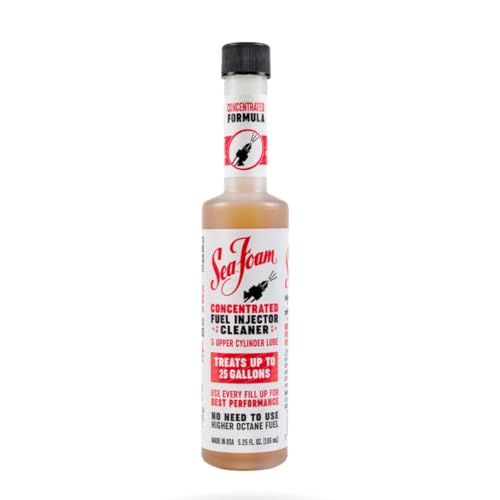
Sea Foam IC5 Fuel Injector Cleaner is directed at gasoline fuel-injected engines and injectors, unlike an upper engine spray that is applied at the intake. The purpose is injector cleaning, with restoring lost power and fuel economy as intended outcomes. It is the more relevant type when the target is the fuel-injection system.
The fields do not give a container size or application amount, so the specifications cannot establish how much to use. It is not the right substitute when you specifically need a spray for upper engine surfaces or intake-valve deposits.
Bottom line: Pick this when injector cleaning is the goal, not intake treatment.
Choose a cleaner by where deposits are
Choose an upper engine spray for intake-path deposits, a fuel additive for deposits addressed through the tank, and an engine-bay cleaner for exterior grease. Intake sprays enter through the air intake or throttle body, while tank additives travel with fuel through the fuel system. Exterior degreasers clean surfaces and do not substitute for internal engine treatments.
For the products here, Sea Foam SS12 Upper Engine Spray is the direct upper engine spray, Sea Foam Motor Treatment, 16 oz is described for fuel and oil treatment, and Sea Foam IC5 Fuel Injector Cleaner targets gasoline injectors. A practical decision rule is to choose a spray only when you can identify the correct intake entry point and product directions for that engine. Do not use a surface cleaner inside an intake or fuel system.
How upper engine spray application differs
Upper engine aerosol cleaners are introduced through an intake opening or throttle body, unlike pour-in fuel treatments. The maker identifies Sea Foam SS12 Upper Engine Spray for intake or carburetor-throat application and calls it especially relevant to gasoline direct injection engines, where fuel does not wash intake valves. The specifications do not establish a universal dose or engine-specific procedure.
Engine designs and electronic throttle bodies vary, so use the vehicle-specific service procedure and product directions rather than spraying blindly. Keep spray away from hot exhaust components and ignition sources, and never work around a running engine without observing the product’s safety instructions. If you cannot identify the correct intake route, get qualified service help instead of guessing.
Fuel additives and injector cleaners serve different jobs
Fuel additives enter the tank and move through the fuel system; injector cleaners focus on injectors, while upper engine sprays are applied at the intake. Sea Foam Motor Treatment, 16 oz is intended for gasoline and diesel fuel and oil use, while Sea Foam IC5 Fuel Injector Cleaner is for gasoline fuel-injected engines. Those routes and targets are not interchangeable just because each product mentions cleaning.
Tank additives cannot directly contact areas upstream of the injectors in the same way as an intake-applied spray. Conversely, an intake spray is not the same maintenance choice as a fuel treatment. Match the method to the suspected deposit location, and avoid combining products unless their directions explicitly allow it.
Use engine-bay foam only on exterior surfaces
Foaming engine cleaners are for external oil, dirt, and road grime, not internal engine deposits. Its process is to leave the foam for 10 to 15 minutes, then rinse with a hose.
Before rinsing an engine bay, protect electrical connectors, the alternator, air intake openings, and other components that should not be soaked; allow the engine to cool and avoid spraying hot parts. Confirm the cleaner is suitable for the exact materials being cleaned. Exterior degreasing should be kept separate from intake or fuel-system servicing.
Frequently Asked Questions
Does Sea Foam spray clean GDI intake valves?
Sea Foam SS12 Upper Engine Spray is identified for cleaning upper engine areas and is described as especially useful for GDI engines. GDI fuel does not pass over intake valves, so a tank additive cannot wash those valve backs directly.
Can I use fuel treatment instead of intake spray?
No, the application routes differ: a tank treatment moves with fuel, while an intake spray enters through an intake opening. Choose based on the deposit location and the product’s permitted use.
How often does Sea Foam recommend adding motor treatment?
For Sea Foam Motor Treatment, 16 oz, the specifications says to add it to the fuel tank every 3,000 miles. Use only the amount and method given by the product directions for your vehicle.