
Capers Packed in Salt: 4 Products Compared for Cooking

Fratelli D’Amico Non-Pareil Capers, 35.3 oz is the best starting point for most cooks because its 35.3-ounce package is the largest of these options. Choose Frantoi Cutrera Sicilian Non-Pareil Capers, 2 x 5.3 oz instead for two smaller packs, or La Nicchia Pantelleria Capers in Sea Salt, 500 g if you want capers from Pantelleria.
Salt-packed capers are cured flower buds that need rinsing to remove surface salt before cooking; their concentrated, briny flavor suits sauces, seafood and pasta.
We earn a commission if you buy through links on this page. As an Amazon Associate I earn from qualifying purchases. Products are compared on manufacturer specifications, not hands-on testing.
- Best overall: Fratelli D’Amico Non-Pareil Capers, 35.3 oz – Its 35.3-ounce package is the largest in this comparison.
- Best for smaller portions: Frantoi Cutrera Sicilian Non-Pareil Capers, 2 x 5.3 oz – Two 5.3-ounce packs let you open one container at a time.
- Best for Pantelleria origin: La Nicchia Pantelleria Capers in Sea Salt, 500 g – These capers are from Pantelleria Island in Sicily.
| Product | Best for | Package size | Origin | Caper grade | Shop |
|---|---|---|---|---|---|
| Fratelli D’Amico Non-Pareil Capers, 35.3 oz | Frequent cooking | 35.3 oz | Italy | Non-pareil | Check Price on Amazon |
| Sanniti Spanish Non-Pareille Capers, 28.2 oz | Spanish origin | 28.2 oz | Spain | Non-pareil | Check Price on Amazon |
| La Nicchia Pantelleria Capers in Sea Salt, 500 g | Pantelleria origin | 17.6 oz | Pantelleria, Sicily | — | Check Price on Amazon |
| Frantoi Cutrera Sicilian Non-Pareil Capers, 2 x 5.3 oz | Smaller packs | 10.6 oz total | Sicily | Non-pareil | Check Price on Amazon |
Capers Packed in Salt Compared
Compare package size, origin and grade to find the salt-packed capers that suit your cooking.
Fratelli D’Amico Non-Pareil Capers, 35.3 oz

Fratelli D’Amico Non-Pareil Capers, 35.3 oz offers the largest package here, making it a practical fit for cooks who use capers often. The Italian non-pareil buds are described as firm with a delicate flavor, and the maker suggests them for hot or cold recipes such as piccata, puttanesca, sauces and salads. Rinse off the salt and soak the capers in water for up to 15 minutes before use. The 35.3-ounce size is a substantial amount; cooks who use capers only occasionally may prefer one of the smaller packages.
Bottom line: Choose this if you use capers regularly and want the largest package.
Sanniti Spanish Non-Pareille Capers, 28.2 oz
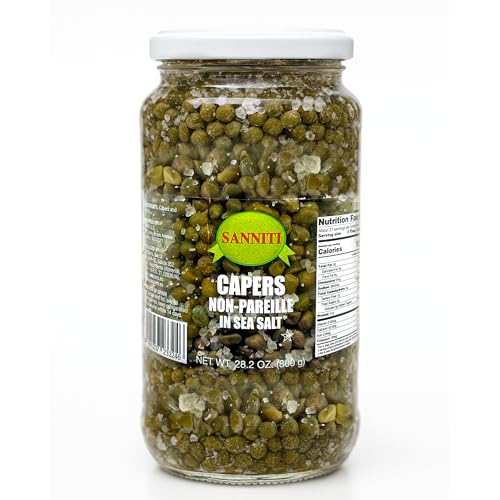
Sanniti Spanish Non-Pareille Capers, 28.2 oz is the Spanish-origin choice, with a 28.2-ounce jar of non-pareil capers packed in sea salt. Non-pareil is the smallest caper grade, valued for a firm texture and delicate flavor. The maker recommends these for hot or cold dishes, including chicken piccata, salmon crostini and pasta puttanesca. Wash away the salt and soak the buds in water for 15 minutes before cooking. This jar is smaller than Fratelli D’Amico Non-Pareil Capers, 35.3 oz but still a sizable quantity, so it may be more than occasional cooks need.
Bottom line: Pick this when Spanish origin matters more than getting the largest package.
La Nicchia Pantelleria Capers in Sea Salt, 500 g

La Nicchia Pantelleria Capers in Sea Salt, 500 g stands out for its named origin: Pantelleria Island, Sicily. The 500-gram package is smaller than the two largest options here, while still providing enough capers for repeated use in sauces, pasta or seafood dishes. The specifications identify the capers as packed in sea salt but do not give a grade, so buyers choosing specifically for non-pareil size should compare that point before deciding. As with other salt-packed capers, rinse and taste a small amount before adding extra salt to a dish.
Bottom line: Choose this for capers identified with Pantelleria Island.
Frantoi Cutrera Sicilian Non-Pareil Capers, 2 x 5.3 oz

Frantoi Cutrera Sicilian Non-Pareil Capers, 2 x 5.3 oz comes as two 5.3-ounce packs, the smallest total package in this comparison. Its Sicilian non-pareil capers are made with capers and sea salt, and the maker says they contain no preservatives or additives. The maker recommends soaking them in water for up to 15 minutes after rinsing, then using them in sauces, seafood, meat, pasta or salads. Two packs can help separate use over time, but the total amount is a limitation for cooks who go through capers quickly.
Bottom line: Pick this if two modest packs suit your cooking pace.
How to Choose Salt-Packed Capers
Choose salt-packed capers by grade, origin and how much you cook with them. Capers are unopened flower buds, and salt curing gives them a concentrated savory tang; the salt coating also means they need rinsing before they go into a recipe. Non-pareil is the smallest common grade, generally under 7 mm, and is often selected when a small, firm bud is wanted. Larger grades suit recipes where a more visible garnish is useful. Among these choices, package size ranges from 10.6 to 35.3 ounces total, so cooks who use capers often can favor a larger pack while occasional users may prefer the two smaller packs.
Choose by origin only when it matters to your recipe or preference: the options here identify Italy, Spain, Sicily or Pantelleria. A named island origin is more specific than a country label.
Rinsing and Using Capers Packed in Salt
Rinse salt-packed capers and soak them before adding them to food; otherwise, surface salt can overwhelm a dish. The product makers here recommend soaking for up to 15 minutes, with one specifying 15 minutes. Start with a brief soak, taste a caper, and soak longer if it is still too salty for the recipe. Pat the buds dry when you want them to cling to a garnish or avoid adding extra liquid to a sauce.
Salt-packed capers work in both hot and cold preparations. Add them near the end of cooking when you want their flavor to remain distinct, or chop them into a dressing or topping. A useful decision rule is to rinse and taste before salting a dish; add additional salt only after the capers are incorporated.
Salt-Packed Caper Sizes and Best Fits
Package quantity matters because opened capers are easy to use sparingly but a large container can be cumbersome for an occasional cook. The comparison below shows the total package amount, not a serving size. Product size labels vary, so compare the total ounces when you are deciding how much to keep on hand. Grade refers to bud size rather than package size; non-pareil indicates the smallest grade among common European size classifications.
Use the table to match a practical quantity or origin preference to an option. If you need a specific bud grade, the non-pareil choices are identified in the product specifications; the Pantelleria product does not include a grade in its fields.
| Need | Choose | Reason |
|---|---|---|
| Largest package | Fratelli D’Amico Non-Pareil Capers, 35.3 oz | 35.3 oz |
| Two smaller packs | Frantoi Cutrera Sicilian Non-Pareil Capers, 2 x 5.3 oz | 2 x 5.3 oz |
| Pantelleria origin | La Nicchia Pantelleria Capers in Sea Salt, 500 g | Named island origin |
| Spanish origin | Sanniti Spanish Non-Pareille Capers, 28.2 oz | Product of Spain |
Frequently Asked Questions
How long should salt-packed capers soak?
Rinse salt-packed capers, then soak them for up to 15 minutes. Taste one after a short soak and continue until the salt level suits the recipe.
Do salt-packed capers need rinsing before cooking?
Yes, rinse them to remove surface salt before adding them to a dish. Taste before salting the rest of the recipe, since the buds can season the food.
What does non-pareil mean for caper size?
Non-pareil is the smallest common caper grade, generally under 7 mm. It is a useful choice when a recipe calls for small, firm buds.
Are capers packed in salt the same as pickled capers?
No; salt-packed capers are cured with dry salt, while pickled capers are preserved in a vinegar-based liquid. Rinse salt-packed buds before use, and account for their salt when seasoning.
When should I add capers to a hot sauce?
Add rinsed capers near the end of cooking when you want their distinct savory flavor to stand out. For a more blended flavor, chop them and stir them in earlier.