
3 Barrel Crimping Iron: 4 Wave Tools Compared

For most shoppers, Alure 1-Inch Triple-Barrel Waver is the best fit because its 1-inch triple barrels pair with adjustable heat, an LCD display and dual voltage. Choose Conair Triple-Barrel Waver instead if you want finer, more defined waves and 30 heat settings; a triple-barrel iron presses hair between heated barrels to form repeating waves.
We earn a commission if you buy through links on this page. As an Amazon Associate I earn from qualifying purchases. Products are compared on manufacturer specifications, not hands-on testing.
- Best overall: Alure 1-Inch Triple-Barrel Waver – Its 1-inch barrels, LCD temperature display and dual voltage suit general wave styling and travel.
- Best for defined waves: Conair Triple-Barrel Waver – Smaller 1/2- and 5/8-inch barrels and 30 heat settings give more control over wave definition.
- Best for heat adjustment: Bed Head Wave Affair Jumbo Waver – Digital controls offer 10 heat settings up to 410°F, and a glove is included.
| Product | Best for | Barrel size (inches) | Max temperature | Heat settings | Shop |
|---|---|---|---|---|---|
| Alure 1-Inch Triple-Barrel Waver | Travel styling | 1 inch | 410°F | — | Check Price on Amazon |
| Conair Triple-Barrel Waver | Defined waves | 0.5 and 0.625 inches | 400°F | 30 | Check Price on Amazon |
| Bed Head Wave Affair Jumbo Waver | Digital heat control | Jumbo; size not given | 410°F | 10 | Check Price on Amazon |
| TOP4EVER 25 mm Triple-Barrel Iron | Simple heat settings | 0.984 inches | 410°F | 2 | Check Price on Amazon |
3 Barrel Crimping Irons Compared
Compare barrel size and heat controls to find the wave pattern and adjustment range that suit your routine.
Alure 1-Inch Triple-Barrel Waver

Dual voltage distinguishes this 1-inch triple-barrel waver for travelers who need a tool that can work with different electrical systems. The ceramic-tourmaline barrels heat to 410°F in 60 seconds, and an LCD display shows the selected temperature. Adjustable heat can help tailor styling to hair texture, while the larger barrel size favors broader waves than the narrower-barrel option.
Bottom line: Pick this for 1-inch waves and dual-voltage travel flexibility.
Conair Triple-Barrel Waver

Different inner and outer barrel diameters set this Conair waver apart: the inner barrel is 0.5 inch and the outer barrels are 0.625 inch. The double-ceramic tool offers 30 heat settings up to 400°F, giving more adjustment steps than the 10-setting Bed Head model. Its smaller barrels can produce tighter, more defined waves than a 1-inch design. Auto-off adds a useful shutoff feature, but the maximum temperature is lower than the 410°F options, which may matter if you specifically want that upper setting.
Bottom line: Choose this for smaller barrel dimensions and many heat adjustments.
Bed Head Wave Affair Jumbo Waver
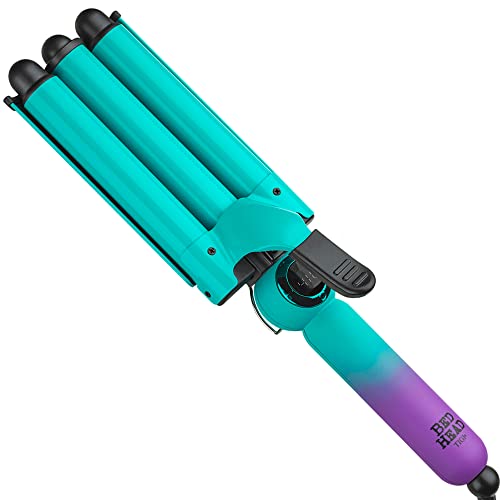
Ten digital heat settings and an included heat-protectant glove distinguish the Bed Head Wave Affair from the simpler two-setting option. Its three-barrel design is intended for quick styling, and the maker says the tourmaline ceramic adds smoothness and shine while helping protect against heat damage. Heat reaches 410°F, making this a fit for shoppers seeking a high maximum setting with digital adjustment.
Bottom line: Pick this for digital temperature adjustment and the included glove.
TOP4EVER 25 mm Triple-Barrel Iron
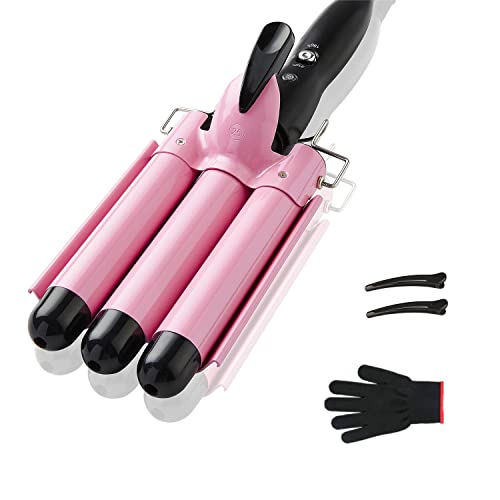
Two temperature settings make the TOP4EVER a simpler choice than the digital-control models, while its 25 mm ceramic barrels provide a size to guide wave selection. The maker says the tool reaches 410°F and is intended for fine or thick hair, with ceramic heating for wave styling. This straightforward setup may suit someone who prefers fewer controls. Its two settings provide less fine adjustment than a 10- or 30-setting tool, so shoppers seeking closely tailored heat levels may prefer one of those alternatives.
Bottom line: Choose this for a 25 mm barrel size and straightforward controls.
How to Choose a 3 Barrel Crimping Iron
Barrel diameter is the main choice for wave scale: smaller barrels generally create tighter bends, while larger barrels make broader waves. A three-barrel tool forms a repeated S-shaped pattern by clamping sections between its heated cylinders; work in sections no wider than the heated plate so the shape stays even. Heat control matters too: fine or chemically treated hair generally needs less heat than coarse hair, so start low and increase only if the wave does not hold. For a routine that needs frequent adjustment, prefer a model with multiple settings rather than a two-setting switch. Hold each section only briefly and avoid repeated passes to limit heat exposure.
Barrel Sizes and Wave Shape
Barrel size changes the spacing and depth of the wave, but the individual tool design also matters. A 1/2- to 5/8-inch barrel arrangement tends toward tighter, more defined bends than a 1-inch barrel, while a jumbo waver can make a broader pattern. Check the exact barrel diameter rather than relying on words such as “jumbo,” since that label does not give a measurement. Hair length affects maneuverability: narrower tools are easier to position near shorter layers, while wider barrels cover more hair per clamp on longer sections. Keep the iron parallel to the section and overlap each clamp slightly to avoid gaps in the wave.
Heat Settings and Hair Safety
Maximum temperature is not a target for every hair type; begin with the lowest setting that produces a lasting wave and make one test section before styling the rest. Temperatures above 400°F can increase the risk of heat damage, especially on fine, bleached or already fragile hair, so avoid the highest setting unless lower heat fails. Use a heat protectant and make sure hair is fully dry before using a heated iron. A digital display or larger number of settings can make small adjustments easier, but it does not make a high setting safer. Keep the hot barrels away from skin and set the iron on a heat-resistant surface while it cools.
Using and Storing a Triple-Barrel Waver
Dry, detangled sections about 1 inch wide are a useful starting point for consistent waves; thicker sections may not heat evenly through the center. Clamp from near the roots without touching the scalp, hold briefly, then release and move down the section with a small overlap. A swivel cord reduces tangling during use, while auto shutoff can limit risk if the tool is accidentally left on; neither replaces unplugging the iron after styling. Let the barrels cool completely before storage, and do not wrap the cord tightly around a hot or warm tool. Travelers should match the tool’s voltage capability to the destination’s electrical supply and use a plug adapter when needed.
Frequently Asked Questions
Are three-barrel wavers suitable for short hair?
Three-barrel wavers can work on short hair if the tool fits the length of each layer; narrower barrels are generally easier to position around shorter sections. Leave enough hair length to clamp safely without bringing the heated barrels against the scalp.
What temperature should I use for fine hair?
Start fine hair at the lowest available heat setting and test one small section before styling more. Increase gradually only if the wave does not hold, because high heat can damage fine or fragile strands.
Should hair be wet or dry before waving?
Hair should be fully dry before using a heated waver. Water in the hair can heat rapidly and increase damage risk, so dry hair completely and apply a heat protectant before styling.
How wide should each section be for even waves?
Sections about 1 inch wide are a practical starting point for consistent contact with the barrels. Very thick sections may not heat evenly, so divide them into smaller portions rather than repeatedly clamping the same area.
Can I use a dual-voltage waver overseas?
A dual-voltage tool can accommodate compatible electrical systems abroad, but the plug shape may still differ. Check the destination voltage and use an appropriate plug adapter; dual voltage does not automatically make plugs physically compatible.