
Best Bandages for Blisters: 5 Options Compared

For most people, Dr. Frederick’s Better Blister Bandages is the best bandage for blisters because its 12 hydrocolloid pads come in heel, toe and spot shapes. Choose BAND-AID Pro Heal Hydrocolloid Blister Bandages instead if you want a bandage designed to stay on for up to five days; for a larger pack of varied shapes, consider Arme 50-Piece Hydrocolloid Bandages.
We earn a commission if you buy through links on this page. As an Amazon Associate I earn from qualifying purchases. Products are compared on manufacturer specifications, not hands-on testing.
- Best overall: Dr. Frederick’s Better Blister Bandages – Includes heel, toe and spot shapes in a 12-count hydrocolloid variety pack.
- Best for multi-day wear: BAND-AID Pro Heal Hydrocolloid Blister Bandages – Designed to stay in place for up to five days and is 100% waterproof.
- Best for shape variety: Arme 50-Piece Hydrocolloid Bandages – Provides 50 pads across four shapes with dimensions for each.
| Product | Best for | Count | Shapes | Water resistance | Shop |
|---|---|---|---|---|---|
| Dr. Frederick’s Better Blister Bandages | Mixed foot areas | 12 | Heel, toe, spot | Water-resistant | Check Price on Amazon |
| BAND-AID Pro Heal Hydrocolloid Blister Bandages | Extended wear | 6 | Blister shape | 100% waterproof | Check Price on Amazon |
| Arme 50-Piece Hydrocolloid Bandages | Four-shape supply | 50 | Four shapes | Waterproof | Check Price on Amazon |
| Amazon Basics Extreme Heel Cushions | Heel coverage | 10 | Heel cushion | — | Check Price on Amazon |
| 30-Piece Hydrocolloid Blister Bandages | Shoe friction | 30 | Variety | Waterproof | Check Price on Amazon |
Bandages for Blisters
Compare these hydrocolloid options by shape, pack size and the kind of protection each is designed to provide.
Dr. Frederick’s Better Blister Bandages

Heel, toe and spot shapes make this 12-count variety pack the most adaptable choice here for different foot areas. The hydrocolloid pads are latex-free and water-resistant, and the maker says they are designed to stay on through showers, sweat and a full day. Choose it if you want several shapes in one pack rather than a large supply of one general style. The trade-off is a smaller count than Arme 50-Piece Hydrocolloid Bandages, which has 50 pads in four shapes.
Bottom line: Choose this if you need different shapes for different foot areas.
BAND-AID Pro Heal Hydrocolloid Blister Bandages

Designed for a longer wear interval than the other options here, this six-count pack uses hydrocolloid technology for everyday blisters, cuts and scrapes. The maker says the bandages are 100% waterproof and stay in place for up to five days; a white bubble can form under the seal as fluid is absorbed. That multi-day design suits people seeking continuous coverage. Its limitation is the small pack and single described shape, so it offers less shape variety than Dr. Frederick’s Better Blister Bandages or Arme 50-Piece Hydrocolloid Bandages.
Bottom line: Choose this for the maker’s up-to-five-day wear design.
Arme 50-Piece Hydrocolloid Bandages

Four distinct shapes and 50 pieces set this pack apart: elongated strips, circular guards, oval pads and crescent shields target different foot areas. The dimensions range from 2.17 by 1.45 inches to 2.76 by 1.14 inches, so compare the pad outline with the spot you want to cover. It suits buyers who want multiple shapes in one larger pack. The limitation is that its many shapes may be more than needed for someone covering only one recurring spot.
Bottom line: Choose this if you want a larger supply in four shapes.
Amazon Basics Extreme Heel Cushions

A 1.65-by-2.67-inch size and flexible design make this 10-count option specifically heel-focused, unlike the multi-shape packs. The hydrocolloid gel cushion is intended to protect blisters and reduce rubbing and friction, with multi-day use described by the maker. It may suit a heel area that needs a broad cushion. Its main limitation is its heel-specific design; buyers looking for toe or spot shapes should consider Dr. Frederick’s Better Blister Bandages or Arme 50-Piece Hydrocolloid Bandages instead.
Bottom line: Choose this for a broad, flexible heel cushion.
30-Piece Hydrocolloid Blister Bandages
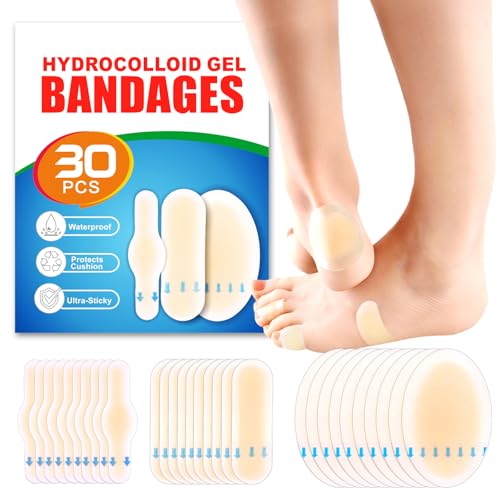
For shoe-related rubbing, this 30-piece hydrocolloid option is described as thin and lightweight, with cushioning intended to shield sore spots from friction and pressure. It is positioned for use with heels, boots and athletic shoes, making it a practical fit for people dealing with chafing from footwear. The pack is identified as one size, so it offers less precise shape selection than the four-shape set in Arme 50-Piece Hydrocolloid Bandages or the heel, toe and spot assortment in Dr. Frederick’s Better Blister Bandages.
Bottom line: Choose this for a general-purpose pad for footwear friction.
How to choose bandages for blisters
Choose the pad shape and coverage area before comparing pack count. Hydrocolloid dressings absorb wound fluid and form a moist gel at the surface; they are commonly used for minor blisters when the skin is clean and the dressing can seal around the area. A shape that extends beyond the blister is more likely to protect the surrounding skin from rubbing than a pad that barely covers it. For shoe friction, apply protection before a long walk rather than waiting for a hot spot to become painful. Do not use an adhesive blister dressing on a deep, infected or heavily draining wound; seek medical advice for worsening redness, warmth or pus.
| Need | Useful choice |
|---|---|
| Heel, toe and spot coverage | Multi-shape assortment |
| One heel area | Heel-focused cushion |
| Longer sealed wear | Bandage designed for multi-day use |
Hydrocolloid blister bandage fit and placement
A hydrocolloid pad should cover the blister with a margin of intact skin around its edge so the adhesive can seal. Clean and dry the skin first; lotion, sweat and moisture can weaken adhesion. Avoid stretching the skin or the bandage while applying, since tension can make edges lift as the foot moves. For a blister between toes, use a shape that does not bunch when toes flex, and stop using any dressing that causes a rash or irritation. Footwear fit matters too: a shoe with a tight heel counter or toe box can keep creating friction even under a cushion, so address the rubbing source as well as covering the sore spot.
How hydrocolloid bandages differ from blister cushions
Hydrocolloid dressings and cushioning pads overlap, but their practical emphasis differs: a sealed hydrocolloid dressing manages moisture at the wound surface, while a thicker cushion primarily reduces pressure and friction. Product shapes also influence fit more than a broad claim such as waterproof or water-resistant. Use a sealed dressing on a small clean blister when the edges can adhere; use a cushion where shoe contact is the main problem and the pad can stay flat. If a blister has already torn, rinse gently with clean water, leave the skin flap in place if possible, and cover it with a clean dressing. Do not pop an intact blister just to make a bandage fit.
Frequently Asked Questions
How long should a hydrocolloid blister bandage stay on?
Wear time depends on the dressing and how well its edges stay sealed. Some products are designed for several days, but replace a dressing that leaks, loosens or becomes dirty.
Should I pop a blister before covering it?
No, an intact blister generally provides a natural barrier over the skin underneath. Cover it with a clean dressing, and seek medical advice if it becomes increasingly red, warm or drains pus.
Can I wear blister bandages in the shower?
Some hydrocolloid bandages are waterproof or water-resistant, but water resistance varies by product. Pat the area dry afterward and replace the dressing if water gets under its seal.
How do I stop a heel blister from coming back?
Reduce heel movement inside the shoe: check that the heel fits snugly without slipping and wear moisture-wicking socks on long walks. A protective pad can reduce rubbing, but it cannot correct a shoe that repeatedly slides.