
Micronta 30x Illuminated Microscope: Alternatives Compared

The United Scientific MCR30X is the closest match to a Micronta 30x illuminated microscope because it combines 30x magnification, a light, and wheel focusing. The SE model also offers 30x and adjustable LED illumination; choose a different option if a variable magnification range or keychain size matters more.
We earn a commission if you buy through links on this page. As an Amazon Associate I earn from qualifying purchases. Products are compared on manufacturer specifications, not hands-on testing.
- Best overall: United Scientific MCR30X Pocket Microscope – It matches 30x magnification and adds a switchable light, focus wheel, and storage case.
- Best for LED adjustment: SE 30x LED Pocket Microscope MW10084 – Its adjustable LED and 30x magnification suit buyers who want control over illumination.
- Best for variable magnification: Carson Pocket Micro 20x–60x MM-450 – Its 20x–60x range offers more magnification flexibility than fixed 30x models.
| Product | Best for | Magnification | Illumination | Focus | Shop |
|---|---|---|---|---|---|
| United Scientific MCR30X Pocket Microscope | Closest 30x match | 30x | Switchable light | Focus wheel | Check Price on Amazon |
| SE 30x LED Pocket Microscope MW10084 | Adjustable LED | 30x | Adjustable LED | Focus wheel | Check Price on Amazon |
| Carson Pocket Micro 20x–60x MM-450 | Variable magnification | 20x–60x | Built-in LED | — | Check Price on Amazon |
| Carson MicroBrite Plus 60x–120x MM-300 | Higher magnification | 60x–120x | Built-in LED | — | Check Price on Amazon |
| Carson MicroMini 20x Keychain Microscope | Keychain portability | 20x | UV and LED | Focus wheel | Check Price on Amazon |
Micronta 30x illuminated microscope alternatives
These pocket microscopes differ most in magnification range, lighting, and how you focus a specimen.
United Scientific MCR30X Pocket Microscope

The United Scientific MCR30X is the closest match here to a fixed 30x illuminated pocket microscope. It has a monocular eyepiece, a wheel mechanism for focusing, and a switch to turn its light on and off; a storage case is included. Its uses include classroom, field, and shop-floor observation, so it suits buyers seeking a straightforward portable instrument rather than a toy-style variable-power model. The limitation is that its illumination type and battery requirements are not given, which matters if LED lighting or a particular power source is essential.
Bottom line: Choose this if you want fixed 30x magnification with a focus wheel and a case.
SE 30x LED Pocket Microscope MW10084

The SE MW10084 distinguishes itself with adjustable LED illumination while keeping a fixed 30x magnification. Its focus wheel and two modes—flashlight and microscope—add flexibility for quick inspection, and the compact body measures 5⅝ by 1 by 1⅞ inches and weighs about 1.6 ounces. The maker positions it for examining jewelry, antiques, and coins, making it a fit for hobby inspection. Its fixed magnification is the tradeoff: choose a variable-power model if you need to move between a wider view and stronger magnification.
Bottom line: Pick this for adjustable LED light in a fixed 30x pocket microscope.
Carson Pocket Micro 20x–60x MM-450
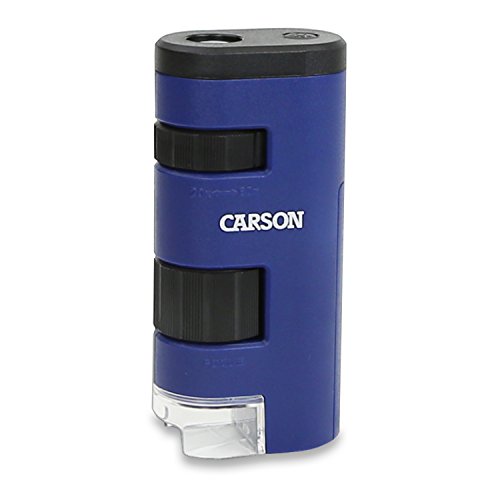
The Carson Pocket Micro MM-450 differs from the fixed-power 30x choices by spanning 20x to 60x. That range suits everyday exploration of items such as stamps, coins, and plants, and its built-in LED helps illuminate observations. The compact blue handheld design is described for STEM learning and daily use, making it a reasonable alternative when a child-friendly exploration tool matters more than matching Micronta’s exact 30x power.
Bottom line: Choose this when a variable 20x–60x range matters more than fixed 30x.
Carson MicroBrite Plus 60x–120x MM-300

The Carson MicroBrite Plus MM-300 is the higher-magnification alternative, with a 60x–120x optical zoom range and built-in LED illumination. Its compact handheld format is presented for field use, classroom labs, and student science activities. That makes it a better fit for buyers specifically seeking more magnification than 30x, rather than a direct replacement for a fixed 30x microscope.
Bottom line: Select this if stronger 60x–120x magnification is the priority.
Carson MicroMini 20x Keychain Microscope
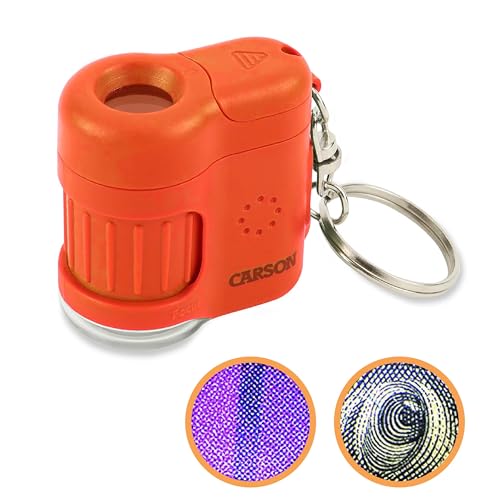
The Carson MicroMini MM-280O is the smallest-format option here: a 20x microscope built into a keychain design. It combines UV lighting with an LED flashlight and has a focus wheel, making it useful for portable close inspection and demonstrations of fluorescence. The 20x power is below the requested 30x, so it suits buyers who value carry-anywhere convenience and dual lighting over magnification. Its miniature format is the limitation for anyone wanting the more powerful fixed 30x view of the closest matches.
Bottom line: Choose this for a keychain-sized tool with UV and LED lighting.
How to choose a 30x illuminated pocket microscope
Start with magnification and the kind of illumination you need: fixed 30x models match the target, while variable-power microscopes trade a fixed view for a range. A wider field of view is generally easier for locating a specimen; higher magnification narrows the view and makes steady positioning more important. LED lighting is useful for opaque objects viewed from above, while transmitted light is needed to illuminate transparent samples from below. Compare the control layout too: a focus wheel is useful for fine adjustment, while a light switch or adjustable output changes illumination without changing magnification.
What magnification range fits your inspection
Choose fixed 30x for a direct match, 20x–60x for a flexible general-purpose view, or 60x–120x when the higher-power range is the goal. Magnification alone does not determine how much detail is visible; lens quality, focus, illumination, and specimen stability also matter. A higher-power pocket microscope typically has a shallower depth of field, so tiny changes in distance can move an object out of focus. For handheld observation, start at the lowest available power, center the feature, then increase magnification if the design allows it. This avoids losing the specimen in a narrow view.
Illumination and safe microscope handling
Use a microscope’s built-in light for opaque objects, and keep fingers and loose material clear of moving focus parts while adjusting the view. LED illumination can improve visibility, but strong direct light may create glare on coins, glossy paper, or polished jewelry; tilt the specimen slightly to reduce reflections. UV light is different from visible LED illumination and should be directed only at the object, never at eyes or skin. Pocket microscopes do not replace laboratory microscopes for measuring or identifying specimens, and a steady surface can help keep higher magnification focused.
| Need | Suitable microscope type | Tradeoff |
|---|---|---|
| Fixed 30x match | 30x illuminated pocket microscope | No variable range |
| Changeable power | 20x–60x handheld microscope | Not fixed at 30x |
| More magnification | 60x–120x pocket microscope | Higher starting power |
Focusing and care for a pocket microscope
Focus by moving the microscope or specimen in small increments until the subject is sharp; at high magnification, even a slight distance change can shift focus. Keep lenses free of fingerprints and grit, since debris near a small lens can obscure a large part of the view. Use a clean lens cloth rather than a shirt sleeve or paper towel, which can leave fibers or scratches. Store the instrument in its case when one is included, and switch off illumination after use to conserve the batteries. Check battery compatibility before ordering if a specific power source is required.
Frequently Asked Questions
Is a 30x pocket microscope enough for coins?
A 30x pocket microscope can show fine surface features on coins, including marks and texture. Glare from a reflective surface can hide detail, so angle the coin or light slightly rather than looking straight at a bright reflection.
What does 20x to 60x magnification mean?
A 20x–60x microscope can vary its magnification across that range, unlike a fixed 30x model. The lower end generally gives a wider view that is easier for finding and centering an object.
Can a pocket microscope view transparent specimens?
Transparent samples are easiest to see with light passing through them from below. A microscope with only top illumination may work better for opaque surfaces such as coins, stamps, and leaves.
How should I clean a pocket microscope lens?
Use a clean lens cloth and remove loose dust gently before wiping. Avoid paper towels or clothing, which can leave fibers or scratch small optical surfaces.
Is UV light on a pocket microscope safe to look at?
Do not look directly into a UV light or shine it at eyes or skin. Direct the light only at the specimen and use visible illumination when UV is unnecessary.