
Lucas Slick Mist Speed Wax: 3 Options Compared

For most buyers seeking classic Lucas Slick Mist Speed Wax, Lucas Slick Mist Speed Wax, 24 oz is the straightforward choice: it is a single 24-ounce bottle of the polymer gloss-intensifier formula. Choose Lucas Slick Mist Speed Wax, 2 × 24 oz if you want two bottles; Lucas Slick Mist Speed Wax, 8-pack is also presented as a multi-pack, but its bottle size conflicts with its title.
These spray-on wax products are intended for quick shine rather than a substitute for the cleaning and surface preparation needed before longer-term paint protection.
We earn a commission if you buy through links on this page. As an Amazon Associate I earn from qualifying purchases. Products are compared on manufacturer specifications, not hands-on testing.
- Best overall: Lucas Slick Mist Speed Wax, 24 oz – A single 24-ounce bottle of the classic polymer gloss-intensifier formula.
- Best for a two-pack: Lucas Slick Mist Speed Wax, 2 × 24 oz – Two 24-ounce bottles of the classic formula.
- Best for an eight-pack: Lucas Slick Mist Speed Wax, 8-pack – The title presents eight bottles, though the size should be confirmed.
| Product | Best for | Pack size | Bottle volume | Formula or use | Shop |
|---|---|---|---|---|---|
| Lucas Slick Mist Speed Wax, 24 oz | Single bottle | 1 bottle | 24 oz | Polymer gloss intensifier | Check Price on Amazon |
| Lucas Slick Mist Speed Wax, 2 × 24 oz | Two-bottle pack | 2 bottles | 24 oz each | Polymer gloss intensifier | Check Price on Amazon |
| Lucas Slick Mist Speed Wax, 8-pack | Multi-pack option | 8 bottles | Conflicting: 3 oz or 24 oz | Spray-and-wipe wax | Check Price on Amazon |
Lucas Slick Mist Speed Wax Options
Compare these classic Slick Mist Speed Wax formats by bottle count and the use each is meant to serve.
Lucas Slick Mist Speed Wax, 24 oz

Lucas Slick Mist Speed Wax, 24 oz is the single-bottle option for buyers who want classic Lucas Slick Mist Speed Wax without a multi-bottle pack. The 24-ounce spray is a polymer paint gloss intensifier, and its product features say it can be used on wet or dry surfaces and on paint, glass, chrome, and vinyl decals. That range suits someone maintaining several exterior surfaces with one product. The trade-off is the one-bottle format: buyers who want a pair of bottles should compare Lucas Slick Mist Speed Wax, 2 × 24 oz instead. The product is described as a traditional wax, so do not assume it is a ceramic sealant.
Bottom line: Choose this if you want one 24-ounce bottle of classic Slick Mist.
Lucas Slick Mist Speed Wax, 2 × 24 oz
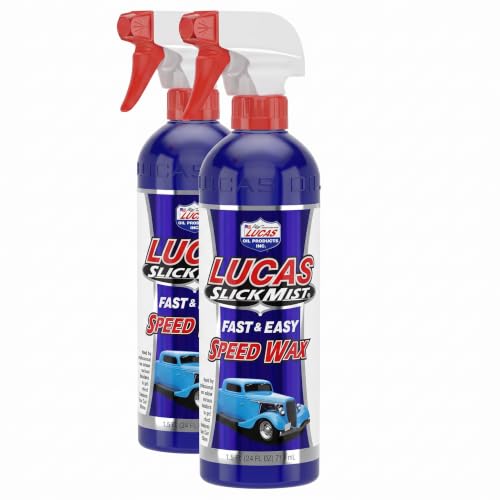
Lucas Slick Mist Speed Wax, 2 × 24 oz is the classic Slick Mist formula in a two-bottle pack, making it the clearest fit for buyers who want a spare bottle on hand. Each bottle is 24 ounces, and the product features describe a polymer paint gloss intensifier for cars, trucks, boats, and airplanes. They also say it can be applied to wet or dry surfaces and used on glass, chrome, and vinyl decals. The limitation is pack size: choose Lucas Slick Mist Speed Wax, 24 oz if a single bottle is a better fit, rather than buying extra product you do not need.
Bottom line: Pick this when you specifically want two 24-ounce bottles.
Lucas Slick Mist Speed Wax, 8-pack

Lucas Slick Mist Speed Wax, 8-pack is presented in its name as an eight-pack of 24-ounce spray wax, and its features emphasize spray-and-wipe touch-ups for light dust and fingerprints between washes. That makes it the option aimed at frequent quick-cleaning use.
Bottom line: Consider this only after confirming its bottle volume.
How to choose a spray wax
Choose a spray wax by its intended role: quick gloss and light touch-ups are different from a dedicated paint sealant or a full wax application. Spray wax is generally applied thinly to a clean surface and buffed with a microfiber towel; grit left on paint can scratch it when wiped. For visible dust or road film, wash first rather than using a wax towel to drag dirt across the finish. A quick spray product is most useful after washing or between washes when the surface is already clean. Do not treat a gloss claim as a durability specification: paint protection products differ in how long they last, and these options do not provide a service interval.
Where spray wax can be used
Use a product on only the surfaces its label identifies, because paint, glass, chrome, vinyl, and textured trim can respond differently to wax residue. The classic Slick Mist options here identify paint, glass, chrome, and vinyl decals; that is broader than products restricted to painted panels. Apply a small amount to a cool surface and wipe it away rather than letting residue dry, especially on glass where streaks interfere with visibility. If a finish is matte, freshly repaired, or otherwise unusual, check its care guidance first; gloss-enhancing products can change the appearance. Always keep wax off pedals, steering wheels, tires, and other areas where a slick surface creates a hazard.
Spray wax compared with sealant
Spray wax is generally chosen for fast application and added gloss, while paint sealants are intended as a separate protection category and can require different preparation and cure time. Names alone do not prove that a spray wax contains ceramic ingredients or delivers a particular protection duration. These options distinguish the classic polymer gloss-intensifier formula from a marine-branded variant and a ceramic-branded variant; those differences matter more than assuming every product called speed wax behaves alike. Use a decision rule: if the priority is a single bottle of the classic formula, choose Lucas Slick Mist Speed Wax, 24 oz; if the priority is a two-bottle pack of that formula, choose Lucas Slick Mist Speed Wax, 2 × 24 oz. For another format, verify its volume and intended surface first.
Common spray-wax mistakes
The most common mistake is wiping a dusty panel without washing it first, which can grind particles into clear coat. Another is applying too much product: a light, even coat is easier to remove and less likely to leave streaks than a wet layer. Avoid working on hot paint or in direct sun when the surface dries before you can buff it. Use separate clean microfiber towels for applying and final buffing, and replace a towel once it picks up grit. Spray wax is not a substitute for correcting oxidation, scratches, or neglected paint; those conditions require suitable cleaning or paint-care steps before a gloss product can improve the finish.
Frequently Asked Questions
Can spray wax go on a wet car?
Some spray waxes are made for wet or dry surfaces, and the classic Slick Mist options here say they can be used either way. Follow the label’s application method and dry or buff the surface so residue does not remain streaky.
Should I wax a car in direct sunlight?
A cool, shaded panel is easier to work because heat and sun can make product dry before you buff it. Move the car into shade or work on one small section at a time if the panel is warming.
Do I need to wash paint before spray wax?
Yes, wash off grit and road film before wiping on spray wax; a towel can drag particles across clear coat and scratch it. For a light touch-up, use the product only when the surface is clean enough to wipe safely.
How much spray wax should I apply?
Use a light, even mist rather than saturating the panel, then buff with a clean microfiber towel. Excess product is harder to remove and can leave streaks, particularly on glass.
Can spray wax be used on glass?
Some formulas identify glass as a compatible surface, including the classic Slick Mist products here. Apply sparingly and buff completely, since residue or streaking on a windshield can reduce visibility.