
Glue for Faux Leather: Flexible Adhesives Compared

For glue for faux leather, choose Loctite Vinyl, Fabric & Leather Adhesive for flexible-material repairs when a 10-minute set and 24-hour full cure work for your schedule. Its material range includes vinyl, fabric and leather, while the other options emphasize leather bonding or have fewer verified details about their fit for faux leather.
Choose a leather adhesive instead when the repair is chiefly on leather, or select a larger container for broad repairs only after confirming that the formula suits your faux leather material.
We earn a commission if you buy through links on this page. As an Amazon Associate I earn from qualifying purchases. Products are compared on manufacturer specifications, not hands-on testing.
- Best overall: Loctite Vinyl, Fabric & Leather Adhesive – Its maker says it bonds vinyl, fabric and leather, sets in 10 minutes and cures fully in 24 hours.
- Best for faux leather compatibility: Professional Leather Glue, 4.23 oz – Its maker explicitly names faux leather among the materials it bonds.
- Best for larger repairs: Leather Repair Glue, 120 mL – The package is 120 mL and the maker says its formula flexes with leather and vinyl.
| Product | Best for | Materials named | Set or cure time | Container size | Shop |
|---|---|---|---|---|---|
| Loctite Vinyl, Fabric & Leather Adhesive | Flexible material repairs | Vinyl, fabric, leather | 10-minute set; 24-hour cure | 1 fl oz | Check Price on Amazon |
| Professional Leather Glue, 4.23 oz | Named faux leather | Faux leather, vinyl, suede, rubber, canvas | Fast tack | 4.23 oz | Check Price on Amazon |
| Leather Repair Glue, 120 mL | Larger leather repairs | Leather, faux leather, vinyl, suede, fabric | — | 120 mL | Check Price on Amazon |
| Leather Glue, 1.23 oz | Small leather repairs | Leather, vinyl, rubber | Fast-drying; sets in seconds | 1.23 oz | Check Price on Amazon |
| Leather Glue, 130 mL | Large leather bonding | Leather, cloth | — | 130 mL | Check Price on Amazon |
Glue for Faux Leather Compared
Compare material compatibility, working time and package size before choosing an adhesive for a repair.
Loctite Vinyl, Fabric & Leather Adhesive

For a repair spanning vinyl or fabric as well as leather, this adhesive has the clearest match across flexible materials. The maker says it dries clear, remains flexible, resists water and will not yellow or turn brittle with age or sunlight. It sets in 10 minutes and cures fully in 24 hours, so allow a full day before putting the repaired item back into service. The 1-fl-oz container is suited to localized mends; buyers repairing a broad area may prefer a larger package, provided it is compatible with the surface.
Bottom line: Choose this for flexible-material mends when a full 24-hour cure is practical.
Professional Leather Glue, 4.23 oz

This is the only option whose maker explicitly names faux leather as a compatible material, alongside vinyl, suede, rubber and canvas. The 4.23-ounce container and fine applicator tip may suit a repair with several seams or detailed placement. That makes it harder to plan when a repaired item can be flexed or exposed to moisture; verify timing before relying on it for a time-sensitive repair.
Bottom line: Pick this when explicit faux leather compatibility is the deciding factor.
Leather Repair Glue, 120 mL

The 120-mL package is the largest clearly quantified option here, and its maker names faux leather and vinyl among the materials it bonds. The use range also includes shoes, handbags, furniture and car seats, making the package relevant to multiple repair points. Its broad material list is useful, though the maker does not specify application steps.
Bottom line: Choose this for multiple repairs when a 120-mL container is useful.
Leather Glue, 1.23 oz

This small package is aimed at leather and adjacent materials such as vinyl and rubber, with a maker-claimed clear, flexible, waterproof bond. The set time of seconds may appeal when holding a small repair in place for less time matters. The maker does not expressly name faux leather, however, so compatibility is less certain than for adhesives that identify it directly. The 1.23-ounce size also makes it better suited to a limited repair than repeated work across a large upholstered area.
Bottom line: Consider this for a small repair only after confirming the faux leather material.
Leather Glue, 130 mL
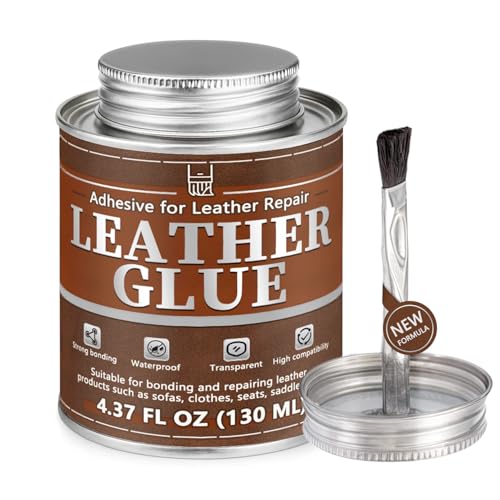
This leather cement comes in a 130-mL container and is positioned for larger bonding jobs such as sofas, car seats and saddles. Its maker describes the formula as clear, waterproof and high strength, but the material range supplied names leather and cloth rather than faux leather or vinyl. That distinction matters because faux leather surfaces can use different top layers and backings, so a leather-focused description alone does not establish compatibility. The data also gives no set or cure time; check both compatibility and timing before committing it to a visible repair.
Bottom line: Use it only when the surface is confirmed compatible with this leather-focused cement.
How to choose glue for faux leather
Start with the surface named on the adhesive, then match flexibility and repair size. Faux leather may have a plastic top layer over a textile backing, so a product that names leather alone is not the same as one that explicitly names faux leather or vinyl. Flexible adhesives are preferable for seams and cushions that bend; a rigid bond can crack as the surface moves. For a small edge or seam, a 1- to 2-ounce container is often easier to control than a larger bottle, while broad upholstery repairs may need more adhesive. Choose the product with the clearest material match before weighing set time or container size.
Preparing a faux leather surface
Clean the repair area and let it dry completely before applying adhesive; moisture, dust and oils can interfere with contact between surfaces. Work in a ventilated area and keep adhesive off skin and eyes, since household adhesives can irritate or bond skin. Apply a thin, controlled amount rather than flooding the seam, especially on a visible surface where squeeze-out can show. Test in an inconspicuous spot if appearance matters, and do not assume a clear formula will disappear on every color or texture. Keep the repaired area still through its full cure time, not just the initial set, before bending or loading the material.
Set time versus full cure
Set time is when a bond first holds; full cure is when the adhesive reaches its intended strength. One product here specifies a 10-minute set and 24-hour cure, while several others use general fast-drying language without an exact cure schedule. Do not treat quick tack as permission to stretch, wash or put weight on a repair. For a seat seam, cushion edge or shoe panel that flexes, waiting for full cure reduces the chance of shifting the joint. The table’s timing can help plan downtime, but always match the repair’s use to the specific adhesive timing.
| Repair need | Selection cue |
|---|---|
| Mixed vinyl and fabric repair | Choose a formula naming both materials |
| Explicit faux leather match | Choose a formula that names faux leather |
| Repeated or broad repairs | Compare container volume and confirm surface compatibility |
| Fast return to use | Compare full cure time, not set time alone |
Common faux leather glue mistakes
The most common mistake is assuming all leather adhesives bond every synthetic leather finish. Product wording may name leather, vinyl, fabric or faux leather separately, so use an explicit match when available and confirm compatibility when the material is uncertain. Another mistake is applying too much adhesive: excess can squeeze onto the finish and leave a visible mark even when the adhesive dries clear. Avoid pulling the repair taut while it cures, since tension can reopen the joint. Keep water away until full cure; waterproof claims describe the cured bond, not necessarily the adhesive while it is still setting.
Frequently Asked Questions
Can leather glue bond faux leather surfaces?
Some adhesives name faux leather or vinyl, while others only name leather. Prefer a formula that explicitly includes the surface material, especially for a visible or flexing repair.
How long should faux leather glue cure?
Use the full-cure time rather than the set time to decide when to use a repair. One adhesive specifies a 10-minute set followed by 24 hours to cure fully.
Should I use flexible glue on a faux leather seam?
A flexible adhesive is a better match for a seam that bends with a cushion, seat or bag. Avoid treating a quick initial hold as proof the joint can already flex.
How much glue should I apply to a faux leather tear?
Use a thin, controlled amount along the joint to limit squeeze-out on the visible finish. A fine applicator can help with detail work, but excess adhesive may still show.
Can faux leather repairs get wet right away?
Wait until the adhesive has fully cured before exposing the repair to water. A waterproof-bond claim should not be read as waterproof protection during the setting period.