
Glidden Exterior Paint: 4 Options by Surface and Sheen

For general exterior walls, Glidden Total Exterior Satin is the closest fit because it is intended for wood, brick, masonry, concrete, weathered aluminum, weathered vinyl siding and primed metal. Choose Glidden Porch and Floor Cool Surface Satin or Glidden Grab-N-Go Porch and Floor instead for porch and floor surfaces; Glidden Total Exterior Flat White is a flat white exterior option.
Exterior paint is a protective coating for outdoor surfaces, and the surface and finish matter as much as the brand. These options are compared by their specifications; confirm surface compatibility and preparation requirements before painting.
We earn a commission if you buy through links on this page. As an Amazon Associate I earn from qualifying purchases. Products are compared on manufacturer specifications, not hands-on testing.
- Best overall: Glidden Total Exterior Satin – Its use spans several exterior wall materials, including wood, masonry and weathered siding.
- Best for flat white: Glidden Total Exterior Flat White – This exterior paint and primer is flat white and resists fading, cracking and peeling.
- Best for cooler decks: Glidden Porch and Floor Cool Surface Satin – Its maker says Cool Surface Technology can limit surface temperature by up to 20%.
| Product | Best for | Finish | Color | Intended surface | Shop |
|---|---|---|---|---|---|
| Glidden Total Exterior Satin | Multiple wall surfaces | Satin | Fudge / brown | Wood, masonry, siding, concrete, primed metal | Check Price on Amazon |
| Glidden Total Exterior Flat White | Flat white walls | Flat | White | Exterior surfaces | Check Price on Amazon |
| Glidden Porch and Floor Cool Surface Satin | Sun-exposed floors | Satin | Steel gray | Porches, patios, pool decks, walkways | Check Price on Amazon |
| Glidden Grab-N-Go Porch and Floor | Fast-drying floors | Satin | Dark gray | Porches and floors | Check Price on Amazon |
Glidden exterior paint options
Match the paint to the surface first, then choose a finish and color that suit the project.
Glidden Total Exterior Satin

For the broadest range of listed exterior wall surfaces, this satin paint and primer is the most versatile option here. It is intended for properly prepared exterior wood, brick, masonry, concrete, weathered aluminum, weathered vinyl siding and primed metal. The maker says it resists fading, cracking and peeling, offers dirt resistance, and can be applied down to 35°F. The Fudge brown color and satin finish suit buyers who want a visible sheen rather than a flat look. Its limitation is the surface-preparation requirement: it is not a general-purpose coating for every material or an unprepared surface.
Bottom line: Choose it for a satin finish across several compatible exterior wall materials.
Glidden Total Exterior Flat White

For a low-sheen white finish, this flat paint and primer differs from the satin brown option. The maker says it has excellent adhesion, resists fading, cracking and peeling, and offers dirt resistance; it can be applied down to 35°F. Flat finishes reduce visible sheen, which can suit a simple, understated exterior appearance. The surface range is broader on Glidden Total Exterior Satin, so buyers tackling a particular substrate should verify compatibility before choosing this one. Its single white color also makes it a focused choice rather than a color-range option.
Bottom line: Pick it when flat white is the required finish and color.
Glidden Porch and Floor Cool Surface Satin
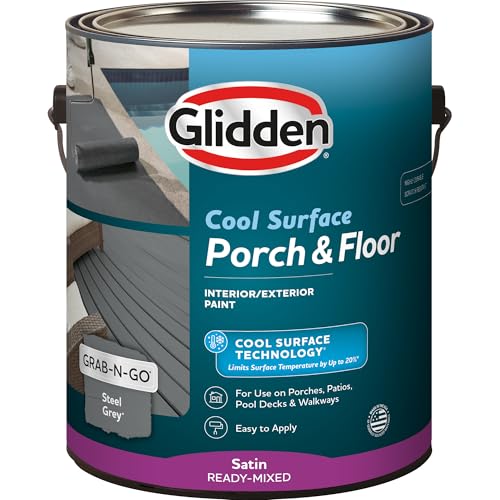
This porch-and-floor paint is the one here with Cool Surface Technology, making it the specialized choice for outdoor floors rather than broad wall coverage. It is intended for porches, patios, pool decks and walkways, and the maker says the technology can limit surface temperature by up to 20%. The satin Steel Gray finish also offers scratch resistance and easy application, according to the maker. That temperature figure is a product claim, not a guarantee of a specific floor temperature; choose it for its designated floor uses, not as a substitute for a siding paint.
Bottom line: Choose it for a porch, patio, pool deck or walkway where its surface-temperature feature matters.
Glidden Grab-N-Go Porch and Floor

For porch and floor projects where quick drying is a priority, this dark gray satin paint is the floor-focused alternative to the Cool Surface version. The maker describes it as easy to apply and fast drying, with high durability and scratch resistance; cleanup is with soap and water. Its use is narrower than the general exterior wall paint options, so it is better matched to a floor than to siding or masonry walls. The maker does not identify a special temperature-limiting feature, so buyers seeking that claim should compare it with Glidden Porch and Floor Cool Surface Satin.
Bottom line: Pick it for a dark gray satin porch or floor coating with a fast-drying feature.
How to choose Glidden exterior paint by surface
Start with the material being painted: wall paints and porch-and-floor paints are not interchangeable just because both can be used outdoors. Exterior coatings commonly serve wood, masonry, metal or siding, while floor coatings need to suit walking surfaces and their wear. A gallon typically covers about 250 to 400 square feet on a smooth, previously painted surface; rough, porous or bare materials can need more. Use the product’s surface guidance and calculate area as wall length × height, subtracting large openings. If the project includes both siding and a deck, select a coating intended for each surface rather than extending one product beyond its use.
Exterior paint temperature and weather conditions
Paint when the surface and air are within the coating’s application range and the forecast allows it to dry before rain or dew. Glidden Total Exterior Satin and Glidden Total Exterior Flat White specify application down to 35°F, but that lower limit does not establish an ideal temperature for every surface or weather condition. Many exterior paints work best around 50°F to 85°F; cold slows drying, while hot sun can make paint dry too quickly and impair leveling. Avoid painting wet wood or when rain is expected during the product’s drying window. For wood, a moisture meter reading below about 15% is a useful general target before coating. Verify the specific label’s temperature and recoat windows before starting.
Satin and flat exterior paint compared
Flat and satin finishes trade appearance against cleanability and visible sheen. Flat has little reflected light and can visually soften surface irregularities, while satin has a subtle sheen that is generally easier to wipe clean. Neither finish is automatically right for every wall: substrate texture, exposure and the intended look all matter. Porch floors call for a coating intended for walking surfaces, not merely a sheen preference. Use the quick guide below to narrow the choice by application, then check that the exact surface is compatible.
| Project | Finish or feature | Option |
|---|---|---|
| Exterior walls, several materials | Satin, brown | Glidden Total Exterior Satin |
| Exterior walls, white | Flat | Glidden Total Exterior Flat White |
| Porch or deck with temperature feature | Satin, Steel Gray | Glidden Porch and Floor Cool Surface Satin |
| Porch or floor, fast drying | Satin, dark gray | Glidden Grab-N-Go Porch and Floor |
Exterior paint preparation mistakes to avoid
Loose or chalky paint, dirt, mildew and failed caulk can undermine a new exterior coat even when the paint is intended for that material. Scrape unstable paint, wash the surface, let it dry, and prime bare or repaired areas when the coating system calls for it. A stain-blocking primer can help with smoke, ink, water stains or tannins, but primer is not a substitute for a compatible finish coat. Do not paint over active mildew; clean it using a product suitable for the surface and let the area dry. For previously painted surfaces, check adhesion in an inconspicuous spot, and avoid assuming that paint-and-primer means no surface preparation is needed.
Frequently Asked Questions
How many square feet does a gallon of exterior paint cover?
A gallon commonly covers about 250 to 400 square feet on a smooth surface. Rough siding, bare masonry and porous wood can reduce coverage, so estimate from the actual surface and follow the product’s coverage.
Can exterior paint be applied at 35 degrees?
Some coatings allow application at 35°F, including Glidden Total Exterior Satin and Glidden Total Exterior Flat White. Temperature alone is not enough: the surface must be dry, and rain, dew or falling temperatures can interfere with drying.
Should I use satin or flat exterior paint?
Flat has little sheen and can make surface texture less prominent, while satin has a subtle sheen and is generally easier to wipe. Choose based on the surface, desired appearance and the coating’s approved use.
Can I use exterior wall paint on a porch floor?
Use a coating specifically intended for porch or floor surfaces rather than assuming wall paint will tolerate foot traffic. Floor coatings are formulated for that use, and surface preparation remains important.
How dry should wood be before exterior painting?
A common target is below about 15% wood moisture before painting. Rain-soaked or damp wood can trap moisture beneath the coating, so allow it to dry and check with a moisture meter when conditions are uncertain.