
Anua Quercetinol Pore Deep Cleansing Foam Compared

Anua Heartleaf Quercetinol Foam suits most people seeking Anua Quercetinol Pore Deep Cleansing Foam because it is the single 5.07-ounce daily face wash aimed at oily and combination skin. Choose Anua Heartleaf Oil and Quercetinol Foam Duo instead if you want a cleansing oil for the first step of a double cleanse; Anua PDRN Hyaluronic Acid Cleansing Foam is a different foam cleanser for dry or sensitive skin.
We earn a commission if you buy through links on this page. As an Amazon Associate I earn from qualifying purchases. Products are compared on manufacturer specifications, not hands-on testing.
- Best overall: Anua Heartleaf Quercetinol Foam – A 5.07-ounce Quercetinol and Heartleaf foam cleanser is positioned for everyday use on oily and combination skin.
- Best for double cleansing: Anua Heartleaf Oil and Quercetinol Foam Duo – Combines an oil cleanser for makeup and excess oil with a follow-up Quercetinol foam.
- Best for dry skin: Anua PDRN Hyaluronic Acid Cleansing Foam – A PDRN and hyaluronic acid foam cleanser is formulated for dry and sensitive skin.
| Product | Best for | Format | Size | Skin focus | Shop |
|---|---|---|---|---|---|
| Anua Heartleaf Quercetinol Foam | Oily or combination | Foam cleanser | 5.07 fl oz | Oily, combination | Check Price on Amazon |
| Anua Heartleaf Oil and Quercetinol Foam Duo | Double-cleansing routine | Oil + foam set | 2-piece set | Daily cleansing | Check Price on Amazon |
| Anua Heartleaf Quercetinol Foam, 5.07 oz | Foam cleanser shoppers | Foam cleanser | 5.07 oz | Unisex | Check Price on Amazon |
| Anua PDRN Hyaluronic Acid Cleansing Foam | Dry or sensitive skin | Foam cleanser | 5.07 fl oz | Dry, sensitive | Check Price on Amazon |
Anua Quercetinol Pore Deep Cleansing Foam Options
Compare the matching foam cleansers with related Anua formats to choose the wash that fits your routine.
Anua Heartleaf Quercetinol Foam

Anua Heartleaf Quercetinol Foam is the single-tube Quercetinol cleanser for shoppers who want the named foam without adding a separate first-step wash. The formula pairs Heartleaf-derived Quercetinol with Anti-Sebum P, hyaluronic acid, and fine, dense foam. Anua positions it for daily use on oily and combination skin, with a refreshed, hydrated feel after cleansing. Its main limitation is the narrower stated skin focus: buyers shopping specifically for a cleanser formulated for dry or sensitive skin may prefer a different option rather than assuming this formula is targeted to them.
Bottom line: Choose this for a single-step Quercetinol foam aimed at oily or combination skin.
Anua Heartleaf Oil and Quercetinol Foam Duo

Anua Heartleaf Oil and Quercetinol Foam Duo adds an oil cleanser before the Quercetinol foam, making this the only option here built as a two-step cleansing set. The oil is intended to dissolve makeup and excess oil, while the follow-up foam removes buildup; the set also features Heartleaf, proprietary NON-COMED OIL at 10,000 ppm, and five plant-derived oils. Both formulas are described as fragrance-free and non-comedogenic for daily use. The tradeoff is the extra step: someone who only wants the named foam does not need the oil cleanser included in this format.
Bottom line: Pick this if you want an oil-first, foam-second cleansing routine.
Anua Heartleaf Quercetinol Foam, 5.07 oz

Anua Heartleaf Quercetinol Foam, 5.07 oz is another 5.07-ounce version of the named Heartleaf Quercetinol foam, presented as a unisex face cleanser. Its headline identifies the same cleanser type and size as Anua Heartleaf Quercetinol Foam, so it fits a shopper searching for this foam rather than a different cleansing format. The specifications provide little formula-level distinction from the more fully characterized single cleanser, so buyers comparing skin focus or ingredient specifics should use those stated characteristics rather than infer a different performance profile. This option is not the better match for someone seeking an oil-and-foam set or a dry-skin-focused wash.
Bottom line: Choose this if the unisex 5.07-ounce foam format matches your search.
Anua PDRN Hyaluronic Acid Cleansing Foam
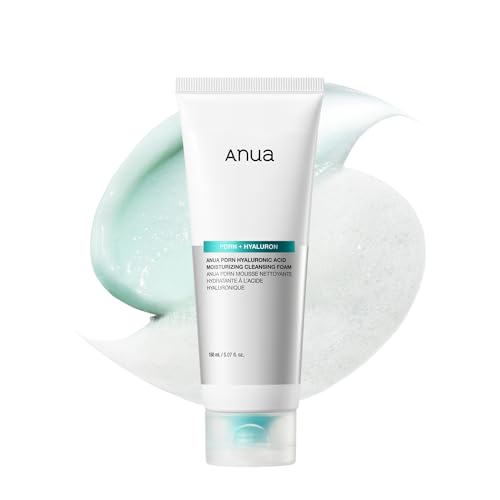
Anua PDRN Hyaluronic Acid Cleansing Foam is a related Anua foam cleanser, but its PDRN and hyaluronic acid focus differs from the Quercetinol cleanser. Its formula is described as mildly acidic at pH 6 and designed for dry and sensitive skin; it also has a one-minute mask-style use on dry skin before foaming. That alternative focus matters if a moisture-oriented cleanser is the priority. The limitation for a strict search for Quercetinol Pore Deep Cleansing Foam is straightforward: this is a different formula and does not meet that exact ingredient and product-name match.
Bottom line: Consider this for a dry- or sensitive-skin-focused Anua foam instead.
How to choose an Anua Quercetinol foam cleanser
Choose by routine first: a foam-only wash fits a one-step cleanse, while makeup wearers may want an oil cleanser before foam. A double cleanse uses an oil- or balm-based cleanser to loosen sunscreen, makeup, and oil-soluble residue, followed by a water-based cleanser; the second wash is not automatically necessary for every routine. For daily face washing, use lukewarm water and fingertips rather than a rough cloth, then rinse fully. Foaming does not itself prove a cleanser is gentler or more effective, so skin comfort after rinsing is a useful practical signal. If cleansing leaves persistent tightness or irritation, reduce frequency or switch to a gentler formula rather than scrubbing harder.
What a double cleanse changes
An oil-first routine adds a distinct first step: massage a cleansing oil onto dry skin, then emulsify and rinse according to the product directions before using a water-based cleanser. Oil cleansers are commonly used to loosen long-wear makeup and sunscreen, while foam cleansers remove water-soluble residue. The order matters because applying a water-based wash first may not lift oil-based products as efficiently. A double cleanse can be useful after heavy makeup or water-resistant sunscreen, but it is optional for lighter days. Avoid getting cleanser into the eyes, and stop using a formula that causes burning or a persistent rash; facial cleansers are rinse-off products, not leave-on treatments.
How to use a foaming face wash
Use a small amount on wet skin, work it gently over the face, and rinse without prolonged rubbing. Many dermatology recommendations favor washing the face no more than twice daily and after heavy sweating; more frequent washing can aggravate dryness. Keep water lukewarm rather than hot, and avoid abrasive exfoliating tools, especially when a routine already includes exfoliating acids or retinoids. A cleanser described as gentle exfoliation still belongs in a rinse-off routine, not as a reason to scrub. Pat skin dry and apply moisturizer while the skin is slightly damp if it tends to feel dry. Patch-test a new facial product on a small area before regular use, particularly if skin is reactive.
Which cleanser format fits your routine
Use this guide to match the cleanser format to the job it is meant to do.
| Routine need | Format | What it adds |
|---|---|---|
| Simple daily wash | Foam cleanser | One rinse-off cleansing step |
| Makeup or sunscreen removal | Oil, then foam | Oil-based first cleanse plus water-based follow-up |
| Dry or sensitive-skin focus | Moisture-oriented foam | A formula positioned for that skin focus |
For the exact Quercetinol cleanser, choose the single foam when you want that formula alone; choose the duo only when the added oil step is useful. A different Anua foam may suit a different skin focus, but formula names should not be treated as interchangeable.
Frequently Asked Questions
How often should I wash my face each day?
Most people can wash once or twice daily, plus after heavy sweating. If twice-daily cleansing leaves skin persistently tight or irritated, try reducing the frequency or using a gentler cleanser.
Should I double cleanse after wearing sunscreen?
A double cleanse can help remove water-resistant sunscreen, especially when it is combined with makeup. Massage an oil cleanser over dry skin first, rinse, and follow with a water-based cleanser.
Is foaming cleanser suitable for oily skin?
Foaming cleansers are often chosen by people with oily skin, but foam alone does not determine how drying a formula will feel. Use lukewarm water and stop or change products if cleansing causes ongoing irritation.
Does a cleanser with exfoliating care replace a leave-on exfoliant?
No; a rinse-off cleanser has shorter skin contact than a leave-on exfoliant. Avoid stacking exfoliating products when skin is already irritated, and introduce only one new exfoliating product at a time.
How should I patch-test a new face cleanser?
Apply a small amount to a limited area and watch for irritation before using it across the face. Stop use if you develop persistent burning, swelling, or a rash.