
Back Support for Bikers: 5 Braces Compared by Fit

For back support for bikers, FREETOO Lower Back Brace, Medium is the clearest match because its maker names cycling as a use, and it includes a removable lumbar pad and multiple supports. Choose a different brace if you need a specific waist range, since the other options focus on general back support rather than biking.
A back brace wraps around the torso to provide compression and support; it should fit securely without limiting breathing or movement on the bike.
We earn a commission if you buy through links on this page. As an Amazon Associate I earn from qualifying purchases. Products are compared on manufacturer specifications, not hands-on testing.
- Best overall: FREETOO Lower Back Brace, Medium – Its maker explicitly includes cycling among its intended uses, and the removable lumbar pad can be taken out.
- Best for adjustable lumbar padding: Sparthos Back Brace, Small – It has an adjustable lumbar pad and vertical support stays.
- Best for defined waist sizing: FEATOL Back Brace, S/M – It gives a waist-at-navel range for each size, including 24.4–29.8 inches for S/M.
| Product | Best for | Support design | Waist fit | Cycling named | Shop |
|---|---|---|---|---|---|
| FREETOO Lower Back Brace, Medium | Cycling-specific use | Bionic panel, 4 aluminum stays, 2 springs | 33.4–40.5 in | Yes | Check Price on Amazon |
| Sparthos Back Brace, Small | Adjustable lumbar pad | Vertical stays, adjustable lumbar pad | — | No | Check Price on Amazon |
| FEATOL Back Brace, S/M | Clear waist sizing | 4 stays, removable pad | 24.4–29.8 in at navel | No | Check Price on Amazon |
| MUELLER Adjustable Back Brace, One Size | Wide waist range | 8 steel springs | 28–50 in | No | Check Price on Amazon |
| MUELLER Lumbar Brace with Removable Pad | Removable compression pad | 4 steel springs, removable pad | One size fits most | No | Check Price on Amazon |
Back support braces for bikers
Compare each brace’s fit and support features, then consider how it will feel in your riding position.
FREETOO Lower Back Brace, Medium

FREETOO Lower Back Brace, Medium is the only option here whose maker explicitly names cycling, driving and gym use. Its support system combines a bionic lumbar panel, four memory-aluminum stays and two flexible springs; the lumbar pad is removable. The medium size is specified for a 33.4–40.5-inch waist. Those details make it the most directly relevant choice for a rider looking for a brace to wear during cycling. The maker also makes pain-relief claims, which should not be treated as a substitute for medical advice. Check that the brace does not interfere with breathing or reaching the handlebars in your riding position.
Bottom line: Pick this if cycling-specific use and a removable lumbar pad matter.
Sparthos Back Brace, Small
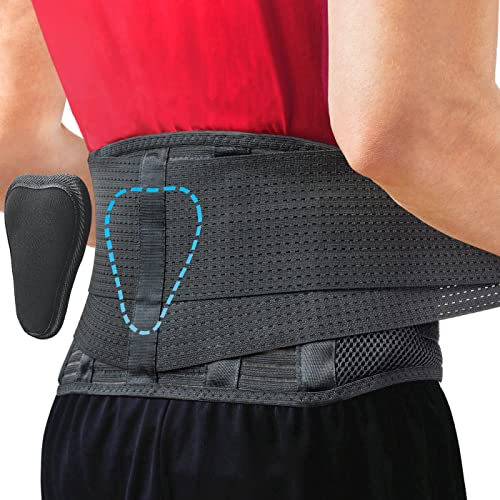
Sparthos Back Brace, Small stands out for its adjustable lumbar pad, paired with vertical support stays intended to help stabilize the lower back. The maker describes it for walking, bending and stretching, but does not name cycling among its uses. Its size is Small; verify that size against the maker’s waist-sizing guidance before choosing it, especially because a brace that shifts or feels restrictive can be distracting on a ride. Breathable fabric and an under-clothing design are also part of the construction. Riders prioritizing a pad they can adjust may consider it, but its fit and comfort in a forward-leaning riding posture remain important.
Bottom line: Choose this if adjustable lumbar padding is your priority.
FEATOL Back Brace, S/M

FEATOL Back Brace, S/M distinguishes itself with a specific waist-at-navel fit range and four support strips plus a removable lumbar pad. The S/M size fits a 24.4–29.8-inch circumference measured at the navel, not at the pants waist. Its maker positions it for lifting, work and sitting rather than naming biking, so a rider should assess its fit in the actual riding posture before relying on it for a longer trip. Measuring at the navel is the key selection step; choosing by clothing size can lead to a poor fit. The size range is useful only if your measurement falls within it.
Bottom line: Choose this when its navel-measured S/M range fits you.
MUELLER Adjustable Back Brace, One Size

MUELLER Adjustable Back Brace, One Size has eight steel springs and an adjustable wraparound closure, giving it a different support setup from braces built around removable lumbar pads. Its one size fit covers a 28–50-inch waist, measured around the widest part. That broad sizing may help when the wearer falls within its range, though it does not establish how the brace will sit while leaning forward over handlebars. Confirm the fit and freedom of movement before riding; the brace should not impede breathing or control.
Bottom line: Choose this if its wide waist range and spring support suit you.
MUELLER Lumbar Brace with Removable Pad

MUELLER Lumbar Brace with Removable Pad combines four steel springs with a removable lumbar compression pad, unlike the eight-spring design in the other MUELLER option. Its adjustable closure allows wraparound tightening, and breathable mesh is part of its construction. The maker describes it for lifting and general back support, not specifically for cycling. Riders who want to remove a lumbar pad may find the design relevant, but should check that the brace stays comfortable and does not restrict their riding position.
Bottom line: Choose this if you want a removable pad with four steel springs.
How to choose back support for biking
Start with riding position and fit, not the number of stays: a brace that prevents comfortable breathing or reaching the bars is unsuitable for riding. Measure the waist exactly where the maker specifies; some braces use the widest part, while others use the navel. A road-bike position usually places the torso farther forward than an upright commuter position, so try the brace in the posture you actually ride. Before adding support gear, check saddle height, reach and handlebar position: an overly long reach or a saddle set too high can encourage awkward back movement. If back discomfort is persistent, severe or follows an injury, get medical guidance rather than using a brace to push through it.
How a back brace fits on a bike
A bike brace should stay in place without pinching when you hinge forward, turn your torso or take a full breath. Put it on over a thin base layer if that is how you plan to ride, then check for pressure at the waist and edges when seated; clothing layers can change how a closure fits. Do not tighten a brace so much that breathing or trunk movement is restricted. A snug fit matters more than maximum compression. For rides longer than a short test, reassess comfort at a safe stop rather than adjusting while moving. Numbness, pain that worsens, or trouble breathing are reasons to stop and remove the brace.
Back brace features compared for bikers
Support structures differ in how they add rigidity or compression, but the feature count alone does not establish comfort or suitability for a riding position. Use the table to identify the construction and sizing information that differentiates these choices.
| Brace feature | What it provides | Rider check |
|---|---|---|
| Steel springs | Spring-based support with a wraparound brace | Check for pressure when leaning forward |
| Vertical or aluminum stays | Support elements along the back | Check that edges do not dig in while seated |
| Removable lumbar pad | A pad that can be removed in some designs | Try the fit both with and without the pad |
Materials and closure style also affect how a brace feels over a ride. A feature that suits lifting or desk work does not automatically make a brace suitable for cycling.
When to wear back support while riding
A brace can be considered for a specific activity if it fits comfortably and a clinician has not advised against it, but it should not mask symptoms or replace bike-fit adjustments. A useful decision rule is to test a new brace on a short, familiar ride before using it on a long or remote route. Carrying a brace for occasional support is different from depending on it to tolerate worsening pain. Riders who experience sharp pain, weakness, numbness or symptoms that spread into a leg should stop riding and seek medical assessment. For ordinary discomfort, inspect bike setup and riding posture first; repeated discomfort despite adjustments deserves professional evaluation.
Frequently Asked Questions
Should I wear a back brace while cycling?
A brace may be worn for cycling if it fits securely and does not restrict breathing, movement or bike control. Test it on a short, familiar ride before wearing it for a longer trip.
Where should I measure for a cycling back brace?
Use the measurement location given for the specific brace: some use the widest part of the waist, while others specify the navel. A waist measurement in inches is more reliable than choosing by pants size.
Can a back brace fix poor bike fit?
No, a brace does not correct bike fit. An overly long reach or a saddle set too high can contribute to an uncomfortable riding position, so review those adjustments if discomfort keeps returning.
What should a bike back brace feel like?
A properly fitting brace should stay in place without limiting a full breath or comfortable torso movement. Stop using it if it causes numbness, worsens pain or makes breathing difficult.
When should I stop riding with back pain?
Stop if pain becomes sharp or worsens, or if you notice weakness, numbness or symptoms spreading into a leg. Persistent or severe symptoms warrant medical assessment rather than riding through them.