
Best Glue for Styrofoam Ceiling Tiles: 4 Compared

Soudal 50A Universal Adhesive is the best fit for most Styrofoam ceiling tile projects because its adhesive is explicitly made for foam tiles and contains no solvents. Choose another option when you need a larger quantity or a formula intended for a particular substrate, but confirm it is compatible with polystyrene foam before applying.
We earn a commission if you buy through links on this page. As an Amazon Associate I earn from qualifying purchases. Products are compared on manufacturer specifications, not hands-on testing.
- Best overall: Soudal 50A Universal Adhesive – A solvent-free adhesive specifically identified for Styrofoam ceiling tiles.
- Best for large installs: Titebond 2704 Acoustical Tile Adhesive – The 4-gallon formula is made for acoustical ceiling tiles and multiple building materials.
- Best for caulking-gun application: À LA MAISON CEILINGS Instant Grab Adhesive – The six-pack is designed for ceiling tile and wall panel adhesion and applies with a standard caulking gun.
| Product | Best for | Form | Size (mL) | Foam-tile fit | Shop |
|---|---|---|---|---|---|
| Soudal 50A Universal Adhesive | Foam ceiling tiles | Tube | 300 mL | Made for Styrofoam tiles | Check Price on Amazon |
| Titebond 2704 Acoustical Tile Adhesive | Large ceiling jobs | Water-based adhesive | 15,142 mL | Acoustical tiles | Check Price on Amazon |
| À LA MAISON CEILINGS Instant Grab Adhesive | Multiple surfaces | Cartridge pack | — | Ceiling tile use | Check Price on Amazon |
| Loctite Power Grab Express Heavy Duty | General construction | Cartridge | 266 mL | Foam board | Check Price on Amazon |
Glue for Styrofoam Ceiling Tiles
Compare these adhesives by their tile use, package size and foam compatibility before choosing.
Soudal 50A Universal Adhesive

Soudal 50A Universal Adhesive is the only option here expressly identified for Styrofoam ceiling tiles. The 300 mL tube contains a white, all-purpose adhesive described as permanent and solvent-free, making it the most directly matched choice for a foam-tile project.
This tube suits smaller rooms, repairs or buyers who want a product named for the material. A single tube may be limiting for a large ceiling, so estimate coverage from the package directions and buy enough before starting.
Bottom line: Pick this when you want an adhesive explicitly made for Styrofoam ceiling tiles.
Titebond 2704 Acoustical Tile Adhesive

Titebond 2704 Acoustical Tile Adhesive stands out for its 4-gallon container and stated use with acoustical ceiling tiles rather than specifically with Styrofoam. The beige, water-based formula is described by the maker as fast-grab and no-sag, and the compatible surfaces include drywall, concrete, metal, plywood, hardboard and wood.
This quantity may suit a broad installation where acoustical tiles and varied substrates are involved. Its limitation for a foam-tile buyer is that acoustical tile use does not establish polystyrene compatibility; verify that before applying it to Styrofoam.
Bottom line: Choose this for a large acoustical tile job only after confirming foam compatibility.
À LA MAISON CEILINGS Instant Grab Adhesive

À LA MAISON CEILINGS Instant Grab Adhesive offers six cartridges and is identified for ceiling tile, wall panel and crown molding work. The white adhesive is described as water-resistant and suitable for indoor or outdoor use, with wood, drywall, tile and metal among its materials; a standard caulking gun is required.
This pack makes sense when the project also involves panels or molding and a cartridge format is useful. Its material examples do not establish compatibility with Styrofoam, so confirm polystyrene suitability before using it on foam tiles.
Bottom line: Pick this for cartridge-based ceiling tile or panel work when foam compatibility is confirmed.
Loctite Power Grab Express Heavy Duty
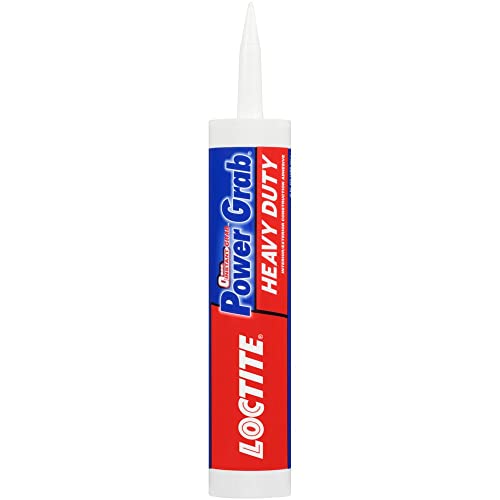
Loctite Power Grab Express Heavy Duty is a general construction adhesive whose material range includes foamboard, wood, drywall, plaster, ceramic, concrete, masonry, brick, cork and vinyl cove base. The 9 fl oz white formula is water-based, applies with a caulking gun and is described by the maker as repositionable for up to 15 minutes and fully cured in 12 hours.
That versatility may help with mixed-material projects, but foamboard is not necessarily the same as Styrofoam ceiling tile. Confirm the adhesive works with the specific polystyrene tile and ceiling surface before installation.
Bottom line: Consider this for mixed construction materials only if it is confirmed safe for the foam tile.
How to choose glue for Styrofoam ceiling tiles
Choose an adhesive explicitly labeled for foam or polystyrene when the tile is Styrofoam. Solvent-based products can attack polystyrene, so avoid an adhesive unless its compatibility is clear. Water-based adhesives are commonly used for foam applications, but the base alone does not prove compatibility. Match the product to both surfaces: the tile and the ceiling substrate. Painted drywall, bare drywall, plaster and concrete can each affect adhesion, and dusty or loose surfaces can undermine even a suitable glue. For a first pass, prefer a foam-specific formula such as Soudal 50A Universal Adhesive; consider general tile or construction adhesives only after confirming their material fit. Keep tiles supported while adhesive cures if the product directions require it.
Check ceiling condition and tile fit
Ceiling tiles adhere best to a clean, dry, sound surface; scrape away loose paint and remove dust before applying adhesive. A surface with peeling paint, grease or chalky residue can fail at the surface layer even when the glue bonds to the tile. Measure the ceiling area in square feet, then use the adhesive package’s coverage rate to estimate quantity; do not assume a tube count from room size alone. Align tile rows from a straight reference line rather than treating an uneven wall as square. If the ceiling is damp or the tiles are exposed to recurring moisture, fix the moisture source first; trapped moisture can damage finishes and reduce bond reliability.
Compare adhesive types and application
Foam-specific adhesives prioritize compatibility with polystyrene; acoustical tile adhesives target ceiling panels and may need a separate compatibility check for foam. Cartridge adhesives are convenient for bead application with a caulking gun, while a larger pail may suit broad work but requires applying the material with the method on its label. Use this quick decision guide before buying:
| Project need | What to prioritize |
|---|---|
| Styrofoam ceiling tiles | Explicit foam or polystyrene compatibility |
| Acoustical panels | Adhesive labeled for acoustical ceiling tile |
| Mixed construction surfaces | Compatibility with both tile and substrate |
Apply the amount and pattern specified for the chosen adhesive. Excess adhesive can squeeze out at tile edges, while too little can leave unsupported areas overhead.
Common mistakes with overhead foam tiles
The most important mistake is treating every ceiling-tile adhesive as foam-safe; tile adhesives can be formulated for materials unlike polystyrene. Another is bonding over loose paint or dust, which leaves the adhesive attached to a weak layer instead of the ceiling. Test-fit and dry-align the first row before applying glue, and keep cut edges neat so gaps do not accumulate across the room. Overhead tiles can shift before a bond sets, so use temporary support only if compatible with the tile and the product directions. Do not use a ceiling adhesive to cover a damaged or wet substrate; repair the surface and resolve leaks or condensation before installation.
Frequently Asked Questions
Can construction adhesive melt Styrofoam ceiling tiles?
Some solvent-based adhesives can damage polystyrene foam. Choose an adhesive that explicitly confirms compatibility with Styrofoam or polystyrene, rather than relying only on a general construction-use claim.
How much glue do ceiling tiles need?
Use the adhesive maker’s coverage rate to calculate quantity from the ceiling area in square feet. Bead pattern and substrate texture affect coverage, so avoid estimating by tile count alone.
Can Styrofoam ceiling tiles go over painted drywall?
They can adhere to sound painted drywall when the adhesive is compatible with both surfaces. Remove loose paint and dust first; peeling paint can release with the tile even if the glue bonds well.
Should ceiling tiles be supported while glue dries?
Some adhesives need temporary support while setting, especially overhead. Follow the chosen product’s application directions and avoid supports that dent or deform foam tiles.
Can ceiling tile adhesive be used in a damp room?
Moisture can weaken finishes and contribute to tile or substrate damage, so fix leaks or condensation before installing tiles. Use only an adhesive whose label permits the room conditions and materials.