
Acrylic Sealer Spray for Paper: 3 Options Compared

Aleene’s Spray Acrylic Sealer, Gloss is the closest fit for paper crafts when you want a clear gloss spray and a can sized for small projects. Choose Mod Podge Clear Acrylic Sealer, Matte instead for a matte finish and a larger can; Diamond Art Sealer Spray, 100 mL is aimed at finished diamond art rather than general paper, and the brush-on sealer is not a spray.
Paper absorbs moisture and coating unevenly, so test the spray on a matching scrap before coating a finished piece.
We earn a commission if you buy through links on this page. As an Amazon Associate I earn from qualifying purchases. Products are compared on manufacturer specifications, not hands-on testing.
- Best overall: Aleene’s Spray Acrylic Sealer, Gloss – Its clear gloss spray is presented for virtually any indoor or outdoor project.
- Best for matte finish: Mod Podge Clear Acrylic Sealer, Matte – It dries to a clear matte finish and comes in a 12-ounce can.
- Best for diamond art: Diamond Art Sealer Spray, 100 mL – Its fine-mist spray is designed to coat completed diamond art designs.
| Product | Best for | Finish | Volume | Application | Shop |
|---|---|---|---|---|---|
| Aleene’s Spray Acrylic Sealer, Gloss | Small glossy crafts | Clear gloss | 6 oz | Aerosol spray | Check Price on Amazon |
| Mod Podge Clear Acrylic Sealer, Matte | Matte paper crafts | Clear matte | 12 oz | Aerosol spray | Check Price on Amazon |
| Diamond Art Sealer Spray, 100 mL | Finished diamond art | Clear gloss | 100 mL | Fine-mist spray | Check Price on Amazon |
Acrylic Sealer Sprays for Paper
Compare the finish and intended use before choosing a spray for a paper craft.
Aleene’s Spray Acrylic Sealer, Gloss

Aleene’s Spray Acrylic Sealer, Gloss is the gloss option in this group, with a 6-ounce can for smaller craft projects. The maker says its clear acrylic spray gives projects an indoor-or-outdoor protective finish, applies evenly, and dries gloss. That makes it a fit when you want a shiny surface rather than a matte look.
Paper can curl or darken when a coating wets it, so test a matching scrap first and let it dry completely before deciding whether to coat the finished piece. The limitation is the smaller can, which may be less convenient for covering many sheets or larger projects.
Bottom line: Choose this if a clear gloss finish and smaller can suit your paper craft.
Mod Podge Clear Acrylic Sealer, Matte
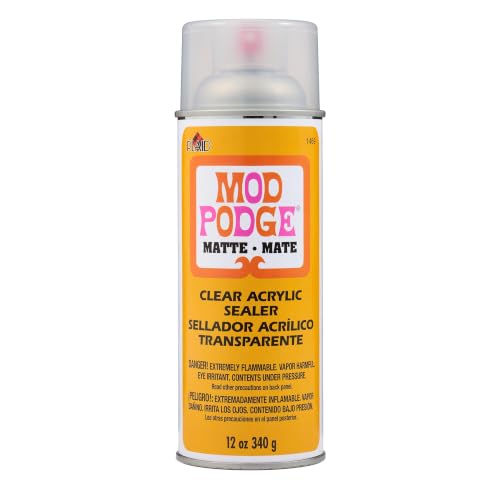
Mod Podge Clear Acrylic Sealer, Matte is the matte choice, unlike the gloss finish of Aleene’s Spray Acrylic Sealer, Gloss. The maker says the 12-ounce spray dries clear and matte, is quick-drying and no-run, and works on surfaces including wood, metal, canvas, and terra cotta. Its larger can suits a project where a matte surface matters and you want more volume than a 6-ounce can.
Paper is not among the named surfaces, so check a scrap for curling, darkening, or an unwanted texture before applying it to a finished sheet. The key tradeoff is the matte appearance, which will not give paper the reflective look of a gloss sealer.
Bottom line: Choose this when you want a matte finish and a larger spray can.
Diamond Art Sealer Spray, 100 mL

Diamond Art Sealer Spray, 100 mL differs from the general craft sprays because it is made for completed diamond art. Its fine mist is intended to spread a clear acrylic coating over finished designs without a brush, and the maker says it helps hold resin diamonds in place while preserving visible color and shine. The single 100 mL bottle is a compact format for that specific finishing task.
This is a specialized option, not the broadest match for ordinary paper projects. Paper crafts without raised resin diamonds may not need its purpose, so choose it only when sealing a completed diamond art surface is the goal.
Bottom line: Choose this for completed diamond art, not general paper sealing.
How to Choose a Paper Sealer Spray
Choose by finish first: gloss reflects more light, while matte reduces surface shine. Aerosol coatings form a thin film, but paper fibers can absorb solvents or moisture and change shape, so use a scrap from the same paper stock as a test. Paper weight and surface sizing affect how much liquid soaks in; lightweight, uncoated sheets are more prone to cockling than heavier or coated stock.
For a measurable decision rule, if a scrap visibly curls or develops blotches after one light pass and full drying, do not coat the final piece with that spray. Consider whether the artwork can tolerate a sheen or color shift, and keep the test beside the original for comparison under the same light.
Applying Spray Sealer to Paper
Apply aerosol sealer in light, even passes rather than one heavy wet coat; a saturated sheet is more likely to ripple or show uneven gloss. Work in a ventilated area, keep the spray away from flames and heat, and protect nearby surfaces from overspray. Aerosol products can contain flammable propellants or solvents, so read the can’s hazard and use directions before spraying.
Let each pass dry before adding another, and check the finish from several angles before continuing. Spray distance and dry time vary by formulation, so use the can’s directions rather than assuming one setting fits every product. A useful decision rule is to stop if the test sheet feels damp or starts to buckle; do not add another coat until it has dried flat.
Gloss, Matte, and Specialized Sprays
Gloss and matte describe the appearance of the dry coating, not how much protection a paper project receives. Gloss tends to make colors look more reflective; matte leaves a lower-sheen surface. A specialized spray can serve a different purpose: diamond art sealers are intended to hold raised resin pieces on a completed design, rather than simply coat a flat sheet.
The table separates these uses so finish and purpose are easy to compare. For ordinary paper art, use a general craft spray only after a scrap test; choose a diamond art sealer when securing raised pieces is the actual need. Neither finish alone establishes that a coating is archival or UV-resistant, so do not assume long-term preservation from a gloss or matte label.
| Need | Type to consider | Tradeoff |
|---|---|---|
| Reflective finish | Gloss craft spray | More visible surface shine |
| Reduced sheen | Matte craft spray | No glossy appearance |
| Hold raised resin pieces | Diamond art spray | Specialized purpose |
Paper Sealing Mistakes to Avoid
The common mistake is spraying a finished original before testing the same paper and ink on a scrap. Inkjet inks, markers, and water-based paints may smear or bleed when exposed to a wet coating; allow artwork to dry fully and test the exact combination first. A coating can also change paper color, texture, and flexibility, even when it dries clear.
Do not treat a clear finish as proof of archival quality, water resistance, or UV protection. Those properties require explicit product claims and are not interchangeable with gloss or matte. If the project must remain flat, test a small matching sample and reject the coating if it warps after drying. Keep spray away from food, children, and pets until the project has dried in a ventilated space.
Frequently Asked Questions
Can acrylic sealer spray make paper curl?
Yes, a wet coating can make paper fibers swell and buckle. Lightweight or uncoated paper is especially worth testing; stop if a matching scrap curls after a light pass and drying.
Should I spray both sides of a paper sheet?
Do not assume that coating both sides will keep a sheet flat; both sides can still react unevenly as they dry. Test the same paper with the intended application before coating a finished piece.
Can I spray sealer over inkjet printing?
Inkjet ink can smear or bleed when exposed to a wet coating. Let the print dry fully, then test the exact ink and paper combination on a spare sheet before spraying the original.
Is matte or gloss better for paper crafts?
Choose based on the appearance you want: gloss reflects more light, while matte has less surface shine. Test both appearance and color on a scrap because a coating may alter the paper’s look.
How can I seal diamond art without brushing?
A fine-mist diamond art sealer is made for applying an even coating over a completed design without a separate brush. Use that specialized type when the goal is securing raised resin diamonds, and follow its can or container directions.