
Fireproof Backsplash Behind Stove: 3 Options Compared

For a metal stove backsplash, VENFAN 24 x 30 Stainless Steel Backsplash is the closest match because its 24-by-30-inch stainless steel panel is made to protect a stove wall from splatters.
We earn a commission if you buy through links on this page. As an Amazon Associate I earn from qualifying purchases. Products are compared on manufacturer specifications, not hands-on testing.
- Best overall: VENFAN 24 x 30 Stainless Steel Backsplash – A stove-specific 24-by-30-inch stainless steel splash panel.
- Best for standard range width: VEVOR 30 x 24 Stainless Steel Range Backsplash – A 30-by-24-inch 430 stainless steel panel with four mounting holes.
| Product | Best for | Material | Dimensions | Mounting | Shop |
|---|---|---|---|---|---|
| VENFAN 24 x 30 Stainless Steel Backsplash | Stove splash protection | 430 stainless steel | 24 x 29.5 in | 4 pre-drilled holes | Check Price on Amazon |
| VEVOR 30 x 24 Stainless Steel Range Backsplash | 30-inch range coverage | 430 stainless steel | 29.92 x 24.02 in | 4 pre-drilled holes | Check Price on Amazon |
| 24 x 30 Reversible 304 Stainless Backsplash | 304 steel finish | 304 stainless steel | 24 x 30 in | 4 pre-drilled holes or adhesive | Check Price on Amazon |
Stove Backsplashes and Heat Shields
Match the panel dimensions and intended setting to the wall and appliance before choosing a surface.
VENFAN 24 x 30 Stainless Steel Backsplash

For a flat, stove-specific panel, VENFAN 24 x 30 Stainless Steel Backsplash pairs 430 stainless steel with a 24-by-29.5-inch face and four pre-drilled holes. Its smooth surface is intended to catch cooking splatter and can be wiped with a damp cloth or mild detergent. This is a splash guard, not a fire-rated wall assembly: the maker gives no fire-resistance rating, so it should not be treated as proof that combustible wall material is protected from stove heat. Its narrower width than a 30-inch range may leave side areas uncovered, so measure the exposed wall before choosing.
Bottom line: Pick it for a stove splash panel when its width covers the exposed wall.
VEVOR 30 x 24 Stainless Steel Range Backsplash

For a panel closer to 30 inches wide, VEVOR 30 x 24 Stainless Steel Range Backsplash measures 29.92 by 24.02 inches and uses 430 stainless steel. The product maker describes the steel as heat- and corrosion-resistant, and four corner holes support screw mounting; the smooth panel is also intended for wipe-clean splash protection. Those material claims do not establish a fire rating or safe clearance behind a particular stove. Measure the appliance and wall area, and verify that the panel does not conflict with the hood or required clearances. Its near-30-inch width is the key distinction from narrower stove panels.
Bottom line: Choose it when a near-30-inch steel panel matches your range and wall.
24 x 30 Reversible 304 Stainless Backsplash
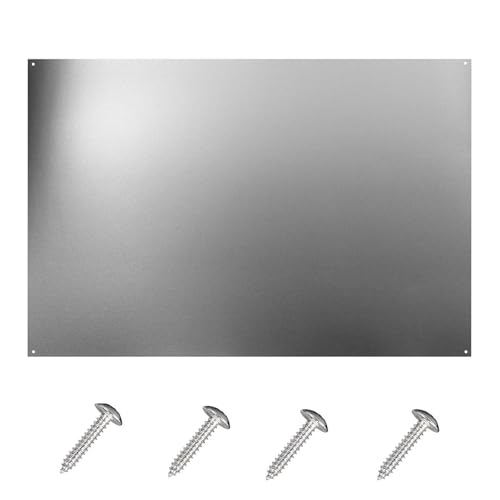
For a brushed 304 stainless face, 24 x 30 Reversible 304 Stainless Backsplash is a 24-by-30-inch reversible panel with four pre-drilled holes and the option to use adhesive. Its maker calls the steel nonmagnetic and describes a thickness of about 0.019 to 0.023 inch, making it a thin, flat wall cover for cooking splashes. The mounting choices also mean the buyer should confirm the fastening method is suitable for the wall surface and appliance clearances.
Bottom line: Choose it for a thin 304 steel splash panel with reversible positioning.
Choosing a Backsplash Behind a Stove
A stove backsplash manages grease and food splatter; fire protection is a separate requirement. Stainless steel panels are surface guards, and a claim that steel resists heat does not provide a tested fire rating for the wall behind it. If the wall is combustible, check the stove manufacturer’s clearance requirements and local building rules before installing any panel. Measure the exposed area beyond the cooktop: a 30-inch-wide range with a 24-inch-high splash zone needs coverage based on both dimensions, not just the panel’s label. The 24-by-30-inch indoor panels here are substantially smaller than the 36-by-60-inch outdoor grill shield, which is intended for a different setting.
How to Measure a Stove Wall
Measure from the countertop or cooking surface to the hood or cabinet underside, then measure the full wall width that needs splash coverage. A 30-inch range does not guarantee that the exposed wall is exactly 30 inches wide; side clearances and adjacent cabinets change the area. A panel should cover the actual splash zone without blocking controls, outlets, or required space around the appliance. For panels with four corner holes, mark the hole positions only after checking that the panel sits flat and does not interfere with the hood. Confirm clearance requirements in the stove manual and local code before installation; decorative metal coverage is not a substitute for required clearance.
Stainless Steel and Grill Heat Shields Compared
Stainless steel panels are intended for indoor splash protection, while the fiberglass shield here is sized and described for outdoor grills. Stainless steel grades such as 430 and 304 are different alloys; neither grade name alone tells you that a complete wall installation is fire-rated. A heat shield’s temperature claim also does not establish safe use with every appliance or mounting method. Use the comparison below to match the product type to the job, then resolve fit and clearance separately.
| Need | Product type | Decision point |
|---|---|---|
| Cooking splatter | Stainless panel | Match panel width and height to exposed wall |
| Outdoor grill heat and embers | Coated fiberglass shield | Confirm outdoor placement and mounting |
| Fire-safe indoor wall assembly | Code-compliant assembly | Check stove clearance and local rules |
Installation and Heat Safety
Keep the stove’s required clearance to combustible surfaces even when a metal backsplash covers the wall; a thin metal panel does not automatically make a combustible wall noncombustible. Installation rules depend on the appliance, wall materials, and whether a tested heat-shield assembly is used. Use a panel’s drilled holes or adhesive only for the mounting method appropriate to its surface and location. Do not assume the outdoor grill shield’s 900°F use claim applies to an indoor range, or that its melting point is a safe operating temperature. Where fire protection is the priority, confirm the permitted wall assembly and clearance with the appliance instructions and local building authority before cooking.
Frequently Asked Questions
Does stainless steel make a stove wall fireproof?
No, a stainless panel is a surface cover and does not by itself make a combustible wall fireproof. Keep the appliance’s required clearance and use a wall assembly accepted by local code.
How wide should a stove backsplash be?
Measure the exposed wall rather than relying only on range width; a common residential range is 30 inches wide, but cabinets and side clearances affect coverage. Choose a panel that covers the actual splash area without interfering with controls or hood spacing.
Can peel-and-stick metal tile go behind a gas stove?
Do not assume peel-and-stick tile is suitable for a gas stove: the adhesive and wall assembly must meet the appliance’s clearance and heat requirements. Confirm both before installing adhesive-backed material near any burner.
Is a grill heat shield suitable for an indoor range?
An outdoor grill shield is not automatically suitable for an indoor range, even when the maker gives a high-temperature claim. Indoor use requires confirming the material, mounting, stove clearance, and applicable local rules.
How do I clean a stainless stove backsplash?
For routine grease and food splashes, use a soft damp cloth and mild detergent, then dry the surface to avoid water marks. Avoid abrasive pads that can scratch a brushed finish.